How CrossFit Can Make You a Better Grandma's Marathon Runner
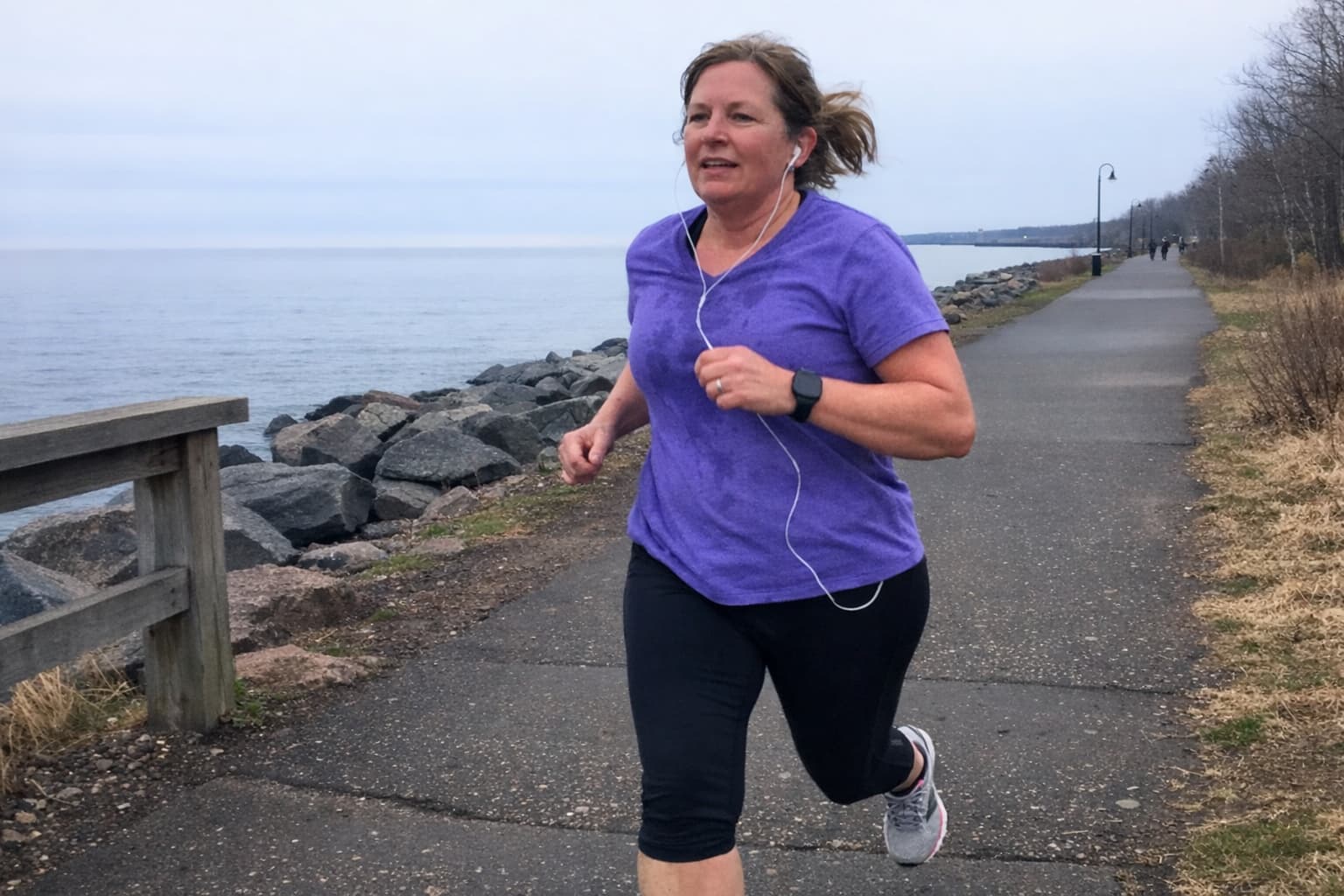
Thursday, Mar 5th, 2026Grandma's Marathon is in June. If you're training for the full or the half, you're probably already building up your weekly mileage, mapping out your long runs, and wondering whether your knees are going to cooperate this year.
Here's something worth thinking about while you're building that training plan: what you do on the days you're not running matters a lot. Maybe more than you think.
At CrossFit Aerial, we've got several members deep into Grandma's training right now. Travis, Lars, Mikaela, and Troy are all working toward race day, and they're all mixing CrossFit into their running schedules. They're not doing it because someone told them to. They're doing it because it works.
Why runners get hurt
Running is repetitive. That's the whole deal. You take roughly 1,500 steps per mile, and if you're training for a marathon, you're going to rack up hundreds of thousands of those steps before June. Every single one loads the same joints, the same tendons, the same muscles in the same pattern.
Most running injuries aren't from one bad step. They're from thousands of slightly-too-weak steps. Your hip stabilizers get tired at mile 18, your form breaks down, and your IT band picks up the slack until it can't anymore. Runner's knee, shin splints, plantar fasciitis — these are almost always overuse injuries, and they almost always have a strength deficit somewhere underneath them.
This is where cross-training comes in. And not just any cross-training.
What CrossFit actually does for runners
When people hear "CrossFit" they picture someone grunting through a heavy barbell workout and collapsing on the floor afterward. And yeah, that happens sometimes. But the actual methodology is broader than that. It's about building general physical capacity — strength, endurance, mobility, coordination — so your body can handle whatever you throw at it.
For a runner training for Grandma's Marathon, that translates to a few specific things:
Stronger legs that hold up longer. Squats, lunges, deadlifts, and single-leg work build the kind of lower body strength that keeps your running form intact deep into a race. When your quads and glutes are stronger, they don't fatigue as fast, which means your mechanics stay cleaner for more miles.
A core that actually works. Your core isn't just your abs. It's the entire trunk that keeps your pelvis stable while you run. Weak core means your hips drop, your stride gets sloppy, and you waste energy. The functional movements in CrossFit — overhead presses, kettlebell swings, loaded carries — train your core the way it actually needs to work during a run.
Better aerobic capacity. CrossFit workouts are metabolic conditioning. Short, intense efforts that push your heart rate up and teach your body to recover faster. This translates directly to your ability to sustain pace over long distances. There's a reason a lot of competitive distance runners incorporate interval and threshold work — CrossFit gives you that stimulus in a different package.
Mobility you didn't know you were missing. If you only run, your ankles, hips, and thoracic spine slowly tighten up over months and years. CrossFit movements take your joints through full ranges of motion. Deep squats, overhead positions, hip-dominant pulls. Your body needs this variety, especially during high-volume training blocks.
If you're curious about the difference between training at a CrossFit gym versus doing your own thing at a regular gym, we wrote about that here.
How to fit CrossFit into a marathon training plan
The most common question we get from runners is "won't CrossFit make me too sore to run?" Fair question. The answer is: not if you're smart about it.
Most of our members who are training for Grandma's come in 2-3 days per week. They run on their other days. The key is treating CrossFit as supplemental, not as the main event. Your long runs and tempo runs still take priority. CrossFit fills in the gaps.
A typical week might look like:
Monday: CrossFit
Tuesday: Easy run
Wednesday: Tempo or speed work
Thursday: CrossFit
Friday: Rest or easy run
Saturday: Long run
Sunday: Rest or light CrossFit
Our coaches know who's training for what. If you tell us you've got a 16-miler on Saturday, we're going to help you scale Thursday's workout so you're not walking into that run with trashed legs. That's the advantage of training at a place where the coaches actually pay attention. (If you're wondering whether CrossFit is worth it compared to just running on your own, that kind of personalized attention is a big part of it.)
Duluth is a runner's city
One of the best things about training for Grandma's Marathon in Duluth is that you're already living in one of the best running cities in the Midwest. The Lakewalk gives you flat, scenic miles right along the lake. Park Point is a long, quiet stretch where you can zone out and just move. The trails around Spirit Mountain and Hartley Park offer hills and terrain when you need to build strength in your legs the old-fashioned way.
And from about April through October, you can't go for a run in this town without passing a dozen other people doing the same thing. Duluth's running community is real and deep. Grandma's Marathon is the centerpiece, but people run here year-round because the scenery and the trails make it easy to love.
We put together an outdoor fitness guide for Duluth that covers a lot of these spots if you're looking for new routes or trail ideas. Worth a look, especially if you've been running the same loop since November.
You don't have to be a runner to start, and you don't have to be fit to walk in
Some people reading this might be thinking about running their first half marathon and aren't sure they're "fit enough" to add CrossFit to the mix. Here's the thing: we scale everything. Every workout, every movement. You show up, tell us where you're at, and we meet you there.
We have members over 40, members who'd never touched a barbell before walking through our door, and members who've been athletes their whole lives. They all do the same workout, scaled to their ability. If you're brand new, check out our beginner's guide — it covers what to expect and how we get people started.
And if you want to hear from people who've been where you are, our Legends page has stories from real CFA members about their own journeys.
The real point
Nobody at CrossFit Aerial is going to tell you to stop running and just do CrossFit. That's not the pitch. The pitch is: you're already putting in the work on the roads and trails. Adding 2-3 days of strength and conditioning per week can be the thing that gets you to the finish line healthy, running stronger in the last 10K than you did last year, and actually enjoying the process instead of just surviving it.
Grandma's Marathon is a special race in a special place. If you're going to train for it, train well. Your running will get you to the start line. Smart cross-training will get you to the finish.
If you want to talk about how to work CrossFit into your training plan, just come check us out. We'll figure it out together.
FAQ
Will CrossFit make me too sore to run?
Not if you approach it right. Our coaches help you scale workouts based on your running schedule. Most of our marathon-training members come in 2-3 times per week and manage their intensity so they're fresh for key running days. After the first couple weeks, your body adapts and the soreness drops off significantly.
Should I do CrossFit on the same day I run?
It depends on the day. Pairing an easy run with a CrossFit session can work fine. But you probably don't want to do a hard CrossFit workout the day before a long run or a speed session. Talk to our coaches about your weekly schedule and we'll help you find the right balance.
I've never done CrossFit before. Can I start while training for Grandma's Marathon?
Yes. We scale everything for beginners and we'll be mindful of your running volume when programming your workouts. Starting with two days per week is a good entry point. Many runners actually notice improvements in their running within the first few weeks of adding strength work.
Will lifting weights make me slower?
No. This is one of the most persistent myths in running. Strength training improves running economy, meaning you use less energy at the same pace. You're not going to bulk up from 2-3 CrossFit sessions per week — you're going to get more efficient.
How far in advance of Grandma's Marathon should I start cross-training?
The sooner the better, but even starting 12-16 weeks out can make a meaningful difference. If you're reading this in March or April, you've got plenty of time to build strength that'll carry you through race day in June.
Do I need to be in good shape to start CrossFit?
No. We meet everyone where they're at. Whether you're a seasoned marathoner or someone who just signed up for their first half, we'll scale the workouts to your current fitness level and your goals.