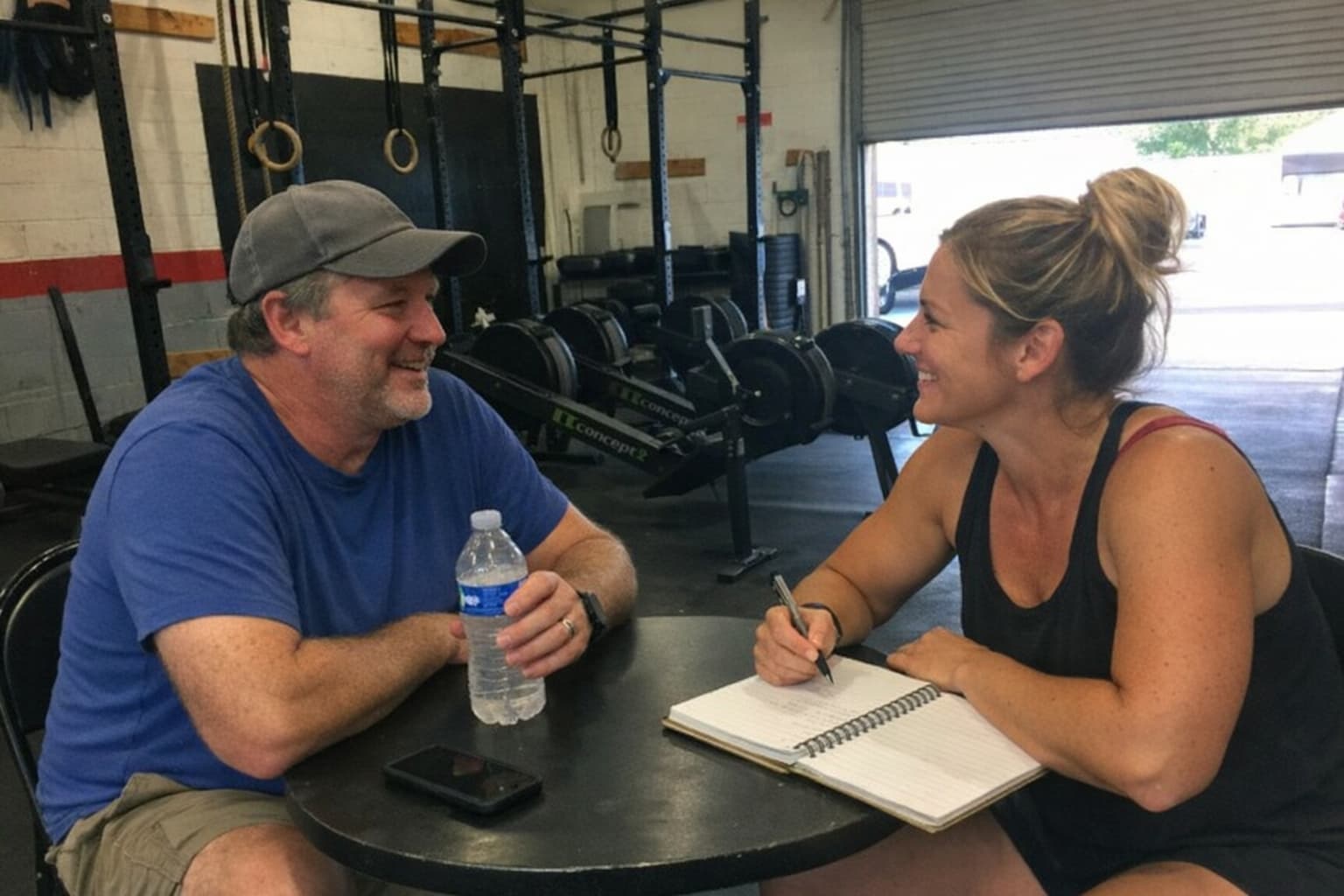
The Power of Habits (and Why You Need an Accountability Coach)
You already know what to do. Eat more vegetables. Move your body. Drink water. Get some sleep. The information is everywhere. It's free. It's on every podcast and Instagram account and doctor's office pamphlet.
So why is it still so hard?
Because knowing what to do and actually doing it are completely different problems. And the gap between those two things isn't filled with more information. It's filled with habits, environment, and someone who holds you to your word.
Why Willpower Always Loses
Most people approach fitness like a willpower contest. They decide on January 1st (or Monday, or "next month") that they're going to change everything. New diet. New workout plan. Early mornings. No more snacking.
And it works. For about two weeks.
Then life happens. A bad day at work. A kid's soccer game that eats up the evening. A week of bad sleep. And just like that, the motivation tank hits empty.
This isn't a character flaw. It's how human brains work. Willpower is a limited resource. It gets depleted throughout the day by every decision you make, from what to wear to what to eat for lunch to whether you should respond to that passive-aggressive email from your coworker. By the time 5pm rolls around, there's nothing left in the tank for "I should probably go work out."
James Clear nails this in Atomic Habits: "You do not rise to the level of your goals. You fall to the level of your systems." The people who stay consistent with fitness aren't the ones with superhuman discipline. They're the ones who've built systems that make the right choice the easy choice.
Habits Are the System
A habit is just a behavior that's been repeated enough times that it becomes automatic. You don't think about brushing your teeth. You don't debate whether to buckle your seatbelt. Those decisions were made a long time ago, and now they just happen.
Fitness can work the same way. But it takes time to build that automaticity, and most people quit before they get there.
Clear talks about the concept of getting 1% better each day. It sounds small because it is small. But small, repeated actions compound in ways that dramatic, unsustainable changes never do. The person who walks for 20 minutes every day for a year is in better shape than the person who does an intense 90-minute workout for three weeks and then burns out.
Identity-Based Habits
Here's a concept that changed how I think about behavior change. Most people set goals like "I want to lose 20 pounds" or "I want to run a 5K." Those are outcome-based goals. They're fine, but they don't change who you are.
Identity-based habits flip it around. Instead of "I want to lose weight," you start with "I'm the kind of person who moves their body every day." Instead of "I want to get strong," it's "I'm someone who trains."
Every time you show up to a workout, you're casting a vote for that identity. You're not just burning calories. You're reinforcing the story you tell yourself about who you are. Miss enough days and the old identity creeps back in. Show up consistently and the new one sticks.
Habit Stacking
One of the easiest ways to build a new habit is to attach it to something you already do. Clear calls this habit stacking. The formula is simple: "After I [current habit], I will [new habit]."
After I drop the kids off at school, I drive to the gym. After I pour my morning coffee, I pack my gym bag. After I park at the gym, I walk inside. (That last one sounds dumb, but getting through the door is genuinely the hardest part for most people.)
The key is reducing the number of decisions between you and the behavior you want. Every decision point is an off-ramp. Remove the off-ramps and you'll get where you're going more often.
Environment Design: The Cheat Code Nobody Uses
Your environment shapes your behavior way more than your intentions do. If there's a bowl of candy on your kitchen counter, you're going to eat candy. If your running shoes are buried in the back of your closet, you're not going running. This isn't weakness. It's just how brains work.
Clear writes about making good habits obvious, attractive, easy, and satisfying. Environment design covers the "obvious" and "easy" parts. You want to work out in the morning? Sleep in your gym clothes. Put your shoes by the door. Have your water bottle filled and ready to go.
But here's where it gets really interesting for group fitness. When you sign up for a class at a specific time, with people who expect to see you there, you've just designed your environment in a way that's incredibly hard to opt out of. The class time creates structure. The people create social expectation. The coach creates accountability.
This is one of the reasons CrossFit works so well for people who've struggled with consistency at traditional gyms. The environment does the heavy lifting. You don't have to decide what to do when you get there. You don't have to motivate yourself through the workout alone. You just have to show up, and the system takes over.
We've written before about what makes CrossFit worth it, and honestly, the habit architecture might be the biggest piece. It's a gym that's engineered, whether intentionally or not, around the exact principles that make habits stick.
The Missing Piece: Accountability
So if habits are the system and environment is the cheat code, what's the missing piece for most people? It's accountability. Specifically, accountability from another human being who actually cares whether you follow through.
There's a study from the American Society of Training and Development that found people have a 65% chance of completing a goal if they commit to someone else. That jumps to 95% if they have a specific accountability appointment with that person.
Think about that. Same goal. Same person. The only difference is whether someone is checking in on them.
This is why personal trainers work, even when the exercises they prescribe aren't anything special. It's not the programming. It's the appointment. It's knowing that someone is going to ask you how it went. It's the mild social discomfort of having to say "I didn't do it."
A coach who checks in on you between sessions changes the game completely. Not in a nagging, guilt-trip kind of way. More like a friend who texts you on Wednesday to ask if you've been hitting your water intake. Or someone who reviews your food log and says "hey, looks like lunches are the tough spot, let's figure out a plan for that."
That kind of consistent, caring follow-up is what separates people who make temporary changes from people who build lasting ones.
How CrossFit Builds Habits Without You Realizing It
Here's something funny about CrossFit. Most people join because they want to get in shape. But the reason they stay is because, without really noticing, they built a bunch of habits around it.
The class schedule IS habit stacking. "Monday, Wednesday, Friday at 5:30pm" becomes as automatic as your commute.
The community IS environment design. When your friends are at the gym, you go to the gym. When people text you asking if you're coming to class, you go to class. It's social gravity.
The coach IS the accountability partner. They notice when you're not there. They ask about your goals. They remember that you were working on your overhead squat three weeks ago and check in on your progress.
For beginners, this matters even more. Walking into a gym for the first time is intimidating. Having someone who guides you through every step, who remembers your name on day two, who makes your first week feel manageable instead of terrifying, that's what turns a nervous beginner into a regular.
And for people over 40 who maybe haven't exercised in a decade, the accountability piece is everything. You're not just fighting inertia. You're fighting years of an identity that says "I'm not a gym person." Having a coach and a community that gently, consistently challenges that story is how the identity shifts.
What an Accountability Coach Actually Does
A good accountability coach isn't a drill sergeant. They're more like a GPS. They help you figure out where you want to go, plan a realistic route, and recalculate when you inevitably take a wrong turn.
That might look like:
- Weekly or biweekly check-ins to review what's working and what isn't
- Helping you set small, realistic goals instead of huge, overwhelming ones
- Following up between meetings to see how you're doing
- Adjusting the plan when life throws curveballs (because it always does)
- Celebrating the small wins that you'd otherwise overlook
The best coaches meet you where you are. If you're eating fast food five nights a week, they don't hand you a meal prep plan for six organic meals a day. They help you swap one of those dinners for something better. Then another. Then another. That's the 1% better approach in practice.
Our nutrition coach Mikaela works with clients exactly this way at CrossFit Aerial. The feedback she hears most often? "I'm surprised at how easy it is" and "it doesn't feel restricting." People learn how to put together a balanced meal, feel confident navigating a grocery store, and actually enjoy the process. One client lost 10% body fat while gaining muscle. Not because they white-knuckled through some miserable diet, but because someone helped them build better habits one step at a time.
It's not glamorous. It's not a dramatic transformation montage. It's just slow, steady, supported change. And it works because someone is there to keep you honest and remind you that progress isn't always visible in the mirror.
Building Your Own Habit System
Whether or not you work with a coach, here are some things you can start doing today:
Pick one thing. Not five things. One. Maybe it's going for a walk three times a week. Maybe it's drinking a glass of water before your morning coffee. Start so small that it feels almost silly. That's the point.
Attach it to something you already do. Use the habit stacking formula. Make it obvious, easy, and connected to your existing routine.
Set up your environment. Lay out your gym clothes. Sign up for a class in advance. Tell someone what you're doing so there's a tiny bit of social pressure.
Track it, but keep it simple. A check mark on a calendar works. You don't need an app. You need a visual streak that makes you not want to break the chain.
Find your people. Whether it's a CrossFit class, a running group, or a friend who'll text you at 6am, surround yourself with people who are doing the thing you want to do. Environment wins.
The Soft Part
If you've read this far and you're thinking "yeah, I know all this, I just can't seem to do it," that's completely normal. Knowing and doing are different skills. And the bridge between them is usually support from someone who gets it.
If you're looking for that kind of accountability, we offer nutrition coaching at CrossFit Aerial that's built around exactly these principles. Consistent check-ins, realistic goal setting, and a coach who actually follows up between sessions. Not a sales pitch. Just the thing we believe in.
Frequently Asked Questions
What is an accountability coach?
An accountability coach is someone who helps you set realistic goals, checks in with you regularly to track your progress, and helps you adjust your plan when things go sideways. They're focused less on telling you what to do and more on making sure you actually do the things you've committed to.
How long does it take to build a fitness habit?
Research suggests it takes anywhere from 18 to 254 days for a new behavior to become automatic, with an average around 66 days. The timeline varies based on the complexity of the habit, your environment, and whether you have support systems in place. Starting smaller makes habits form faster.
Why do most people quit their fitness routine?
Most people quit because they rely on motivation and willpower instead of building systems and habits. When motivation fades (and it always does), there's nothing left to keep them going. Lack of accountability, unclear programming, and training alone in an unsupportive environment all contribute to dropout rates.
What's the difference between a personal trainer and an accountability coach?
A personal trainer focuses primarily on exercise programming and in-session coaching. An accountability coach takes a broader approach, working with you on behavior change, habit formation, nutrition, and lifestyle factors. They typically include between-session check-ins and follow-ups that a personal trainer doesn't.
Can a group fitness class provide accountability?
Yes, and this is one of the biggest advantages of group fitness over solo training. A consistent class schedule creates structure. Fellow members create social expectation. And a coach who knows your name and goals adds a layer of accountability that's hard to replicate on your own.
What are the best habits to start with for someone new to fitness?
Start with something so small it feels easy. Walk for 10 minutes a day. Drink a glass of water every morning. Sign up for one class per week. The goal isn't to overhaul your life overnight. It's to build consistency with something manageable, then gradually add from there.