Winter Recovery in Duluth
Friday, Jul 17th, 2026Winter Recovery in Duluth
If winter makes your body feel a little more beat up than usual, you are not imagining it.
You move less without meaning to. You tense up in the cold. Sleep can get weird when it is dark all the time. Then you try to work out, shovel, ski, chase kids around, or just get through a normal week, and everything feels a little stiffer and a little slower.
That does not automatically mean something is wrong.
A lot of the time, it means recovery needs a little more attention.
This is especially true for the kind of adults we see all the time at CrossFit Aerial: working parents, adults getting back into fitness after a long gap, Legends members, and outdoor people who want to keep moving through winter without feeling cooked by February.
If your bigger issue is just getting yourself out the door on brutal weather days, read Too Cold to Leave the House in Duluth?. If winter scheduling is the real problem, Winter Fitness for Shift Workers in Duluth might fit better.
What winter does to recovery
Winter adds friction in a bunch of small ways.
None of them seem dramatic by themselves. Stack them up, though, and recovery gets worse fast:
- you get less casual walking and movement during the day
- you tighten up when you are cold
- you sit more
- your sleep routine can drift when mornings are dark and evenings feel long
- you are more likely to skip water and live on coffee
- outdoor hobbies like skiing, skating, shoveling, and hiking on packed snow ask more from your body than people think
That is why someone can be doing "the same workouts" in winter and still feel more sore, more sluggish, or just less springy.
Soreness is normal. Staying wrecked is not.
A lot of adults make one of two mistakes here.
The first mistake is thinking every sore muscle means they should stop moving completely.
The second is acting like being wrecked all winter is just what tough people do.
Neither one helps much.
Some soreness is normal, especially if you are newer, coming back after time off, or doing more winter activities than usual.
But if you are dragging for days, never loosening up, or feeling like every workout buries you, it usually means recovery habits need work before training needs more intensity.
1. Sleep matters more in winter than most people want to admit
This is the boring answer, but it is the real one.
If your sleep slips, recovery slips right with it.
In winter, that often looks like:
- staying up too late because evenings feel endless
- getting less morning light
- inconsistent bedtimes
- waking up feeling groggy even after enough hours in bed
You do not need a perfect sleep routine. But you do want a more stable one.
A few practical wins:
- keep your wake-up time as consistent as you can
- get outside for even a few minutes of morning light when possible
- dim the house down a little at night instead of going bright-screen to bed
- keep caffeine from drifting too late into the afternoon
- do not confuse "I am tired" with "I should scroll for another hour"
If you fix nothing else this winter and get sleep more consistent, your body will usually feel it.
2. Keep moving on recovery days
A recovery day does not have to mean doing nothing.
For most adults, light movement helps soreness more than full shutdown mode.
That can look like:
- a 10 to 20 minute walk
- easy rowing or biking
- a short mobility circuit at home
- a few trips up and down the stairs
- a casual ski, snowshoe, or skate instead of an all-out effort
The goal is not to "burn calories" or prove your discipline.
The goal is to get blood moving, loosen up a bit, and keep your body from settling into full winter hibernation.
If you want a lower-pressure way to do that, Low-Pressure Winter Activities in Duluth has a few good ideas.
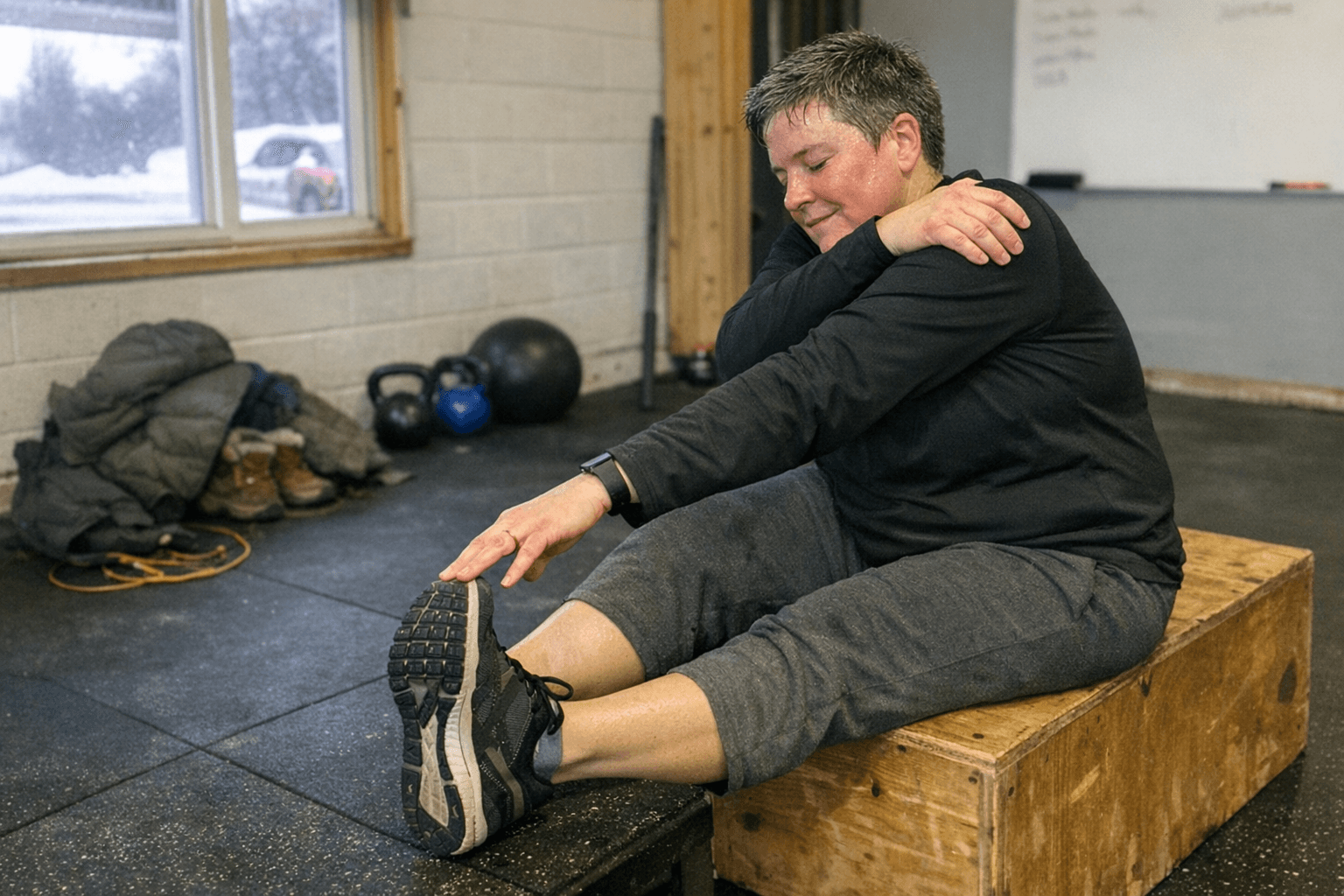
3. Do a short mobility reset before you feel terrible
Most adults wait too long.
They do nothing, nothing, nothing, then try one giant stretch session after everything already feels awful.
A better move is doing five to ten minutes before a workout, after work, or before bed.
You do not need a huge routine. Pick the spots that usually get cranky in winter:
- ankles
- calves
- hips
- upper back
- shoulders
A simple reset might include:
- calf stretch against a wall
- deep squat hold with support
- hip flexor stretch
- thoracic rotations
- hanging from a bar or banded shoulder work if that feels good
Small doses done regularly usually beat the heroic once-a-week version.
4. Eat like you want your body to recover
Winter recovery gets harder when meals are random.
You do not need to eat like a fitness influencer. You do need to stop under-eating protein, skipping meals all day, then wondering why your body feels flat.
A good basic target for most busy adults:
- get protein into each meal
- keep easy foods around so you are not relying on willpower at 7 pm
- eat something real after training instead of pretending coffee counts
- keep one or two repeatable winter meals in the rotation
If food is where your whole week starts falling apart, Winter Meal Prep for Busy Adults in Duluth and High-Protein Crockpot Meals for Busy Adults are both good places to start.
5. Hydration still matters when you are not sweating buckets
This one sneaks up on people.
In winter, you may not feel sweaty, but dry air, indoor heat, coffee, and cold-weather breathing can still leave you under-hydrated.
That usually shows up as:
- headaches
- sluggish workouts
- feeling oddly tired
- extra muscle tightness
Try keeping it stupid simple:
- drink water early in the day, not just at night when you realize you forgot
- have water with coffee instead of only coffee
- drink after winter workouts and outdoor sessions even if you do not feel super thirsty
Nothing fancy here. Just fewer days where you are trying to recover while running half-dry.
6. Match your training to your actual life
This is a big one for parents and busy adults.
If your week already includes shoveling, bad sleep, kids' schedules, work stress, and a long ski on Saturday, then "go harder" is not always the smartest answer.
Sometimes the best recovery move is scaling correctly.
At CrossFit Aerial, that is normal. It is part of good coaching.
You are not weak because you adjusted the load, shortened the volume, or backed off a little when your body clearly needed it. You are just making a smart choice that lets you keep showing up.
That matters more than winning one random Wednesday workout and feeling trashed for three days.
7. Recovery gets easier when you build strength year-round
A lot of winter soreness is not just about winter.
Sometimes it is about not having enough strength underneath your life.
If you are trying to shovel, ski, hike, carry groceries in boots, chase kids, and stay active with no real strength base, winter exposes that pretty fast.
That is one reason people like CrossFit Aerial once they get going. The goal is not to crush people. It is to help them build enough strength, stamina, and movement quality that normal life feels easier.
That applies whether you are starting from zero or trying to stay capable for a long time.
If you are brand new and worried you need to get in shape first, you do not. What to Expect Your First Week at CrossFit covers how we handle that.
If you want the simple membership breakdown, head to the pricing page. Most adults land somewhere in the $100 to $200 per month range depending on the level of coaching and support they want. What they are really paying for is coaching, scaling, structure, accountability, programming, and a community that makes it easier to stay consistent.
That community piece matters in winter too. A lot of friendships here turn into ski partners, hiking plans, and outdoor meetups outside the gym.
A simple winter recovery checklist
If you want the short version, start here:
- sleep on a more consistent schedule
- move a little on off days
- do five to ten minutes of mobility before stiffness piles up
- get protein into meals
- drink more water than your winter brain wants to
- scale workouts based on your actual week, not your ego
That is not flashy. It works.
The bottom line
Winter recovery in Duluth is rarely about one magic fix.
It is usually about doing the basic stuff a little more consistently while the season is making everything harder.
Sleep a little better. Move a little more. Eat like recovery matters. Loosen up before you feel ancient. Scale when it makes sense.
Do that, and winter workouts usually stop feeling like something you have to survive.
FAQ
Why do I feel more sore in winter workouts?
Usually because winter adds less daily movement, more stiffness, worse sleep, and more general stress on the body. It is not always the workout itself.
Should I work out when I am sore in winter?
Usually yes, if it is normal muscle soreness and not something sharp or concerning. Light movement and smart scaling often help more than doing nothing.
What helps recovery most in winter?
Better sleep, regular movement, a little mobility work, enough protein, hydration, and not going too hard when your life is already stacked.
How much mobility work do I need in winter?
Most adults do well with five to ten minutes a day, especially for ankles, calves, hips, shoulders, and upper back.
Do I need to get in shape before starting CrossFit in winter?
No. Most people at CrossFit Aerial start from zero or come back after a long break. Coaching and scaling are part of the process.