CrossFit Before and After
Thursday, Mar 26th, 2026If you search "CrossFit before and after," you're going to get a lot of shirtless mirror selfies and dramatic transformation photos.
Some of those are real. Some are a little generous with the lighting. Either way, they can give you the wrong idea about what progress is supposed to look like.
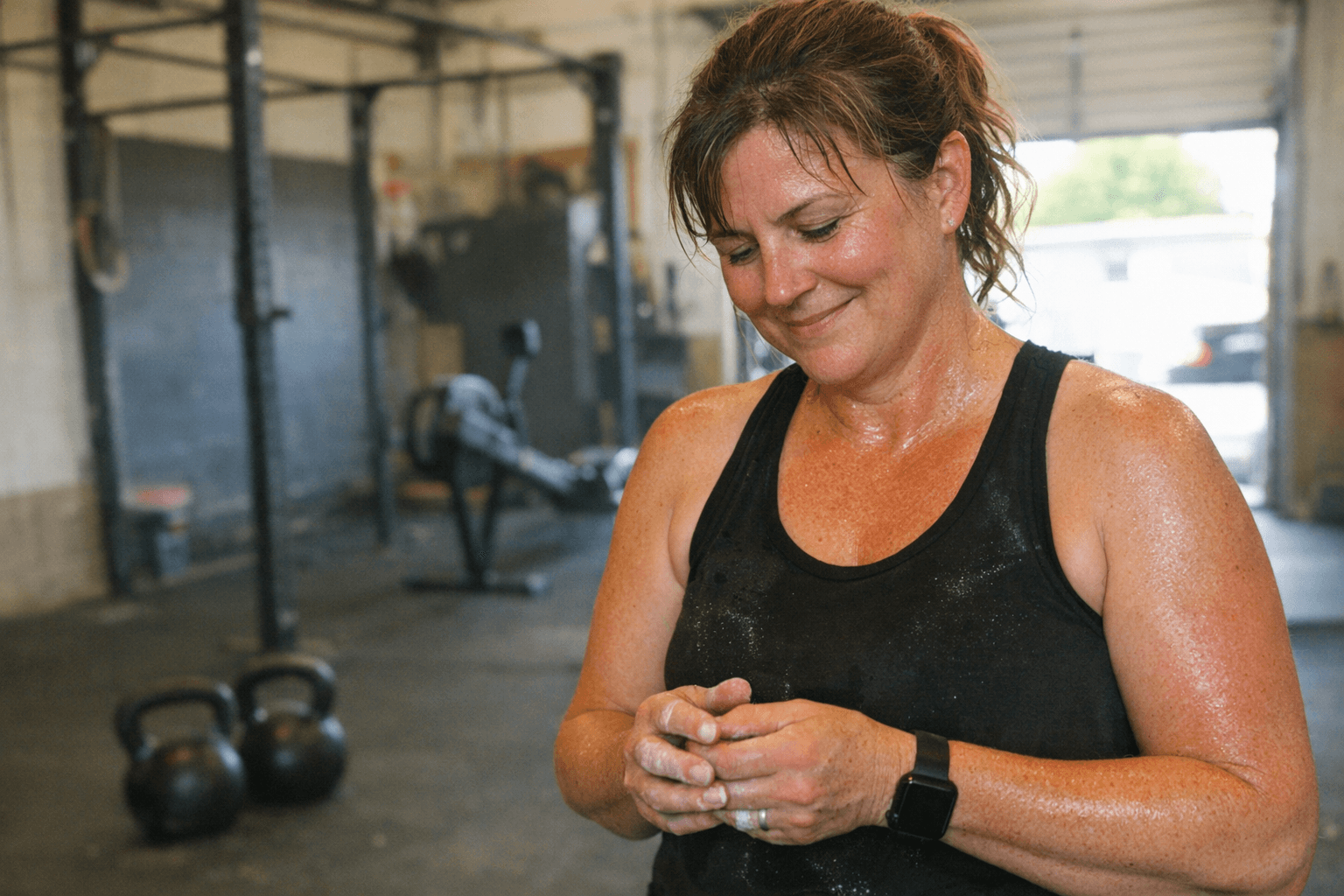
Most people who walk into CrossFit Aerial are not trying to become fitness influencers. They're working parents. They're people who haven't exercised in years. They're in their 40s, 50s, and 60s. Some are starting from absolute zero. Some are just trying to feel better in their own body again.
So let's talk about what a real before and after actually looks like.
The "Before" Usually Doesn't Look Lazy
This is important.
A lot of people think their before story means they were unmotivated or didn't care. That's usually not true. More often, the before looks like this:
- sitting at a desk all day
- taking care of kids or aging parents
- dealing with nagging back pain, low energy, or bad sleep
- trying to piece together random workouts at home and never sticking with them
- telling yourself you'll start once life calms down
That's not laziness. That's real life.
For a lot of our members, the before picture is not about weight. It's about feeling disconnected from their body. Winded on the stairs. Stiff getting out of the car. Unsure if they can keep up on a hike, a ski day, or a weekend outside with friends.
If that sounds familiar, you're not behind. You're normal.
The First After Is Small, But It Matters
When people imagine transformation, they usually picture six months from now. But the first real after often shows up in the first couple of weeks.
It looks like:
- showing up to class without talking yourself out of it
- learning how to squat to a box or deadlift with good form
- sleeping harder because your body actually worked
- feeling less intimidated every time you walk in
- realizing nobody expects you to be good at this on day one
That part matters more than people think.
If you're brand new, your first week at CrossFit is mostly about learning the flow, meeting the coaches, and figuring out that everything can be scaled. That's a before-and-after too. Mentally, it's huge.
Progress Usually Shows Up Before It Looks Dramatic
Here's the funny part. A lot of people change physically before they fully notice it.
Your clothes fit a little better. Your posture changes. Your shoulders sit differently. You look more awake. Your face looks less stressed out.
Then one day somebody at work says, "Have you been doing something different?"
That's usually how it starts.
But even before that, real progress tends to show up in ways that matter more than photos:
You stop dreading movement
The workout isn't this giant scary thing hanging over your head anymore. It becomes part of your routine.
Everyday stuff gets easier
Groceries feel lighter. Snow shoveling doesn't wreck you. You can get on the floor with your kids and get back up without making old-person noises.
You trust your body more
That's a big one, especially for people who haven't felt athletic in a long time. Strength changes how you carry yourself.
What Real Member Progress Looks Like
Not everyone wants a big public before-and-after photo. That's fair. But we see real changes all the time.
Rikki came in after years at a desk job and very little recent training. She started cautiously, learned the movements, and built confidence first. Now she's hitting PRs, including a deadlift over bodyweight.
Michael started north of 25% body fat. After two years of consistent training, he's below 20% and still working toward 15%. That's not a 30-day challenge. That's real change that stuck.
Katie came in with limited training experience and committed to showing up. A few months later, she's training four to five days a week and got her first rope climb.
Those are all before-and-after stories. Not because the photos are dramatic, but because the people are different.
The Best Transformations Aren't Always About Weight Loss
Yes, body composition changes with CrossFit. Often a lot.
But if you're only watching the scale, you can miss the point.
Muscle gain, better conditioning, better sleep, improved mood, and more energy don't always show up as a huge number drop. Sometimes the real transformation is that you weigh roughly the same, but you look different, move better, and feel like a much more capable person.
We talked more about that in How Long Until You See CrossFit Results and in our piece on CrossFit for Weight Loss. The short version: the best results are usually broader than fat loss alone.
Before and After at 40, 50, or 60 Looks Different, In a Good Way
Not every transformation needs to end with visible abs.
For a lot of adults, especially people getting back into fitness after years away, the win is different:
- your joints feel better
- you have more energy after work instead of less
- you stop tweaking your back doing basic stuff
- you're strong enough to keep doing the outdoor things you love in Duluth
- your doctor appointments get less interesting
That's why CrossFit over 40 hits home for so many people. And it's why our Legends members matter so much. Progress doesn't expire just because you're older.
The Biggest Change Is Usually Consistency
A real before and after is often just this:
Before: starting and stopping every few weeks.
After: being the kind of person who works out consistently.
That identity shift is everything.
Most people do not fail because they picked the wrong supplement or didn't find the perfect program. They fail because they try to do it alone, fall off, and have no structure pulling them back in.
CrossFit works well for ordinary adults because it's coached, scheduled, and social. Someone is expecting you. Someone is helping you scale. Someone notices when you're gone.
That's a lot different than hoping your garage workout happens after a long workday.
So What Should You Expect?
If you start now and stay reasonably consistent, here's a more honest version of before and after:
2 weeks: less fear, better sleep, sore but proud of yourself.
6 weeks: more energy, better movement, growing confidence, people starting to notice.
3 months: visible physical change, more strength, more work capacity, a routine that feels real.
6-12 months: you're not "trying to work out" anymore. You're just someone who trains.
That timeline is a lot more useful than any random transformation photo online.
You Don't Need a Perfect Before Photo
You also don't need to wait until Monday, or until you lose ten pounds, or until summer, or until you feel less embarrassed.
If you're thinking about starting, start from the version of you that exists right now.
That's what everybody else did.
If you want help understanding what that actually looks like in practice, read What to Expect Your First Week at CrossFit, see our pricing page, or take a look at Is CrossFit Worth It?.
The best before-and-after stories usually begin with somebody who thought they were too out of shape to start.
They weren't.