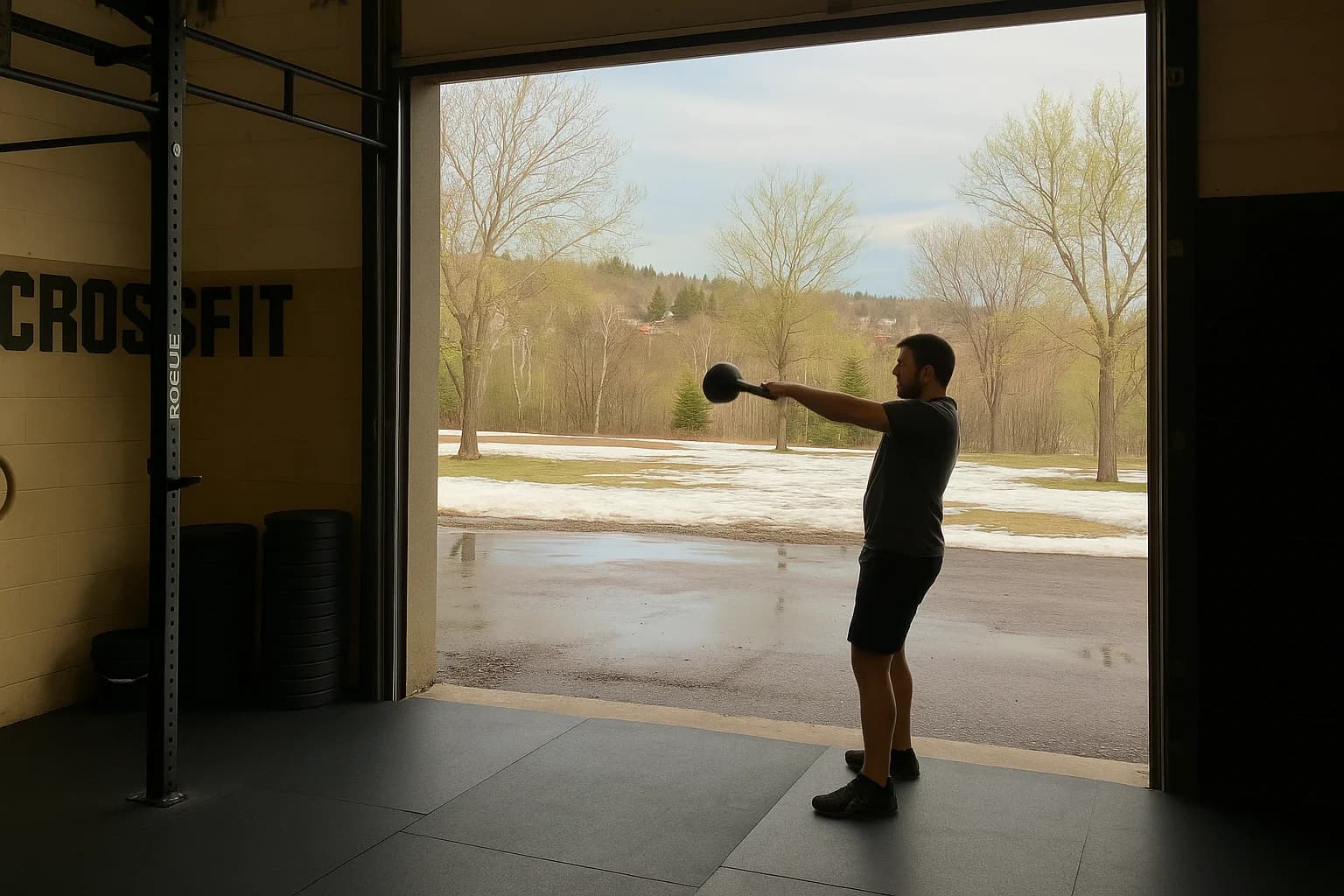
Spring Fitness in Duluth
Tuesday, Mar 24th, 2026There's a moment every spring in Duluth where you step outside and realize the air doesn't hurt your face anymore. The snow is pulling back. The trails are starting to peek out. Lake Superior is doing that thing where it looks almost friendly. And something inside you says: okay, it's time.
Winter in Duluth is long. Like, unreasonably long. And if you spent most of it hibernating, you're not alone. A lot of us did. But spring is the reset button. The trails are about to open. The bikes are coming out of storage. Kayaks are getting pulled off garage hooks. And if you want to actually enjoy all of that, now is when you start getting ready.
The Winter Hangover Is Real
Let's be honest about what five months of winter does to your body. Even if you stayed somewhat active, you probably moved less. Maybe you gained a few pounds. Your joints feel creaky. Walking up a steep hill sounds harder than it should.
That's normal. It's also fixable. But it doesn't fix itself. Waiting until June to start preparing for summer is like studying for a test the morning of. Technically possible, but you're going to have a rough time.
Spring is the window. You have two to three months before full-on summer. If you start training now, you'll be ready when trail season actually arrives. If you wait, you'll spend July catching up instead of enjoying it.
Getting Trail-Ready
Duluth's trail system is incredible. The Superior Hiking Trail, Hartley, Spirit Mountain, Lester Park. Miles and miles of terrain that demand actual fitness. Not treadmill fitness. Real fitness. The kind where you need your legs, your lungs, and your balance all working together on uneven ground with elevation changes.
Here's what trail-readiness actually requires:
Leg strength. Hiking is basically doing hundreds of lunges on uneven terrain while carrying a pack. If your legs aren't strong, your knees pay the price. Squats and lunges in the gym build the strength that keeps you moving uphill without your joints screaming.
Cardiovascular endurance. Being able to sustain effort for an hour or more without gassing out. This isn't about being fast. It's about being able to keep going. The kind of conditioning you get from CrossFit workouts translates directly to trail performance.
Core stability. Every step on a rocky trail requires your core to stabilize your spine. A strong core means less fatigue, better balance, and a lower risk of rolling an ankle because your body couldn't react fast enough.
Ankle and hip mobility. Stiff ankles on a rocky trail are a rolled ankle waiting to happen. Squatting and moving through full ranges of motion in the gym keeps your joints mobile and responsive.
All of these things are trained in every CrossFit class, every week. You don't need a special "hiking prep program." You need general fitness that makes everything else easier. That's what functional fitness actually means.
Biking Season Is Coming
Whether you're a mountain biker hitting the Duluth Traverse or a road cyclist cruising Scenic 61, spring means bike season is close. And if you haven't been on a bike since October, your legs know it.
Cycling demands specific things from your body: hip flexor mobility (tight from winter sitting), quad and hamstring strength, core endurance for long rides, and grip strength for mountain biking. All of these are trained in a well-rounded CrossFit program.
The deadlifts and squats build leg power. The rowing and running build cardio. The varied movements keep your body adaptable instead of locked into one narrow pattern. Cyclists who cross-train tend to have fewer overuse injuries because their bodies aren't doing the same repetitive motion without counterbalance.
Paddling Prep
Kayaking and canoeing on Lake Superior and the local rivers is one of the best parts of Duluth summers. It's also surprisingly physical. Paddling demands shoulder endurance, rotational core strength, and upper back stamina. If you haven't been training those muscles, you'll feel it about 20 minutes into your first paddle of the season.
CrossFit's pulling movements (pull-ups, rows, kettlebell swings) and overhead work build exactly the kind of upper body endurance paddling requires. You won't find a "paddling WOD" on the whiteboard, but the training transfers perfectly.
Grandma's Marathon Is in June
If you're running Grandma's, you're probably already training. But if you're thinking about it, or if you just want to get into running shape for the summer, now is the time to build your base.
We wrote a whole piece on CrossFit and marathon training, and the short version is this: strength training makes you a better runner. Stronger legs absorb impact better. A stronger core maintains your form when you're fatigued. Better hip mobility means more efficient stride mechanics.
CrossFit won't replace your running miles, but it fills in the gaps that running alone doesn't address. The runners at our gym who combine CrossFit with their run training tend to stay healthier and finish stronger than when they only ran.
The Outdoor Duluth Connection
Living in Duluth means outdoor recreation isn't optional. It's a core part of the culture here. Hiking, biking, skiing, paddling, fishing, just being outside. The entire city is oriented around the lake and the trails and the wild spaces.
But here's the catch: if you're not fit enough to enjoy those things, they become chores instead of adventures. A hike up Ely's Peak isn't fun if you're stopping every five minutes to catch your breath. A bike ride on the Munger Trail isn't relaxing if your back is killing you by mile three.
We put together a whole guide to Duluth outdoor activities and the fitness to enjoy them. The thread that runs through all of it is this: general physical preparedness makes everything better. You don't need to train specifically for each activity. You need a strong, capable, well-conditioned body that can handle whatever you throw at it.
Why Spring Is the Best Time to Start
If you've been thinking about starting CrossFit, spring is the move. Here's why the timing works so well.
You have built-in motivation. Summer is coming. You want to be outside. You want to feel good doing it. That's a clear, immediate goal that makes showing up to the gym easier.
The weather is getting better. Early morning walks to the gym stop feeling like a polar expedition. Your body naturally wants to move more as the days get longer.
You have a runway. Start now and by the time summer arrives, you'll have two to three months of training under your belt. That's enough to see real changes in your strength, endurance, and how you feel. You won't be the person gasping at the first trailhead. You'll be the one who keeps going.
And if you've been putting it off since January, that's fine. January resolutions are overrated anyway. Starting when the motivation is real beats starting because the calendar told you to.
Coming Out of Hibernation
If you haven't been active over the winter, start sensible. Don't walk into a gym on day one and try to destroy yourself. That's how people get hurt or burn out before they build any momentum.
At CrossFit Aerial, we ease new members in. The first week isn't designed to wreck you. It's designed to get you moving, assess where you are, and start building from there. Everything is scaled. If you can't do a pull-up, there's a version for you. If squatting is hard, we modify it. You start where you are and work forward.
Arvid is 83 years old and trains with our Legends program. If he can show up and do the work at his pace, you can too. Age, fitness level, experience, none of it disqualifies you. You just have to start.
Make This the Summer You're Ready For
Every year, summer sneaks up on Duluth. One day it's mud season, and the next day someone's asking if you want to hike the SHT this weekend. The people who enjoy it most are the ones who prepared while the snow was still melting.
You live in one of the best outdoor cities in the country. The trails, the lake, the mountains, all of it is right here. All you need is a body that can keep up with the place you call home.
Spring is your starting gun. Don't wait for summer to wish you'd started earlier.
Curious about getting started? Here's what your first week looks like. Want to see what it costs? Full pricing breakdown here. If you're over 40 and wondering if this is realistic, yes, it is.
Is spring a good time to start CrossFit?
Spring is one of the best times to start. You have built-in motivation with summer approaching, the weather makes it easier to stay consistent, and you have two to three months to build real fitness before outdoor season hits full stride. Starting in spring means you'll be strong and conditioned enough to enjoy hiking, biking, paddling, and other summer activities by the time they arrive.
How does CrossFit prepare you for outdoor activities like hiking and biking?
CrossFit builds general physical preparedness that transfers to all outdoor activities. Squats and lunges build the leg strength needed for hiking. Cardiovascular conditioning from varied workouts improves your endurance for long trail days. Core work improves balance on uneven terrain. Upper body and pulling movements prepare you for paddling. Rather than training for one specific activity, CrossFit makes your body capable of handling whatever you throw at it.
Can CrossFit help with marathon training for Grandma's Marathon?
Yes. CrossFit complements marathon training by building the strength and mobility that running alone doesn't develop. Stronger legs absorb impact better and reduce injury risk. Core work maintains running form when fatigued. Hip mobility improves stride efficiency. CrossFit won't replace your running volume, but runners who add strength training tend to stay healthier and perform better on race day.
How long does it take to get in shape for summer outdoor activities?
With consistent training three to five times per week, most people see meaningful fitness improvements within six to eight weeks. Starting in March or April gives you a solid two to three month runway before peak summer season. You won't be an elite athlete by June, but you'll be noticeably stronger, have better endurance, and feel more confident on trails, bikes, and in the water.
I haven't exercised all winter. Is it safe to jump into CrossFit?
Yes, as long as the gym has a proper onboarding process. Quality CrossFit gyms scale every workout to your current level and ease new members in gradually. Your first week should be about learning movements and establishing a baseline, not crushing you. Coaches adjust weights, movements, and intensity so you can build safely from wherever you're starting, whether that's completely deconditioned or just a bit rusty from winter.