Strength Training for Hiking in Duluth
Wednesday, Apr 29th, 2026Strength Training for Hiking in Duluth: How to Get Ready for Summer Trails
In Duluth, hiking is not some rare special-event activity.
It is just part of how people live here.
You finish work and head to Chester. You take the kids out on a Saturday. You hit the Lakewalk, Hartley, Lester, or a section of the Superior Hiking Trail because the weather is finally good and you do not want to waste it.
The problem is a lot of adults love the idea of hiking more than their body loves the first uphill section.
That does not mean you are out of shape in some dramatic moral-failure way. It usually means your legs, balance, and engine are not quite ready for the kind of trails and mileage your brain wants to say yes to.
That is where strength training helps.
Not because you need to become a hardcore athlete to enjoy Duluth. You do not. But if you want summer trails to feel better, last longer, and beat you up less, a little strength work goes a long way.
Hiking asks for more than people think
People tend to treat hiking like it is “just walking outside.”
Sometimes it is. But once you add hills, rocks, roots, uneven footing, elevation changes, a backpack, or a couple hours on your feet, hiking starts asking a lot more from your body.
Most adults do not cut a hike short because they forgot how to walk.
They cut it short because:
- their legs get smoked on climbs
- their knees get cranky on the way down
- their low back starts tightening up
- they feel unstable on uneven ground
- they run out of gas earlier than they expected
That is not a motivation issue.
That is a capacity issue.
The good news is capacity is trainable.
What kind of strength helps hiking?
This part does not need to be fancy.
You do not need a “mountain athlete” identity, trekking poles made of carbon fiber, or some weird social-media hiking circuit. Most adults do really well with basic strength and conditioning done consistently.
1. Leg strength
Hiking in Duluth means climbs.
Even the friendlier trails usually have enough elevation to remind you that Lake Superior is surrounded by hills.
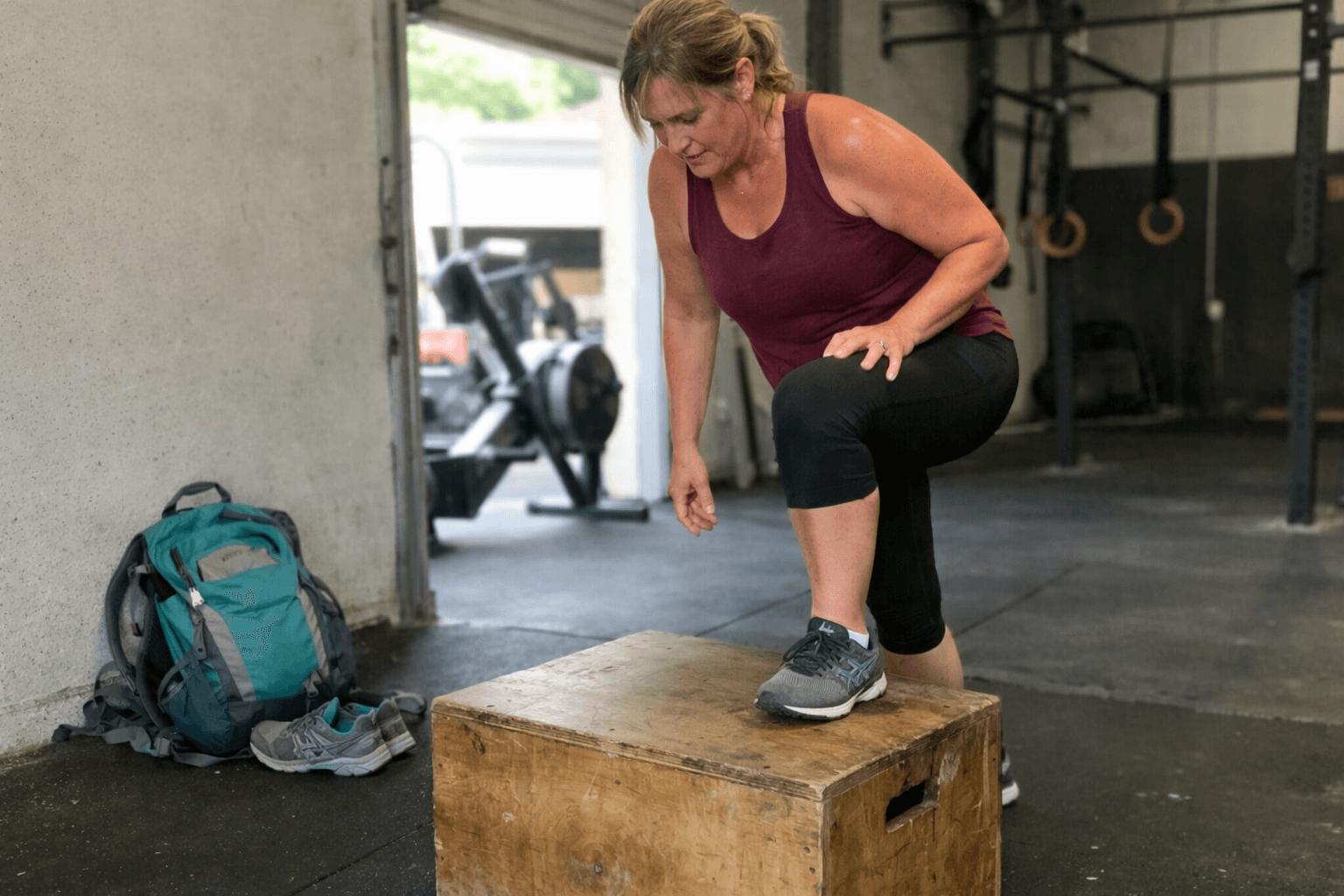
Squats, lunges, split squats, step-ups, and deadlift variations help because they build the kind of lower-body strength that makes uphill sections less miserable and descents less sketchy.
If you want to enjoy more of the local trail system, stronger legs help a lot.
2. Single-leg balance and control
Trails are uneven. One foot lands a little higher. One step hits a root. One side has to catch you when the ground changes.
That is why hiking is not just about brute strength.
Single-leg work helps with stability, coordination, and control when the trail stops being smooth. It also helps expose the side-to-side weaknesses that often show up as knee irritation, hip wobble, or feeling weirdly unsure on rocks and descents.
3. Core strength that actually matters
Not beach-muscle core work. Useful core work.
You want a trunk that can hold position while your legs move, especially if you are carrying a pack, leaning on hills, or spending a long time on uneven terrain. Carries, loaded holds, bracing, and rotational control matter a lot more here than endless crunches.
4. Conditioning that lets you keep going
A hike does not have to be a race to expose weak conditioning.
If you are breathing hard on every climb, stopping way more than you want to, or feeling wiped for the rest of the day after a moderate trail, that is usually your engine asking for more support.
This is where coach-led strength and conditioning work really helps. You build muscle and stamina together instead of trying to patch them in separately.
Strength training makes hiking more fun, not just more impressive
This is the part people usually care about most.
You are probably not trying to become a famous hiker.
You just want to feel good saying yes to local outdoor stuff.
You want to go farther without your hips complaining. You want to trust your footing a little more. You want to do a trail on Saturday and not feel wrecked for the rest of the weekend. You want to keep up with friends, your partner, or your kids without secretly hoping everybody agrees to turn around early.
That is the real payoff.
Strength training expands what feels available to you.
That is a big reason so many of our members care about fitness in the first place. In Duluth, gym fitness is not the end goal. It is support work for real life. Hiking, biking, skiing, paddling, carrying stuff, moving well, and feeling capable year-round.
If that broader outdoor angle is your thing, The Duluth Outdoor Guide: 20+ Activities and the Fitness to Actually Enjoy Them ties it all together.
The mistake a lot of adults make before hiking season
They wait until the weather turns nice and then try to ramp everything up at once.
More hikes. Longer walks. More weekend activity. Maybe a random burst of motivation to “get back into shape.”
That sounds good until your calves are wrecked, your knees are annoyed, and your enthusiasm drops off after two or three outings.
A better move is to build your base first.
That does not mean training like a lunatic. For most adults, two to four strength and conditioning sessions a week is plenty to make summer trails feel better. Especially if you are also walking, biking, or generally moving more once the weather turns.
If you want trail ideas that match that slower build, Best Summer Trails and Walks in Duluth and Best Beginner Hikes in Duluth are good next reads.
What if you have not worked out in years?
Then you are exactly the kind of person this matters for.
A lot of adults assume strength training for hiking is only for already-fit people. It is not.
At CrossFit Aerial, most people are not coming in with a training background. They are working parents, adults who have been away from exercise for a while, and people who want to feel like themselves again. A lot of them already like being outside. They just do not have a consistent strength routine underneath it.
That is why good coaching matters.
You do not need a bootcamp. You do not need to get crushed. You do not need to prove anything.
You need a place that meets you where you are, scales well, and helps you build strength without making the whole thing feel intimidating.
If you want to see what that starting point actually looks like, What to Expect Your First Week at CrossFit lays it out.
This matters even more if you are over 40 or in the Legends crowd
A lot of adults do not care about hiking harder. They care about hiking longer.
They want to keep doing this stuff for years.
That is a strength and durability conversation.
As we get older, balance, muscle mass, recovery, and tolerance for random overuse nonsense do not exactly trend upward by themselves. If you want trails to keep feeling accessible, training helps.
That is why this conversation overlaps so much with CrossFit Over 40 and our Legends 55+ article. The goal is not to become extreme. It is to stay capable.
A simple plan if you want to feel better on the trails this summer
Keep it basic:
- Walk or hike once or twice a week.
- Add two to four strength sessions.
- Focus on legs, balance, carries, and conditioning.
- Build gradually instead of crushing one heroic weekend.
- Stay consistent long enough that it feels normal.
That is it.
You do not need a perfect hiking plan.
You need a body that is a little more ready for the life you already want.
The bottom line
Strength training for hiking in Duluth is not about turning every trail into a performance test.
It is about making the trails feel better.
Stronger legs. Better balance. More gas in the tank. Fewer little aches that make you hesitate before saying yes.
That is the win.
If you want summer hikes, after-work walks, and local trail days to feel more available, strength training is one of the best ways to support that.
And if you want coaching, structure, and classes that actually work for normal adults, not just already-fit people, that is exactly what we do at CrossFit Aerial.
You can see how it works on the pricing page, or start with What to Expect Your First Week at CrossFit.
You do not need to get in shape first.
You just need to start building.
FAQ
Is strength training good for hiking?
Yes. Strength training helps hikers with climbs, descents, balance, pack carrying, and overall durability on uneven terrain.
What exercises help with hiking the most?
For most adults, squats, lunges, split squats, step-ups, carries, deadlift variations, and basic conditioning help the most.
Can beginners start strength training for hiking?
Absolutely. Most adults should start with a scaled program and build gradually, especially if they have not worked out in years.
Does CrossFit help with hiking?
It often does when the coaching and scaling are done well. Strength, conditioning, balance, and functional movements all carry over to hiking and other outdoor activities in Duluth.
How often should I strength train for hiking?
For many adults, two to four sessions a week is enough to make a real difference, especially when paired with regular walking or hiking.