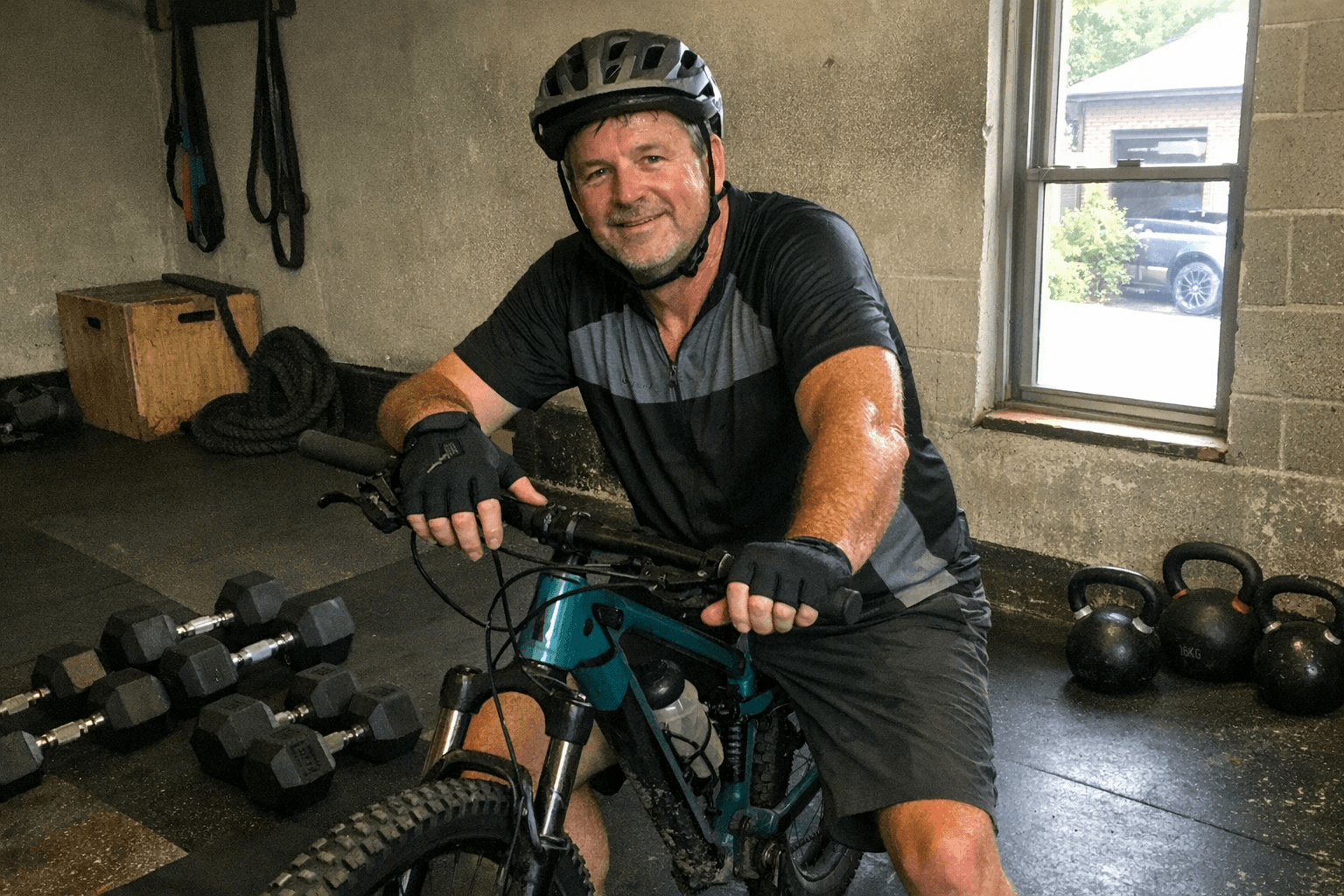
Strength Training for Mountain Biking in Duluth
Friday, May 29th, 2026Strength Training for Mountain Biking in Duluth
If you live in Duluth, mountain biking is never far from the conversation.
Someone is riding Piedmont after work. Someone else is heading to Spirit for laps. Someone is trying to hang on through a long Duluth Traverse day and realizing halfway through that the hard part is not courage. It is legs, grip, and staying solid when you get tired.
That part catches people off guard.
A lot of adults think mountain biking is mostly skill. Skill matters, obviously. But once the ride gets longer, rougher, or hillier, fitness shows up fast. Your hips and legs have to keep producing. Your hands and forearms have to keep hanging on. Your trunk has to stay organized while the trail keeps asking questions.
That is why strength training helps so much.
At CrossFit Aerial, a lot of our members are outdoor people first. They want to ride more, recover faster, feel stronger on climbs, and stop getting smoked by the second half of the ride. They are not trying to become pro riders. They just want their body to keep up with the fun stuff.
If that sounds like you, this is the version that matters.
Why mountain biking feels so physical in Duluth
Duluth trails do not really let you hide.
Even the fun trails ask something out of you. Climbs force your legs to stay on. Descents ask for control, confidence, and enough upper-body endurance that you are not just surviving the last section. Technical features are easier to handle when you are not already cooked.
Usually the limiting factors look like this:
- legs that fade on repeated climbs
- grip that starts slipping late in the ride
- low back or hips getting tight from staying braced
- shoulders and upper back getting tired from rough terrain
- conditioning that is fine for daily life but not enough for long trail efforts
- not enough durability to ride hard and bounce back well
That is why general strength carries over so well. Better fitness gives you more margin.
The goal is not gym strength for its own sake
You do not need to care what you back squat just so you can post a number somewhere.
You need the kind of strength that makes riding feel better.
That usually means:
- stronger legs for climbing and repeat efforts
- a more stable trunk so you can transfer force and stay controlled
- better grip and upper-back endurance for rough descents and longer trail days
- enough single-leg strength and balance to stay athletic on uneven terrain
- conditioning that lets you keep making good decisions when you are tired
This is the same big-picture idea behind our Duluth outdoor guide. Better baseline fitness makes Duluth easier to enjoy.
What helps mountain bikers most
1. Leg strength that actually shows up on climbs
Climbing is where a lot of riders notice the gap first.
If your legs are undertrained, every short punchy hill feels expensive. If they are stronger, you can keep pressure on the pedals without your heart rate spiking quite as fast or your form falling apart.
That is where squats, lunges, step-ups, deadlifts, and sled work help. Not because lifting is the same as riding, but because stronger legs make every pedal stroke a smaller percentage of your total effort.
2. Grip that lasts longer than your first hard section
A lot of riders think they just need tougher hands.
Sometimes they really need stronger hands, forearms, shoulders, and upper back.
Between braking, cornering, holding position, and absorbing trail chatter, your grip gets tested all ride long. Carries, hangs, rows, pulling work, and smart overall strength training help more than people expect.
If you lose your hands late in the ride, the whole trail gets less fun fast.
3. Core strength that keeps you stable, not stiff
Mountain biking is not about walking around flexing your abs.
It is about being able to stay organized through your trunk while the bike moves underneath you. When your core gives out, everything else gets sloppier. Hips wobble. Back gets cranky. Arms work harder than they should.
That is why carries, planks, dead bugs, anti-rotation work, and heavy lifts done well matter. They build the kind of trunk strength that actually transfers.
4. Upper-body durability for rougher rides
Your legs are not the only thing working.
Riding technical terrain in Duluth means your upper back, shoulders, and arms are constantly involved. You are controlling the bike, staying balanced, and dealing with repeated vibration and impact.
Good training builds durability there too. Rows, presses, pulling, and shoulder-stability work all help you stay more comfortable on longer or rougher sessions.
5. Conditioning that makes skills hold up longer
Skill falls apart faster when your engine is not there.
That is true for mountain biking just like anything else. You can know what to do and still stop doing it well once fatigue climbs high enough.
A better conditioning base helps you ride farther, recover between hard sections, and make better choices deeper into the ride.
That matters a lot on long Duluth Traverse days or back-to-back summer weekends.
Where adults usually get stuck
For a lot of normal adults, the issue is not motivation.
It is that they mostly ride when they can, sit a lot for work, and try to get all their fitness from the activity itself. Then they wonder why they feel gassed on climbs, beat up through the shoulders, or weirdly sore for three days after one bigger ride.
The common pattern looks like this:
- weekend activity is high, weekday movement is low
- legs are decent, but hip strength and posture are not
- skill is improving faster than durability
- recovery is not great because the base is not there yet
- they want to do more outside, but their body is running behind their enthusiasm
That is pretty fixable.
Usually the answer is not more random suffering. It is a better base.
You do not need to train like a racer
This is worth saying out loud.
Most adults in Duluth are not trying to podium at anything. They want to ride Spirit, Piedmont, Hartley, Lester, or sections of the Traverse and feel good doing it. They want enough strength to handle climbs, enough stamina to keep going, and enough recovery to want to do it again next week.
That is exactly where general coached training shines.
If your goal is to enjoy outdoor life more, sports training in Duluth and well-scaled CrossFit-style training make a lot of sense. You build strength, conditioning, coordination, and confidence without needing a super niche program.
What a useful training week can look like
For most mountain bikers, it does not need to get complicated.
A solid week might look like:
- two to four coached strength and conditioning sessions
- one to three rides depending on the season and your schedule
- one easy recovery day like a walk, mobility session, or light spin
- enough sleep and food that you are not digging a deeper hole every weekend
That is enough for a lot of adults to feel better on the bike within a couple months.
If you are newer to training, What to Expect Your First Week at CrossFit will give you the realistic version. You do not need to be in shape first.
This matters if you are 40-plus, busy, or starting over
A lot of CrossFit Aerial members are working parents and adults who have not trained consistently in years.
They still want to hike, ride, paddle, ski, and say yes when friends invite them outside. They just need a body that can support that again.
That is one reason we keep publishing guides like Best Beginner Bike Paths in Duluth, Strength Training for Hiking in Duluth, and the broader Duluth outdoor activities guide. The activity is the fun part. Training is what keeps the fun available.
And yes, if you are older, this still applies. Staying strong helps with balance, confidence, recovery, and your ability to keep doing outdoor stuff for a long time.
The bottom line
If you want to enjoy mountain biking in Duluth more, strength training helps.
Not because you need to become a gym person first.
Because stronger legs help on climbs. Better grip helps you stay confident later in the ride. More trunk strength helps you stay stable. Better conditioning helps your skills hold up when you are tired.
That is the real win.
You get more good riding days.
If your body feels like the limiting factor right now, that can change pretty fast with smart training, good coaching, and consistency.
If you want help building that base, you can learn what CrossFit looks like for beginners, see pricing here, or just talk to CrossFit Aerial about where to start.
FAQ
What strength exercises help mountain biking the most?
Squats, lunges, step-ups, deadlifts, rows, carries, planks, and grip work usually help the most because they build leg strength, trunk stability, and durability for longer rides.
Does strength training help with mountain bike climbing?
Yes. Stronger legs and hips make climbs feel less expensive, especially on repeated efforts or punchy Duluth trail sections.
Why does my grip get so tired while mountain biking?
Grip fatigue usually comes from a mix of trail vibration, braking, holding position, and upper-body endurance limits. General strength work for the hands, forearms, shoulders, and upper back often helps.
Is CrossFit good for mountain bikers?
It can be, especially when coaching and scaling are good. Mountain bikers benefit from general strength, conditioning, grip, coordination, and durability.
Do I need a sport-specific mountain bike training plan?
Usually not. Most adults do really well with consistent general strength and conditioning plus regular riding during the season.