Winter Warm-Ups in Duluth
Monday, Jul 13th, 2026Winter Warm-Ups in Duluth
If you live in Duluth, winter has a way of making your body feel older before breakfast.
You wake up stiff. Your ankles feel glued down. Your hips need a minute. Maybe you are heading to work. Maybe you are trying to make it to the gym. Maybe you are getting ready to ski, shovel, or just walk out into the cold without feeling like the Tin Man.
That is where a short warm-up helps a lot.
Not a 45-minute mobility project. Just 10 minutes to get your joints moving, your body temperature up, and your brain out of hibernation mode.
This matters for the adults we see all the time at CrossFit Aerial: working parents getting back into fitness, Legends members who want to keep moving well, and outdoor people who want their body to cooperate before skiing, hiking, or a cold morning walk.
If your main issue is feeling beat up all winter, read Winter Recovery in Duluth. If the bigger problem is getting out the door at all, Too Cold to Leave the House in Duluth? is a better fit.
Why winter mornings feel so stiff
Cold weather does not magically injure you. It just adds friction.
A few things pile up fast in winter:
- you move less first thing in the morning
- your muscles stay tighter when you are cold
- you spend more time sitting
- your ankles, calves, and hips get less casual movement
- your upper back rounds forward from driving, working, and trying to stay warm
That is why a workout can feel terrible in the first ten minutes, then suddenly fine once you are moving.
The problem is not always that your body is broken. A lot of the time, it just needs a runway.
What a good winter warm-up should do
A useful warm-up is simple.
It should:
- raise your body temperature a little
- loosen up the joints that usually feel stuck
- wake up the muscles you need for the day
- help you move better without turning into a workout before the workout
For most adults, the main spots are:
- ankles and calves
- hips
- upper back
- shoulders
- trunk
You do not need twenty drills. You need a few good ones done consistently.
A 10-minute winter warm-up you can actually stick to
Here is a simple version that works well before class, before a ski day, or before work if your body feels locked up.
Minutes 1-2: Get warm
Pick one:
- easy row
- easy bike
- brisk walk on a treadmill
- marching in place or a few trips up and down the stairs
The goal is just to stop feeling like a refrigerator.
Minutes 3-4: Ankles and calves
Do:
- 10 calf raises
- 10 knee-over-toe ankle rocks per side
- 20 to 30 seconds of calf stretch per side
This helps a lot if winter boots, icy sidewalks, skiing, or shoveling tend to make your lower legs feel stiff.
Minutes 5-6: Hips
Do:
- 5 to 8 bodyweight good mornings
- 20 to 30 second hip flexor stretch per side
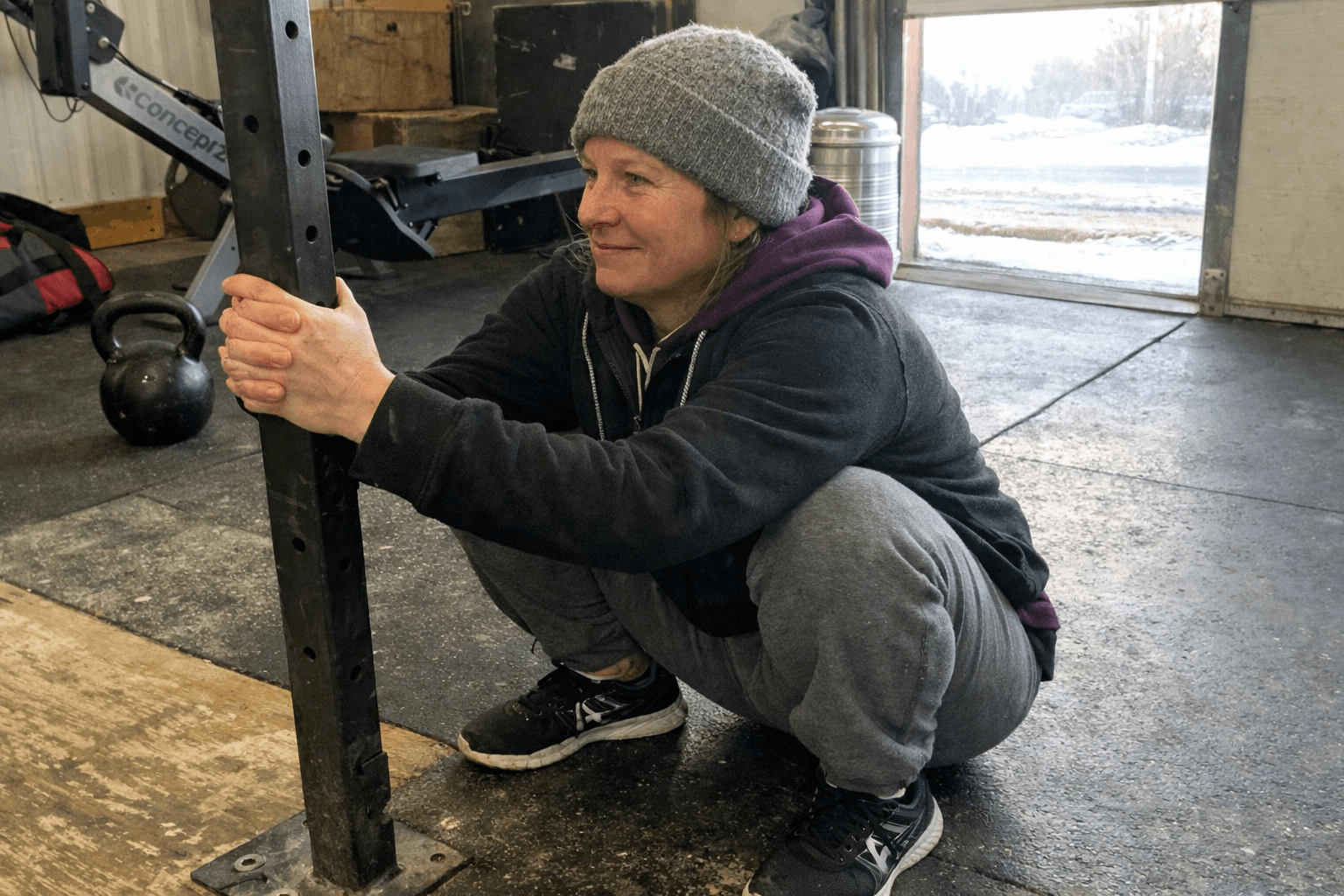
- 5 supported squat pries or deep squat breaths
If your low back feels tight in the morning, hips are often part of the story.
Minutes 7-8: Upper back and shoulders
Do:
- 8 thoracic rotations per side
- 10 band pull-aparts or arm circles
- 20 second dead hang or supported hang if available
This is especially useful if you spend mornings driving, working at a desk, or hunching into the cold.
Minutes 9-10: Wake the whole system up
Pick one:
- 10 air squats
- 8 walking lunges per side
- 20 seconds of a light plank
- 10 light kettlebell deadlifts
Now your body has a better chance of feeling normal by the time the real work starts.
If you only have 3 minutes
Some mornings are chaos. That is real.
If kids are moving slow, work starts early, or you just do not have the margin, do this:
- 20 calf raises
- 10 squat-to-stands
- 8 thoracic rotations per side
- 20 seconds plank
That is enough to change how the first part of your day feels.
Warm up differently depending on what you are doing
A winter warm-up does not have to look identical every day.
Before a gym class
Bias toward:
- ankles
- hips
- shoulders
- a little core work
If you are brand new, this is one reason coaching matters. At CrossFit Aerial, nobody is expected to just walk in cold and figure it out alone. If that whole process feels intimidating, What to Expect Your First Week at CrossFit walks through exactly how we ease people in.
Before skiing, snowshoeing, or a winter hike
Bias toward:
- calves and ankles
- glutes and hips
- trunk stability
If you spend a lot of time outside in winter, Outdoor Activities in Duluth is a good reminder that the gym is not the whole point. The goal is feeling better when you go do real life outside.
Before work if you are just trying to feel human
Bias toward:
- blood flow
- upper back
- hips
- posture
This version is less about performance and more about not carrying morning stiffness into the whole day.
The biggest warm-up mistakes adults make
A few things trip people up here.
1. Waiting until everything hurts
Most people skip warm-ups until they feel terrible, then try to solve it with one heroic mobility session on Sunday.
That usually does not work.
Five to ten minutes most mornings beats the giant reset you never quite get around to.
2. Stretching only the tight spot
If your low back feels tight, it is not always a low-back problem.
Sometimes ankles are stiff. Sometimes hips are locked up. Sometimes your upper back is not moving and the low back is doing extra work.
Think patterns, not just one angry spot.
3. Treating the warm-up like punishment
If the routine is too long, too complicated, or too boring, you will stop doing it.
The best warm-up is the one you will repeat.
Why this matters more for beginners and Legends members
A lot of adults coming back to exercise assume they are just naturally stiff now.
Sometimes age is part of it. Usually inconsistency is the bigger part.
That is true for beginners, working parents, and our Legends crowd too. The good news is that movement quality improves fast when you give it regular reps.
That is one reason the Legends side of the gym works so well. People keep showing up, keep scaling, and keep moving. If you want to see what that looks like, read CrossFit for Legends: Why It's Never Too Late to Start in Duluth.
Nobody needs to be "in shape first" to start taking care of stiffness, strength, or mobility. They just need a place that knows how to meet them where they are.
Warm-ups help, but strength helps more
A warm-up can make your morning feel better.
A stronger body makes your whole winter feel better.
If you have enough strength underneath you, normal winter stuff gets easier:
- getting off the floor
- carrying groceries in boots
- skiing without your hips blowing up
- shoveling without your back feeling cooked
- walking on uneven, snowy ground with more confidence
That is the bigger reason people stick with training. Not because warm-ups are magical. Because over time, they need less rescuing from basic life.
If you are curious what memberships look like, the short version is most adults land somewhere in the $100 to $200 per month range depending on how much coaching and support they want. The full breakdown is on the pricing page.
The bottom line
A good winter warm-up in Duluth does not need to be fancy.
It just needs to get you warm, open up the spots that always feel stuck, and help you move like yourself sooner.
Start with 10 minutes. If that feels like too much, start with 3. Do it often enough that winter mornings stop feeling like something you have to survive.
That is usually where the win starts.
FAQ
How long should a winter warm-up be?
For most adults, 5 to 10 minutes is plenty. The goal is to get moving, not do a second workout.
What if I feel stiff every morning in winter?
That is common in Duluth, especially if you sit a lot, move less in winter, or are getting back into exercise. A short daily warm-up usually helps more than waiting until stiffness piles up.
What joints should I focus on most in winter?
Usually ankles, calves, hips, upper back, and shoulders. Those areas tend to get cranky fastest in cold weather.
Should older adults do warm-ups too?
Yes. Warm-ups are especially useful for older adults and Legends members because they make movement feel smoother and more confident before class or outdoor activity.
Do I need to be fit before starting CrossFit if I feel stiff all the time?
No. Most people start from zero or come back after a long break. Coaching and scaling are built into the process.