CrossFit and Mental Health
Tuesday, Mar 24th, 2026You probably didn't start thinking about CrossFit because of your mental health. Maybe you wanted to lose weight. Maybe your doctor said something about your blood pressure. Maybe your jeans don't fit and you're tired of pretending they do.
But here's what nobody tells you about starting a fitness routine: the physical stuff is almost a side effect. The thing that actually changes your life is what happens between your ears.
The Research Is Pretty Clear
Exercise is one of the most studied interventions for depression and anxiety. A 2023 meta-analysis in the British Journal of Sports Medicine found that physical activity was 1.5 times more effective than counseling or leading medications for reducing symptoms of depression, anxiety, and psychological distress. Not a replacement for professional help — but a powerful addition to it.
And it's not just cardio on a treadmill. Resistance training specifically has been shown to reduce anxiety symptoms by up to 20% and significantly improve depressive symptoms, even in people who weren't clinically depressed when they started.
CrossFit combines both. Strength work, conditioning, and — this is the part the research really lights up about — social connection.
Loneliness Is the Actual Epidemic
The U.S. Surgeon General declared loneliness a public health crisis in 2023. The health effects of chronic isolation are comparable to smoking 15 cigarettes a day. That's not hyperbole. That's the data.
Here's the thing about most gyms: you walk in, put your headphones on, do your thing, and leave. Nobody talks to you. Nobody notices if you disappear for a month. That's fine if you just want equipment access. But it does absolutely nothing for the isolation problem.
CrossFit is built differently. You show up to a class. You suffer through the same workout with the same people. You high-five at the end. Over weeks and months, those people become friends. Real ones. The kind who go hiking with you on weekends and notice when you haven't been around.
We wrote a whole piece about group fitness vs working out alone. The accountability piece is huge. But the mental health piece might be bigger.
Structure When Everything Feels Chaotic
Depression lies to you. It tells you nothing matters, that you should stay in bed, that nobody cares. Anxiety runs the opposite game — everything matters too much, every decision is catastrophic, every moment is a threat.
Both of them thrive in unstructured time.
A CrossFit class gives you one hour where you don't have to make decisions. The workout is written. The coach tells you what to do. You just show up and move. For a lot of people, that hour is the most grounded they feel all day.
Lars, one of our members, took time off from the gym to train for a marathon on his own. He had the discipline to work out at home. The fitness was there. But the motivation tanked and his mood dropped. When he came back to classes, he said he felt stronger within weeks — and not just physically. The community piece was the thing he was missing.
Fitness and Recovery
This one matters and doesn't get talked about enough.
Exercise has real, documented benefits for people in addiction recovery. It reduces cravings, improves sleep, rebuilds routine, and provides a sober social network. A 2019 review in the Scandinavian Journal of Medicine & Science in Sports found that regular exercise significantly reduced substance use and improved mental health outcomes in recovery populations.
CrossFit gyms in particular have become recovery communities around the country. The structure, the accountability, the daily practice of doing something hard — it maps onto recovery principles in a way that's hard to replicate elsewhere.
If this is part of your story, you're not alone. And you don't need to share it with anyone. Just show up.
You Don't Need to Be "Ready"
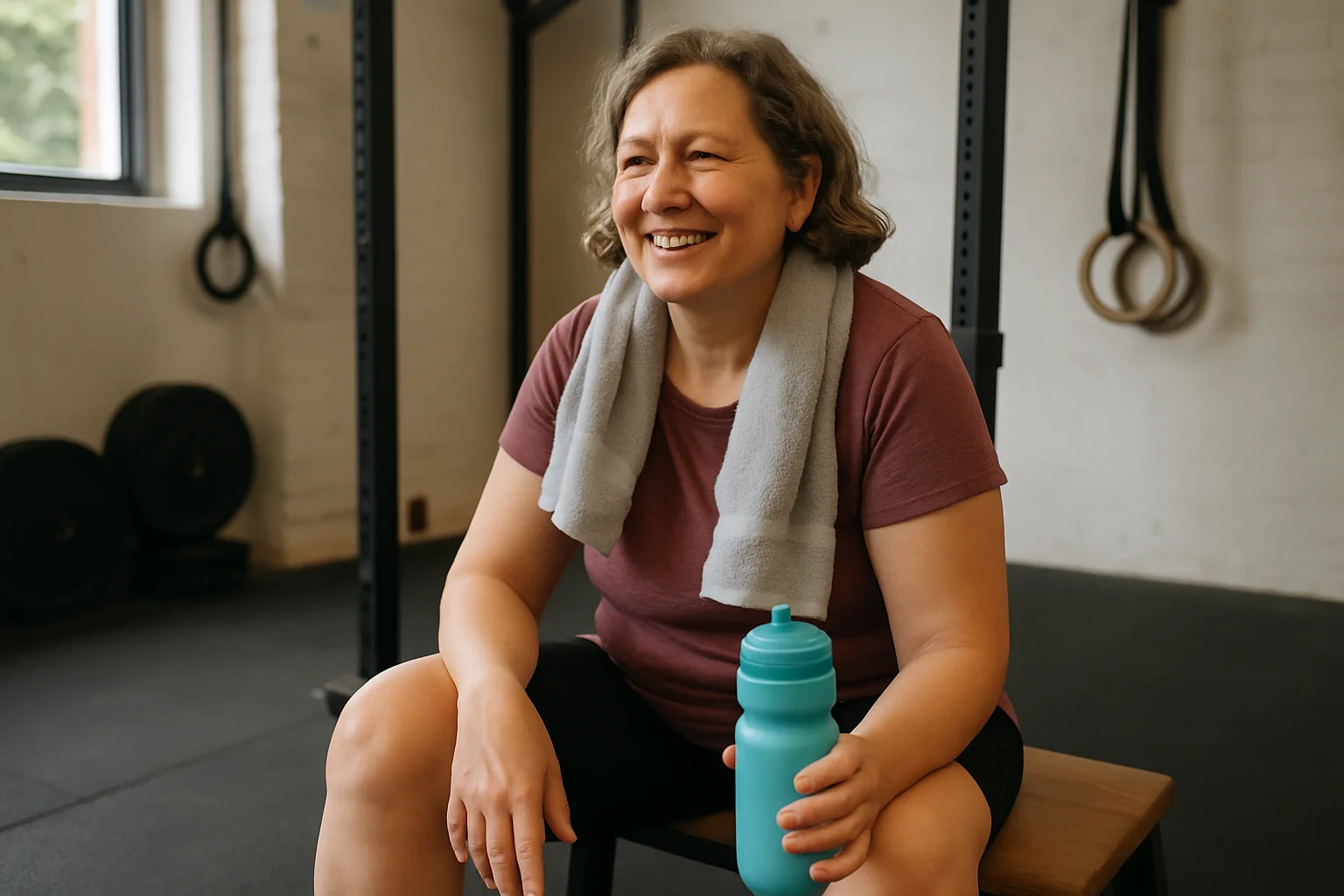
The biggest mental health barrier to exercise is the belief that you need to be in shape to start. You don't. Nobody at CrossFit Aerial showed up knowing what they were doing. Every single person started from zero.
Arvid walked in at 82. Parents juggling three kids' schedules make it work. People who haven't exercised in a decade come through the door every month. The workouts scale to wherever you are right now. That's not a marketing line — it's how the program is designed. Every movement has three levels so you can build from wherever you're starting.
What About When Motivation Disappears?
It will. That's normal. The days you least want to go are usually the days you need it most.
This is where the community thing pays off. When you know people are expecting you, when the coach texts to check in, when someone in class asks where you've been — that's external motivation filling the gap when internal motivation runs dry.
We talk about the power of habits and accountability a lot. Building a routine that doesn't depend on feeling like it is the whole game.
The Duluth Factor
Duluth winters are long. Seasonal Affective Disorder is real up here. The days get short, the cold keeps you inside, and it's easy to spiral into a couch-and-Netflix loop from November through March.
Having a gym to go to — and more importantly, people to go with — makes a massive difference. It's light, movement, human contact, and endorphins on days when the sun sets at 4:30 PM.
And when summer rolls around, the fitness you built carries over. Kayaking, mountain biking, hiking the Superior Trail, paddleboarding on the lake — Duluth is an outdoor playground and actually having the capacity to enjoy it changes how you feel about living here.
This Isn't a Substitute for Professional Help
If you're struggling with depression, anxiety, PTSD, or addiction — please talk to a professional. Therapy works. Medication works. There's no shame in either.
What we're saying is that exercise, and specifically group exercise with structure and community, is one of the most powerful things you can add to whatever you're already doing. The gym isn't therapy. But it can be therapeutic.
Try a Week
Your first week is about getting comfortable, not about crushing a workout. We'll scale everything to where you are. You'll meet people. You'll probably be sore. And there's a decent chance you'll feel something shift — not in your muscles, but in your head.
Check out our pricing or just drop in and see what it's like.
The Research Is Pretty Clear?
Exercise is one of the most studied interventions for depression and anxiety. A 2023 meta-analysis in the British Journal of Sports Medicine found that physical activity was 1.5 times more effective than counseling or leading medications for reducing symptoms of depression, anxiety, and psychological distress. Not a replacement for professional help — but a powerful addition to it.
Loneliness Is the Actual Epidemic?
The U.S. Surgeon General declared loneliness a public health crisis in 2023. The health effects of chronic isolation are comparable to smoking 15 cigarettes a day. That's not hyperbole. That's the data.
Structure When Everything Feels Chaotic?
Depression lies to you. It tells you nothing matters, that you should stay in bed, that nobody cares. Anxiety runs the opposite game — everything matters too much, every decision is catastrophic, every moment is a threat.
What about Fitness and Recovery?
This one matters and doesn't get talked about enough.
You Don't Need to Be "Ready"?
The biggest mental health barrier to exercise is the belief that you need to be in shape to start. You don't. Nobody at CrossFit Aerial showed up knowing what they were doing. Every single person started from zero.
What About When Motivation Disappears?
It will. That's normal. The days you least want to go are usually the days you need it most.