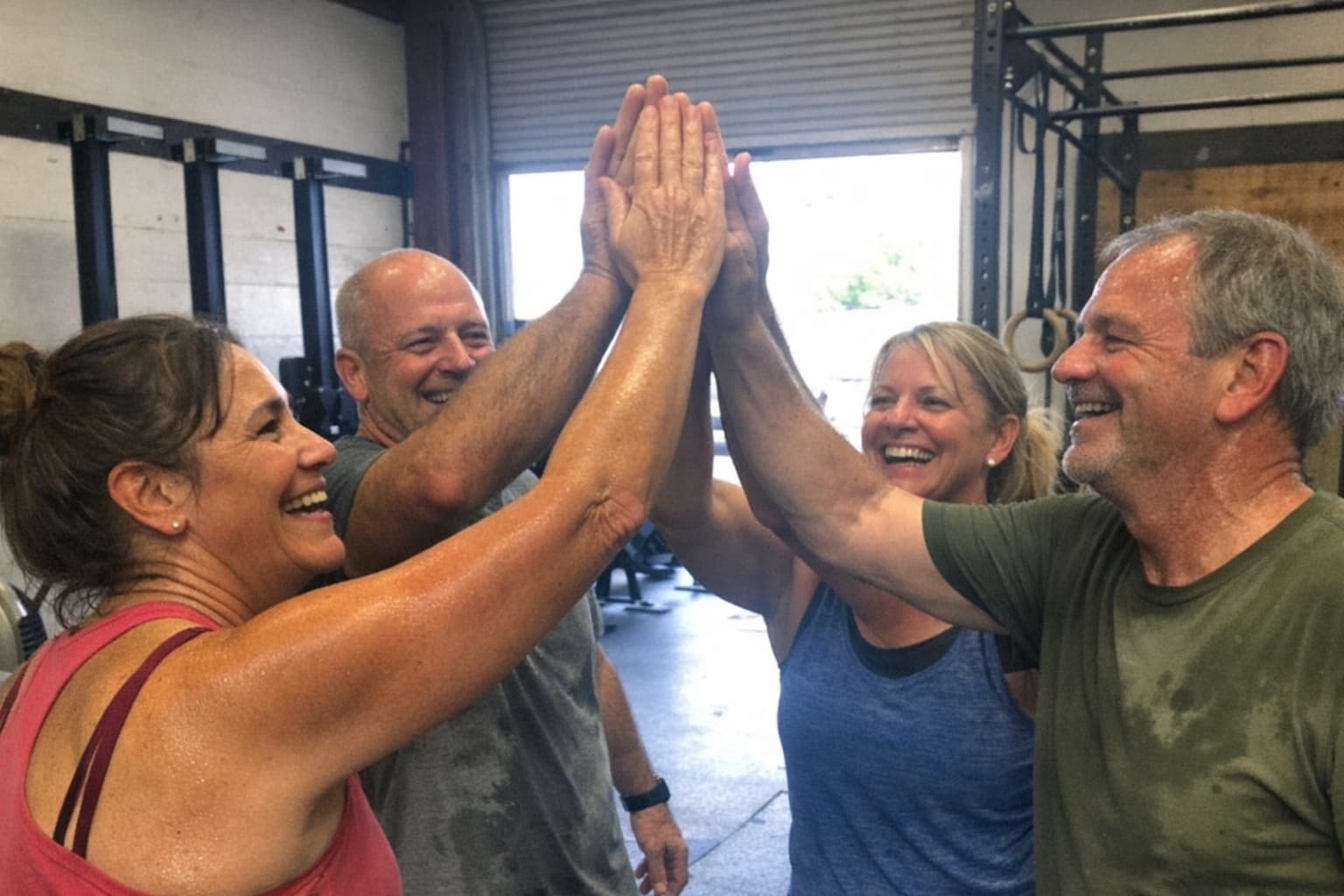
Group Fitness vs Working Out Alone
Tuesday, Mar 10th, 2026You know what a solo gym routine looks like. You walk in, put your headphones on, do some machines, maybe hop on a treadmill for 20 minutes, and leave. Nobody talks to you. Nobody notices if you skip a week. Or two. Or six.
That's not a knock on solo workouts. Some people thrive that way. But most people? Most people quietly stop going.
The stats back this up. Research from the Journal of the American Osteopathic Association found that people who work out in groups report 26% lower stress levels than solo exercisers, even when both groups put in the same amount of effort. A separate study in the International Journal of Behavioral Nutrition found that having a workout partner increases exercise frequency by over 40%.
The accountability factor isn't just nice to have. For most of us, it's the entire reason we stick with it or don't.
The Problem with "I'll Just Go on My Own"
Here's what usually happens. You sign up at a big-box gym because it's cheap and there's no commitment. You go three times the first week, twice the second week, once the third week, and then your membership becomes a recurring charge you keep meaning to cancel.
Nobody noticed you stopped coming. The gym certainly didn't call. Your workout plan was whatever you found on YouTube that morning. And when life got busy, you had zero reason to prioritize it.
This isn't a willpower problem. It's a design problem. Solo gym setups are built for maximum freedom and minimum friction, which sounds great until you realize that friction is sometimes the thing that keeps you moving.
What Changes in a Group Setting
When you walk into a group fitness class, a few things happen that don't happen when you're alone:
Someone is expecting you. The coach knows your name. The people who work out at the same time as you notice when you're not there. That sounds small, but it creates just enough social pressure to get you off the couch on days you're not feeling it.
The workout is already planned. You don't have to decide what to do. You don't have to wonder if you're doing enough or doing it wrong. You just show up, and someone who knows what they're doing tells you what to do. For people who haven't worked out in years, this is huge. One of our members, Dave, put it best: "Just tell me what to do." That's exactly what group coaching does.
You push harder than you would alone. Not because anyone is yelling at you. But because you're working alongside other people, and that low-level energy is contagious. You'll row a little harder, finish a few more reps, and actually complete the workout instead of cutting it short when things get uncomfortable.
Our member Lars experienced this firsthand. He was consistent at the gym for a long time, but took time off to focus on running and marathon training. He worked out on his own at home for a while and slowly lost the motivation. Since rejoining group classes, he says he feels stronger and his mood is noticeably better. That's the community piece at work. It's hard to replicate on your own.
You make friends. This is the part nobody expects. You start coming to the same class time, and you get to know people. At CrossFit Aerial, those gym friendships turn into hiking groups, ski trips, and brewery hangouts. The Duluth outdoor scene is massive, and having friends who are both active and fun makes it easy to stay engaged year round.
"But I Need to Get in Shape Before I Join a Group"
This is the most common thing we hear. And it's completely backwards.
Nobody at CrossFit Aerial showed up in shape. That's the whole point. Our members are working parents who haven't exercised in years, adults over 40 getting back into it, and Legends in their 60s, 70s, and 80s starting from scratch.
Every workout is scaled to your ability. The person next to you might be using a heavier weight or a different movement variation, but you're both doing the same workout. Your first week is designed to ease you in, not bury you.
If this is the thing holding you back, read our piece on why CrossFit isn't as scary as you think. The reality is way different from the Instagram highlight reels.
The Cost Question
Group fitness coaching costs more than a $30/month gym card. That's true. But when you factor in what you actually get, the value math changes fast.
At CrossFit Aerial, your membership includes expert coaching every session, programming designed by professionals, scaling to your fitness level, and a built-in community that actually knows your name. It's closer to having a personal trainer and nutritionist than it is to a gym membership.
We break down the full picture on our pricing page. For most members, it lands between $100 and $200 a month, which is a fraction of what personal training costs on its own.
The real cost question is different anyway. What's it costing you to not work out? The long-term health math is pretty eye-opening.
Who Solo Workouts Actually Work For
Let's be fair. Solo training works great for some people:
- Experienced athletes who already have programming and discipline
- People who genuinely prefer silence and solitude while training
- Anyone with a schedule so unpredictable that group class times don't work
If that's you, keep doing what you're doing. But if you're someone who keeps starting and stopping, who has trouble staying motivated, or who just wants to enjoy working out again, a group setting is probably the missing piece.
What to Do Next
If you're in Duluth and you've been thinking about trying group fitness, come see what it's actually like. Your first week is a low-pressure introduction. No fitness test. No judgment. Just show up and move.
You can check out what to expect your first week or look at pricing and membership options to see what fits.
The hardest part is walking through the door. After that, the group handles the rest.