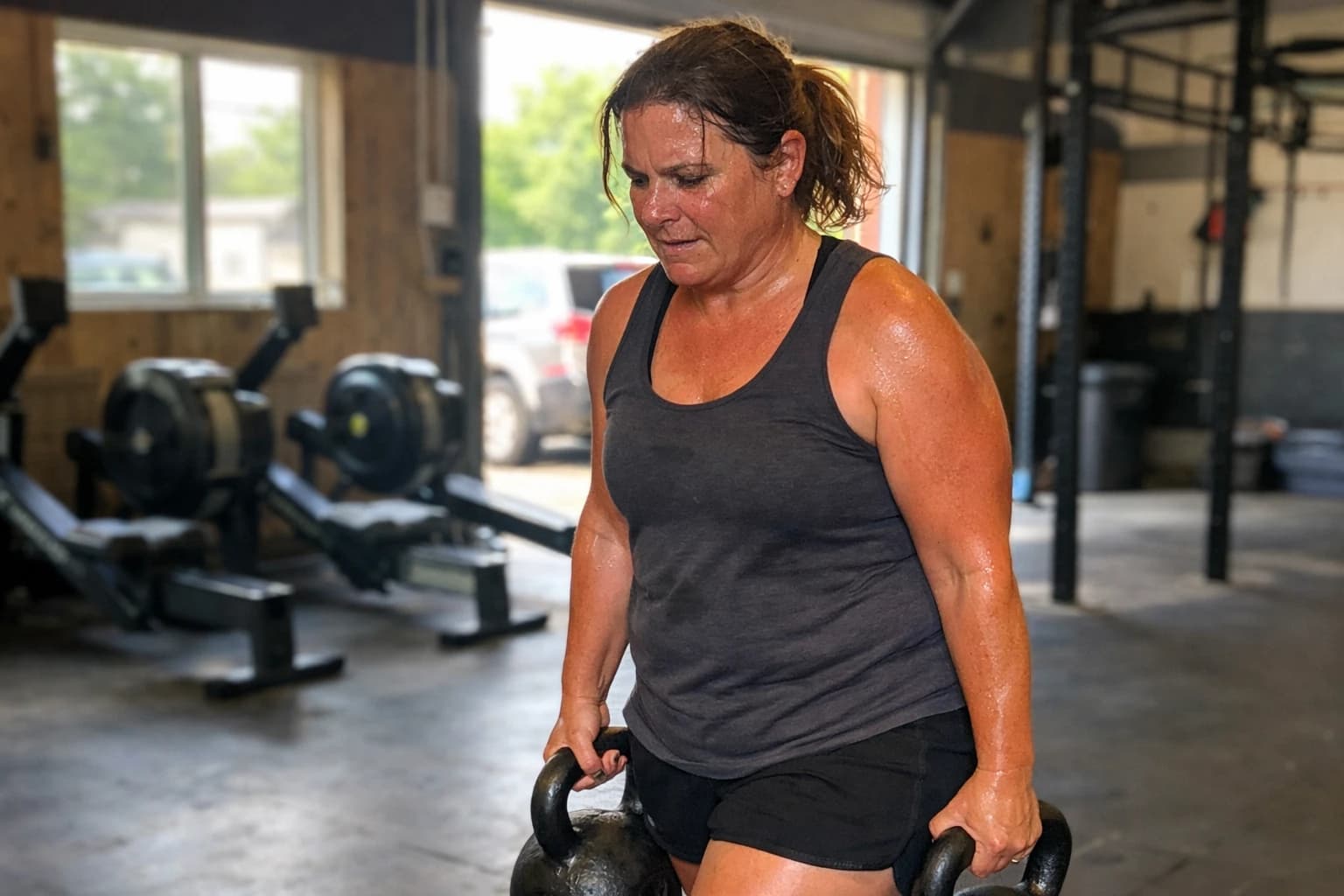
How to Build Grip Strength
Tuesday, Mar 31st, 2026If your grip gives out before the rest of you does, you're not alone.
A lot of adults hit that wall fast.
They can row for a while. Their legs are fine. Their lungs are hanging in there. But then the dumbbells start slipping, the kettlebells feel sketchy, or hanging from a pull-up bar turns into a hard no after a few seconds.
That does not mean you're weak in some grand, permanent way. It usually means one very trainable thing.
Your grip is undertrained.
The good news is grip strength responds really well to consistent practice. You do not need a secret gadget from Instagram. You do not need to crush spring grippers on your couch while watching Netflix for the next six months. You mostly need the right kinds of pulling, carrying, hanging, and patience.
And if you're a normal adult getting back into fitness, grip strength matters more than people realize.
It helps with workouts, sure. But it also helps with carrying groceries, hauling coolers, wrangling mulch bags, dragging hockey gear, lifting kids, paddling, skiing, hiking, and doing all the outdoor stuff Duluth people actually care about.
That is why building grip strength is worth your time.
First, What Grip Strength Actually Means
Most people hear "grip strength" and picture someone squeezing one of those little metal hand grippers.
That is one version of grip.
But in real life, and in CrossFit, grip strength usually shows up in a few different ways:
- Crush grip: squeezing something hard in your hand
- Support grip: holding onto a bar, dumbbell, kettlebell, or carry handle for time
- Pinch grip: holding something with your fingers and thumb, like a plate or thick book
- Hanging grip: staying attached to a pull-up bar, rings, or rig while your bodyweight pulls down on you
For most adults, support grip and hanging grip are the big ones.
They are what show up when you're doing farmer carries, deadlifts, pull-up progressions, kettlebell swings, or trying not to drop every grocery bag in your garage.
That is also why grip work does not need to be fancy. The best grip strength exercises are usually the boring ones that load your hands and ask you to hang on.
Why Grip Strength Matters So Much
There are two reasons.
First, your grip is often the weak link.
You might have the back strength to row more. You might have the leg strength to carry heavier dumbbells. You might be strong enough to work toward your first pull-up. But if your hands quit first, the whole movement stops there.
Second, grip strength has a weird way of affecting confidence.
When your hands feel unreliable, everything feels harder. Pulling feels harder. Carries feel harder. Hanging feels harder. You pace yourself differently because you are waiting for your fingers to fail.
Once your grip improves, a lot of movements stop feeling so intimidating.
That is a big deal for beginners, especially the people we see most often at CrossFit Aerial, working parents, adults starting over, and Legends members who want to stay capable for a long time. If that's you, What to Expect Your First Week at CrossFit lays out how we scale all of this from day one. Nobody is expected to show up already good at hanging from a bar.
The Biggest Mistake People Make
They think grip gets better by accident.
Sometimes it does a little.
If you start training consistently, your hands and forearms will adapt. But if grip is clearly holding you back, hoping it fixes itself is slow.
The better move is to train it on purpose in small doses.
Not with a twenty-exercise forearm day. Just by adding a few smart pieces each week.
That usually looks like:
- carries
- hangs
- rows and pulling work
- controlled barbell or dumbbell holds
- a little patience so your elbows and hands do not get cranky
That last part matters. Grip can improve fast, but the tissues in your hands, wrists, and elbows also need time to adapt. More is not always better.
The Best Grip Strength Exercises for Most Adults
If you want to build grip strength, start here.
1. Farmer carries
This is probably the best place to start.
Grab two dumbbells or kettlebells, stand tall, and walk.
That's it.
Farmer carries are great because they build grip in a way that feels useful right away. They also train posture, core tension, and the kind of whole-body control that matters outside the gym.
A simple starting point:
- pick a pair of weights you can carry with good posture
- walk 20 to 40 yards
- rest
- repeat for 3 to 5 rounds
The goal is not to stagger around like you're moving a refrigerator. The goal is to hold on, stay organized, and keep walking.
And yes, this transfers directly to real life. If you've ever had to carry grocery bags, camping bins, firewood, or a kid in one arm and a bag in the other, you already understand why.
2. Dead hangs
If you want better hanging grip, you need to hang.
Dead hangs are brutally simple.
Grab a bar and hold yourself there.
For beginners, even 5 to 10 seconds can be legit work. That is fine. Start where you are.
A simple progression:
- 3 to 5 hangs
- 5 to 20 seconds each
- full rest between efforts
If a full bodyweight hang is too much right now, use your feet lightly on a box to take some load off. You still get the shoulder and hand exposure without making it miserable.
This is one reason people who are working toward pull-ups often see grip improve fast. The bar forces the issue. If that is part of your goal too, How to Get Better at Pull-Ups is the natural next read.
3. Suitcase carries
This is like a farmer carry with one weight instead of two.
Hold one heavy dumbbell or kettlebell at your side and walk without tipping over like a pirate ship.
This builds grip, yes, but it also trains your core to resist side bending. Great movement. Sneakily hard.
Try:
- 20 to 30 yards per side
- 3 to 4 rounds
4. Bar hangs with active shoulders
Once passive hanging feels better, work on a more active position.
That means you're not just dangling. You're lightly pulling the shoulders down and staying organized through your upper back.
This matters because it looks more like the start of a real pull-up, and it usually feels safer and stronger once you learn it.
5. Heavy holds
You do not always need to walk.
Sometimes just picking up a loaded barbell or heavy dumbbells and standing there is enough.
Examples:
- hold the top of a deadlift for 10 to 20 seconds
- hold heavy dumbbells at your sides for 15 to 30 seconds
- hold kettlebells in the front rack if appropriate
These are simple and effective. They also fit well at the end of a normal strength session.
6. Rows and pulling strength work
Grip is not just fingers. It is connected to stronger pulling overall.
If your upper back is weak, your grip will usually feel worse because everything is working harder and falling apart sooner.
That is why rows still matter here.
Useful options include:
- ring rows
- dumbbell rows
- bent-over rows
- rope pulls if your gym has them
- controlled lat pulldown variations
If you're brand new to all this, CrossFit for Beginners explains why scaling these basics is not a step backward. It is the process.
How to Improve Grip Strength Without Overdoing It
This is where people get themselves in trouble.
They read an article like this, get excited, and start adding hangs, carries, deadlifts, extra pull-up work, and random gripper squeezes every day until their elbows start talking back.
Do not do that.
A better plan is two or three grip exposures per week.
That could look like this:
Option A: beginner plan
Day 1
- farmer carries, 4 rounds of 20 to 30 yards
- dead hangs, 3 rounds of 10 seconds
Day 2
- ring rows, 3 to 4 sets
- suitcase carries, 3 rounds each side
Day 3
- heavy dumbbell hold, 3 rounds of 20 seconds
- bar hang or foot-assisted hang, 3 rounds
That is plenty for most adults.
Keep it simple. Do it consistently. Let the progress stack.
How Long Does Grip Strength Take to Improve?
Usually faster than you think.
If you train it consistently, a lot of people notice a difference in a few weeks.
Not superhero forearms. Just obvious improvement.
Things like:
- you can hold onto dumbbells longer
- hanging doesn't feel instantly awful
- rows feel more stable
- carrying stuff outside the gym feels easier
- your confidence goes up because your hands stop being the first thing to fail
The bigger changes come over a couple months, especially if grip work is paired with normal full-body strength training.
That is the key. Grip improves best when it lives inside a broader training plan, not when it becomes your entire personality.
Does Age Make Grip Strength Harder to Build?
It can make progress a little slower, but it absolutely does not make it pointless.
In fact, grip strength gets more important as you age.
If you want to keep opening jars, carrying luggage, grabbing railings confidently, and feeling capable in daily life, grip matters.
That is a big reason strength work helps both our 40-plus adults and our Legends crowd so much. The goal is not to turn everyone into a climber. The goal is to keep people strong enough to live normally for a long time.
That is the whole spirit behind CrossFit Over 40 and CrossFit for Legends. We are not chasing party tricks. We are protecting independence.
What About Grip Tools, Towels, Fat Bars, and Grippers?
They can help.
They are just not where I would start.
If you are already doing consistent carries, hangs, rows, and heavy holds, then sure, specialty work can add variety.
But most people do not need more variety. They need more consistency.
A lot of times the coolest grip tool in the gym is just a kettlebell you refuse to put down too early.
Grip Strength for Duluth Life
This part matters because CrossFit Aerial members are not training in a vacuum.
A lot of people here want to feel better outside the gym.
They want to hike without feeling smoked. They want to carry packs, bikes, skis, paddles, kids, coolers, and all the weird awkward gear that comes with having an actual life in northern Minnesota.
Grip strength helps with that.
So if you're the kind of person who loves trails, camping, skiing, or just wants to stop feeling flimsy doing basic life stuff, this is useful training. It ties directly into the whole point of our Duluth outdoor guide. Getting stronger in the gym is what makes the fun stuff outside easier to enjoy.
What We Actually Do at CrossFit Aerial
We build grip the same way we build everything else.
Progressively.
That means if someone's grip is the limiting factor, we do not shame them for it or pretend they should already be better. We scale, coach, and give them enough exposure to improve.
That might mean:
- lighter carry variations
- shorter hang times
- foot-assisted hangs
- ring rows instead of full pull-ups
- dumbbell holds after class
- gradual loading over time
The same rule applies here as everywhere else. Meet people where they are, then help them move forward.
That is what people are paying for. Not just access to equipment, but actual coaching, smart progressions, and a room where starting from zero is normal. If you want to see how that works in real life, you can read more on our pricing page.
The Short Version
If you want to build grip strength:
- carry heavy things
- hang from the bar
- do rows and pulling work
- add heavy holds
- train it two or three times a week
- do not overdo it
- stay patient long enough for your hands to adapt
That is the formula.
No magic hack. No weird forearm ritual.
Just consistent work.
And if your grip is currently the thing holding you back, good. Now you know what to train.
First, What Grip Strength Actually Means?
Most people hear "grip strength" and picture someone squeezing one of those little metal hand grippers.
Why Grip Strength Matters So Much?
There are two reasons.
The Biggest Mistake People Make?
They think grip gets better by accident.
The Best Grip Strength Exercises for Most Adults?
If you want to build grip strength, start here.
1. Farmer carries?
This is probably the best place to start.
2. Dead hangs?
If you want better hanging grip, you need to hang.