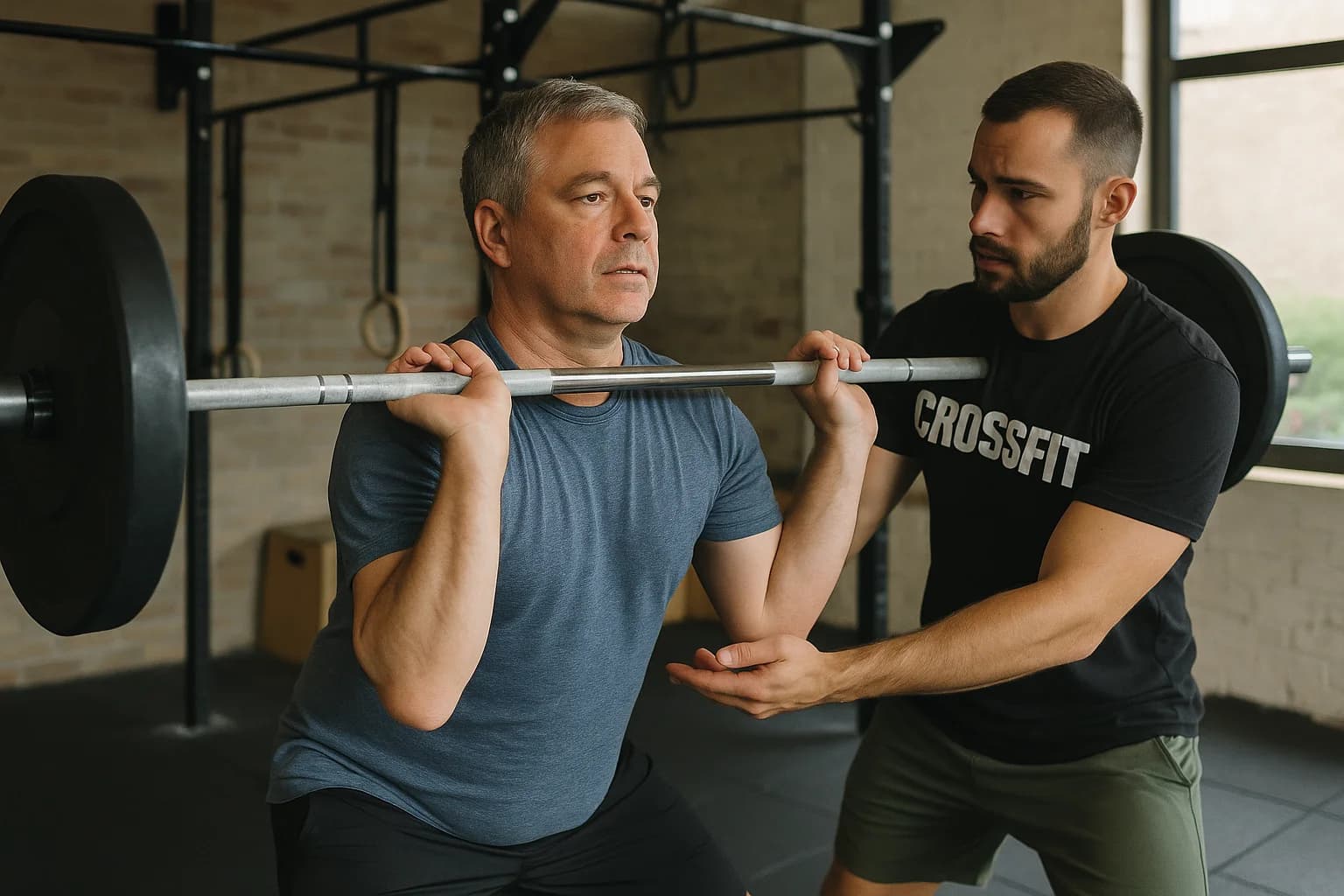
Is CrossFit Dangerous
Tuesday, Mar 24th, 2026Google "is CrossFit dangerous" and you'll find a lot of strong opinions. Most of them are from people who've never actually done CrossFit, watched one viral video of someone doing something stupid, and decided that's the whole sport.
Let's look at what the data actually says. Then let's talk about what separates a good gym from a bad one, because that's where the real answer lives.
What the Research Shows
Multiple studies have looked at CrossFit injury rates, and the numbers might surprise you.
A 2014 study in the Journal of Strength and Conditioning Research found injury rates of about 3.1 per 1,000 training hours. A 2018 systematic review in Sports Medicine reported similar numbers, ranging from 0.27 to 3.3 injuries per 1,000 hours depending on the study.
For context, recreational running has an injury rate of about 2.5 to 12.1 per 1,000 hours. Soccer is around 6-9. Rugby is 15-80. Even recreational weightlifting comes in at 2.4 to 3.3.
So CrossFit's injury rate is comparable to regular weightlifting, lower than most team sports, and right in the same neighborhood as going for a jog. That doesn't match the "CrossFit is dangerous" narrative very well, does it?
The most common injuries are to the shoulder, lower back, and knee, which are the same areas that get injured in pretty much every physical activity. The majority are overuse injuries, not acute trauma. Meaning they come from doing too much too fast, not from a barbell falling on someone.
Where the Reputation Comes From
CrossFit's "dangerous" reputation has a few sources, and it's worth being honest about them.
First, the early days of CrossFit had a culture problem. There was a period where the emphasis was on going hard at all costs. Puking during workouts was sometimes treated as a badge of honor. That culture has largely shifted, especially at well-run affiliates, but the internet has a long memory.
Second, social media. A video of someone doing a terrible-looking snatch with way too much weight gets millions of views. A video of someone doing a perfectly executed snatch with good coaching gets 200. The algorithm rewards the scary stuff, and that shapes public perception.
Third, not all CrossFit gyms are created equal. This is the biggest factor, and it's the one you actually have control over. A gym with undertrained coaches, too-large classes, and an ego-driven culture is going to produce more injuries. A gym with experienced coaches, reasonable class sizes, and a culture that prioritizes movement quality is going to be safe.
What Makes CrossFit Dangerous (When It Is)
Let's be real about the risk factors, because pretending they don't exist doesn't help anyone.
Bad coaching. A coach who doesn't correct form, doesn't know how to scale appropriately, or pushes people beyond their ability is a problem. This is true in CrossFit and it's true at every gym, every yoga studio, and every boot camp. The difference is that CrossFit involves more complex movements, so coaching quality matters more.
Ego. Going heavier than you should because the person next to you is lifting more. Refusing to scale because it feels like a step down. Ignoring pain signals because you want to finish the workout. These decisions cause injuries. Good coaches will check you on this, but ultimately you have to be willing to listen.
Too much too fast. If you go from sitting at a desk 50 hours a week to doing intense workouts five days straight, your body will tell you about it. Smart programming and smart coaches build you up gradually. Starting with a solid intro period makes a big difference.
Ignoring recovery. CrossFit is demanding. If you're not sleeping, not eating enough, and training six days a week, something will break. Rest days exist for a reason. Your coach will tell you this. Listen to them.
What Makes CrossFit Safe (When It Is)
Here's the flip side. When CrossFit is done right, it's not just "not dangerous." It actually makes you more resilient and less injury-prone in the rest of your life.
Think about it. You're learning how to pick heavy things off the floor with proper mechanics. You're building strength in positions that protect your joints. You're improving mobility, balance, and body awareness. These are the things that prevent injuries in everyday life, especially as you get older.
At CrossFit Aerial, safety isn't an afterthought. It's built into how we operate.
Movement screening. Before you jump into regular classes, we assess how you move. Where are your limitations? What needs work? This informs how we scale things for you from day one.
Reasonable class sizes. We keep classes small enough that coaches can actually see everyone. If you're doing a deadlift and your back is rounding, we catch it. If the weight is too heavy for you today, we'll adjust it before it becomes a problem.
Scaling everything. Every single movement in CrossFit has scaled versions. Can't do a pull-up? There's a progression. Not ready for heavy cleans? We'll modify the weight and the movement. Scaling isn't a consolation prize. It's smart training. Shari started in our bootcamp program before moving into CrossFit classes, and that gradual progression was perfect for her.
Coach experience. Our coaches have years of training and coaching experience. They hold certifications, they continue their education, and they know how to read a room. The difference between a good coach and a bad one is enormous, and it's the single biggest factor in gym safety. Here's a deeper look at what our coaches actually do.
Culture. We don't celebrate going to failure on bad form. We celebrate PRs that happen with solid technique. We celebrate consistency. We celebrate the person who scaled appropriately and got a great workout, not the person who went too heavy and gutted through ugly reps.
The Stuff That's Actually Dangerous
You know what has a really high injury rate? Being sedentary. Physical inactivity is associated with heart disease, diabetes, osteoporosis, depression, and a long list of other conditions that will hurt you far more than any workout ever could.
The risk of doing CrossFit (at a good gym, with good coaching) is comparable to going for a run. The risk of doing nothing is dramatically higher. That's not marketing. That's just the data.
Arvid is 83 years old and trains at CrossFit Aerial in our Legends program. He's building strength, maintaining mobility, and staying independent. The "danger" for someone his age isn't exercise. It's the slow decline that comes from not exercising. Every squat he does is an investment in being able to get out of a chair on his own for the next decade.
How to Pick a Safe CrossFit Gym
If you're thinking about trying CrossFit, here's what to look for when evaluating a gym:
Watch a class before you join. Are coaches actively correcting form? Are they interacting with individuals, or just standing at the front yelling "let's go"? How many people are in the class? Is the energy competitive in a fun way or in a reckless way?
Ask about their intro process. A good gym doesn't throw you into a regular class on day one. There should be some kind of onboarding, whether that's an intro course, personal training sessions, or a structured foundations program.
Ask about scaling. If the answer is vague or dismissive, that's a red flag. Good coaches should be able to explain exactly how they'd modify any workout for a complete beginner.
Look at the members. Are they a range of ages and fitness levels? Or is it all 25-year-old former athletes? A gym that serves a diverse membership is usually one that knows how to coach to different abilities. At CFA, we have members from their 40s to their 80s, and everyone trains together safely.
The Honest Answer
Is CrossFit dangerous? It can be, if you go to a bad gym with bad coaching and let your ego make decisions. The same is true for running, skiing, basketball, and pretty much any physical activity.
At a well-run gym with experienced coaches, smart programming, and a culture that values quality over intensity? CrossFit is one of the safest and most effective ways to get fit. The injury rates are right there in the research.
The question isn't really "is CrossFit dangerous." The question is "is this specific gym going to take care of me." And that's a question worth asking before you sign up anywhere, not just CrossFit.
Wondering what walking in actually feels like? Or if you're ready to try, here's what your first week looks like.
What is the injury rate for CrossFit?
Research shows CrossFit injury rates of approximately 0.27 to 3.3 per 1,000 training hours. This is comparable to recreational running (2.5-12.1), regular weightlifting (2.4-3.3), and significantly lower than team sports like soccer (6-9) or rugby (15-80). The most common injuries are overuse-related and affect the shoulder, lower back, and knee.
Is CrossFit safe for beginners?
CrossFit is safe for beginners when done at a gym with qualified coaches and a proper intro program. Good gyms assess your movement, start you with scaled versions of exercises, and gradually increase complexity and intensity. The key is choosing a gym that prioritizes coaching quality and has a structured onboarding process for new members.
What are the most common CrossFit injuries?
The most common CrossFit injuries involve the shoulder, lower back, and knee. Most are overuse injuries rather than acute trauma, meaning they result from doing too much too soon or insufficient recovery rather than a single incident. Proper coaching, appropriate scaling, and adequate rest between sessions significantly reduce injury risk.
Is CrossFit safe for people over 40?
CrossFit can be very safe and beneficial for people over 40 when properly scaled. The strength training, mobility work, and functional movement patterns in CrossFit actually help prevent age-related injuries and maintain independence. Many CrossFit gyms have members well into their 60s, 70s, and even 80s training safely with appropriate modifications.
How do I find a safe CrossFit gym?
Watch a class before joining and look for coaches who actively correct form and interact with individuals. Ask about their intro process for beginners. Ask how they scale workouts. Check class sizes, as smaller classes allow more individual attention. Look for a diverse membership of different ages and fitness levels, which indicates the gym knows how to coach to varying abilities.
Why does CrossFit have a reputation for being dangerous?
CrossFit's dangerous reputation comes from a few sources: early CrossFit culture that emphasized intensity over form, viral social media videos of poor technique, and the reality that not all CrossFit gyms maintain the same coaching standards. The data shows that CrossFit's actual injury rate is comparable to other common physical activities. Gym quality and coaching experience vary significantly between affiliates, which is why choosing the right gym matters.