Strength Training for Curling in Duluth
Monday, Jun 15th, 2026Strength Training for Curling in Duluth
Curling looks calm until you actually play.
Then you spend an end in a partial squat, try to stay balanced on slick ice, lunge out of the hack, sweep hard enough to feel your lungs, and realize this is not just a gentle winter hobby for people in funny shoes.
That is where strength training helps.
Not because you need to turn league night into an elite performance project. You do not. Most adults in Duluth just want better balance, steadier knees, stronger legs, and enough sweep endurance to finish a match without feeling cooked.
If you already liked our pieces on sports training in Duluth, winter fitness in Duluth, or strength training for hockey in Duluth, this fits the same lane. Same city, same winter-body demands, just with more emphasis on balance, repeated lunging, and trunk control.
What curling actually asks from your body
Curling is lower, longer, and more awkward than most people expect.
You are getting into a deep setup, pushing out of one leg, controlling a slide, staying stable while rotating, then sweeping hard in short bursts. Even if you are not trying to be ultra competitive, the sport still asks a lot from your hips, adductors, quads, trunk, and lungs.
That usually shows up as a few weak links:
- knees that do not love the deep bent positions
- hips and groins that feel stiff or underpowered
- balance that disappears the second one leg has to do real work
- low backs that get annoyed from staying low too long
- shoulders and lungs that fade when sweeping gets aggressive
That does not mean curling is too intense for regular adults. It usually means the sport is exposing things daily life does not train very well.
The three big weak links for most adult curlers
1. Single-leg balance and control
A lot of curling happens with one leg doing more than the other.
You push out of the hack, hold a slide, control your line, and try not to wobble all over the sheet. If your hips, feet, and trunk are not doing their job, your knee often ends up handling the mess.
That is why step-ups, split squats, single-leg RDLs, and simple balance work carry over so well.
2. Groin, glute, and quad strength
Curling asks for repeated low positions and controlled force.
If your adductors, glutes, and quads are underbuilt, the sport starts feeling expensive fast. Your slide gets less stable, your knees feel sketchier, and getting low starts to feel like the hardest part of the night.
Split squats, lateral lunges, goblet squats, sled pushes, and carries help build the kind of leg strength that actually transfers.
3. Sweep endurance and trunk stiffness
Sweeping is where people get surprised.
You are bracing through your trunk, driving with your legs, and working your shoulders and lungs at the same time. If your posture folds or your engine drops off, your sweeping gets sloppy in a hurry.
Rows, carries, bike or row intervals, and anti-rotation work help a lot here.
What to train if you want curling to feel better
You do not need some weird curling-only workout.
You need a simple strength plan that covers the positions and energy demands the sport actually uses.
Single-leg strength
Curling rewards control on each side, not just general leg strength.
That is why split squats, step-ups, lunges, and single-leg hinges matter so much. They help clean up imbalances and make you feel more solid in the slide.
Lateral strength and groin work
This is the piece a lot of adults skip until something starts barking.
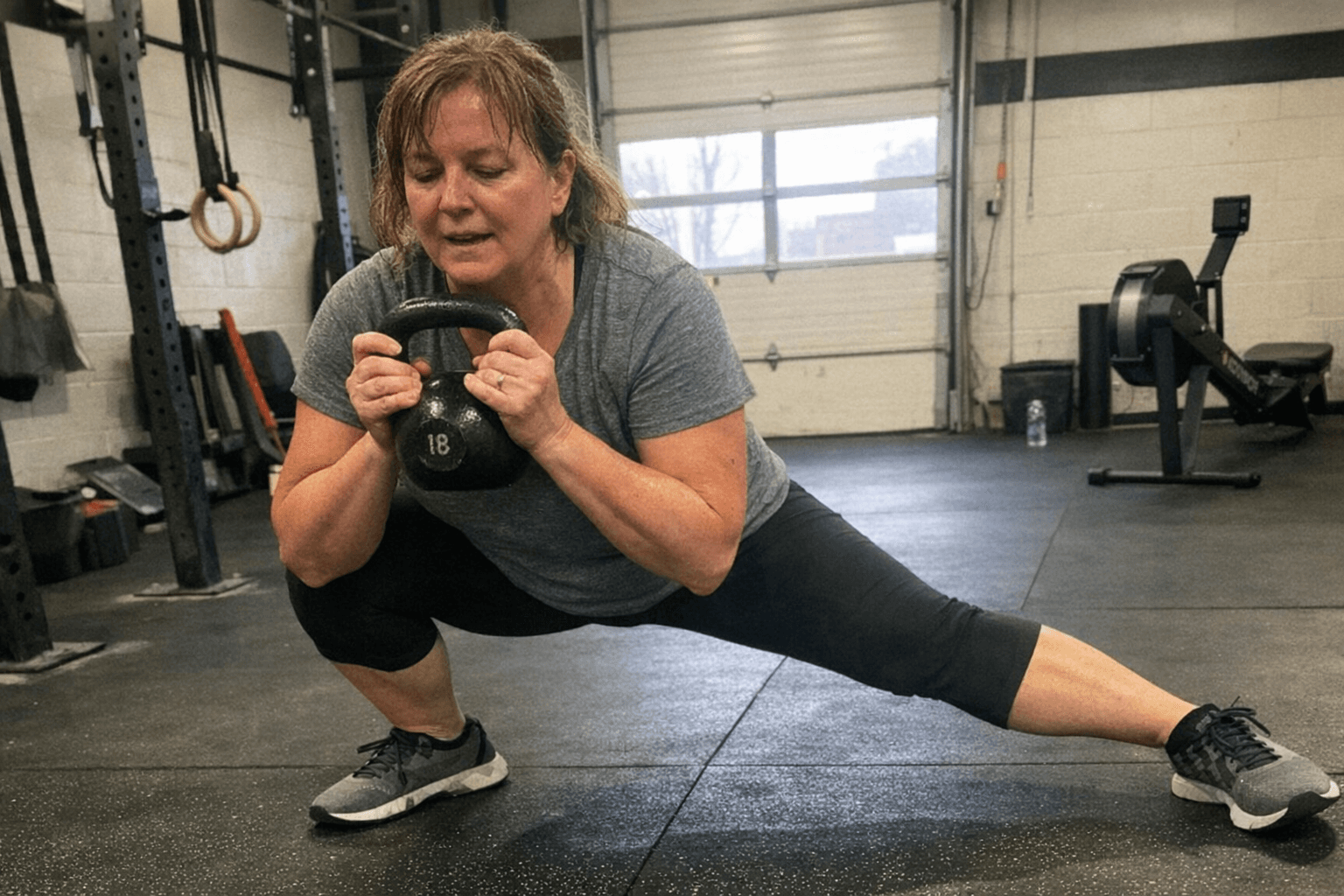
Lateral lunges, Cossack squat variations, skater steps, and adductor-focused work help because curling is not purely straight-ahead movement. You need side-to-side control and enough groin strength to stay durable through the season.
Trunk and upper-back work
Curling is not just a legs sport.
If your trunk gets soft, your posture changes and everything gets sloppier. Carries, rows, planks, dead bugs, and anti-rotation work help you stay more organized when you are low, rotating, or sweeping hard.
Conditioning that matches reality
A curling match is not a sprint, but it is not nothing either.
You need a base level of conditioning plus the ability to handle short pushes when sweeping intensity picks up. That is why bikes, rowers, loaded carries, and interval pieces usually help more than random punishment workouts.
Why this matters for regular adults
Most curlers in Duluth are not building their whole life around training.
They are working, parenting, dealing with winter schedules, and trying to keep doing fun stuff once the weather gets dark and cold. A lot of them have not followed a real strength plan in years. Some have not trained at all beyond normal life and weekend rec sports.
That is fine.
You do not need to be advanced to benefit from this. In fact, you are probably the exact person who benefits most. Two or three smart strength sessions per week can make a huge difference in how stable, strong, and durable you feel on the ice.
If you are worried you need to get in shape first, you do not. Most people at CrossFit Aerial start much closer to zero than they think, and that is normal. What to Expect Your First Week at CrossFit walks through what that ramp-up actually looks like.
If you are 40, 50, or older, this is a longevity play too
Curling is one of those sports people can enjoy for a long time, but only if their body still lets them get into position with confidence.
That is where strength training matters.
It helps you keep muscle, protect your knees, hold your balance, and stay capable enough to keep saying yes to winter activities. That is the same reason our Legends article resonates with so many adults here. The goal is not to prove something. The goal is to keep doing cool stuff for a long time.
A simple week for an adult curler
If you want curling to feel better this winter, a week like this is enough for a lot of people:
- 2 strength sessions built around split squats, hinges, rows, carries, and balance work
- 1 conditioning day with bike, rower, sled, or intervals
- 1 to 2 curling nights depending on league schedule
- regular walking so winter movement does not drop to zero between work and the car
That is realistic for working adults.
It is also much better than doing nothing until your knee gets cranky and then blaming the broom.
Do not ignore fueling and recovery
A lot of adults treat curling like it does not count as exercise, then wonder why late matches feel flat.
Better hydration, a little food before playing, and basic recovery habits go a long way, especially during a busy winter. If you want help on that side too, sports nutrition in Duluth can help tie the whole thing together.
The real goal
The goal is not to become a curling combine athlete.
The goal is to make the sport feel better.
Better balance out of the hack. More confidence in low positions. Stronger sweeping. Less knee and low-back nonsense. More ability to enjoy league night without feeling wrecked the next morning.
That is what good strength training is for.
If you want help building that kind of durability, check our pricing. CrossFit Aerial works with regular adults, including plenty who have not worked out in years, and everything is scaled so you can start where you actually are.