Strength Training for Hunting Season in Northern Minnesota
Monday, Jun 8th, 2026Strength Training for Hunting Season in Northern Minnesota
If you hunt in northern Minnesota, you already know the work starts way before opening morning.
You might be walking uneven ground before sunrise, climbing over deadfall, hauling a pack, dragging a deer, or just spending long hours on your feet in cold weather. Hunting does not care whether you "used to be in shape." It asks your legs, lungs, back, and grip to show up right now.
That is why strength training helps.
Not because you need to turn hunting into some elite performance project. You do not. You just want your body to feel more capable when the season shows up.
A lot of adults around Duluth and northern Minnesota are already trying to stay ready for hiking, skiing, and weekends outside. Hunting fits that same lane. If you liked our articles on strength training for hiking in Duluth and the Duluth outdoor guide, this is the same idea with a little more emphasis on pack work, balance, and carrying awkward loads.
What hunting season actually asks from your body
A lot of people think hunting is mostly sitting.
Sometimes it is. But even then, you still have to get in and out, climb, crouch, carry gear, and move well when the moment comes.
Depending on what and where you hunt, the job usually includes:
- walking hills, brush, mud, and uneven ground
- carrying a pack, layers, water, and gear for a few hours at a time
- getting up and down from awkward positions
- pulling, dragging, or lifting something heavy when the day goes well
- staying steady enough through your trunk and hips that your low back does not get lit up halfway through
That is not bodybuilding. That is practical strength.
The three big physical weak links for most hunters
1. Legs that fade too early
If your legs are not ready, every hill feels steeper and every extra pound in your pack feels heavier.
You do not need marathon legs. You need the kind of leg strength and repeatable endurance that lets you keep moving without your quads and calves turning to mush. Squats, step-ups, lunges, sled pushes, biking, rowing, and loaded carries all help here.
2. A back that gets cranky when the load gets awkward
A lot of people are fine until the carrying turns weird.
A backpack that sits a little off. A deer drag. A lift into a truck bed. Twisting around a blind. That is when a weak trunk and deconditioned posterior chain start talking.
Deadlift patterns, carries, rows, hinges, and core work matter because they build the kind of strength that protects your back when the job is not neat and symmetrical.
3. Gas tank and grip
A lot of hunting fatigue is not one giant effort. It is a bunch of moderate efforts stacked together.
Walk. Stop. Climb. Carry. Wait. Move again. Pick something up. Keep going.
That is why simple conditioning and grip endurance help more than people expect. If your breathing stays calmer and your hands, shoulders, and upper back are not quitting on you, the whole day feels different.
What to train before hunting season
You do not need a fancy hunting-specific program.
You need a simple plan that builds strength, work capacity, and the ability to carry load over time.
Here are the main buckets to focus on.
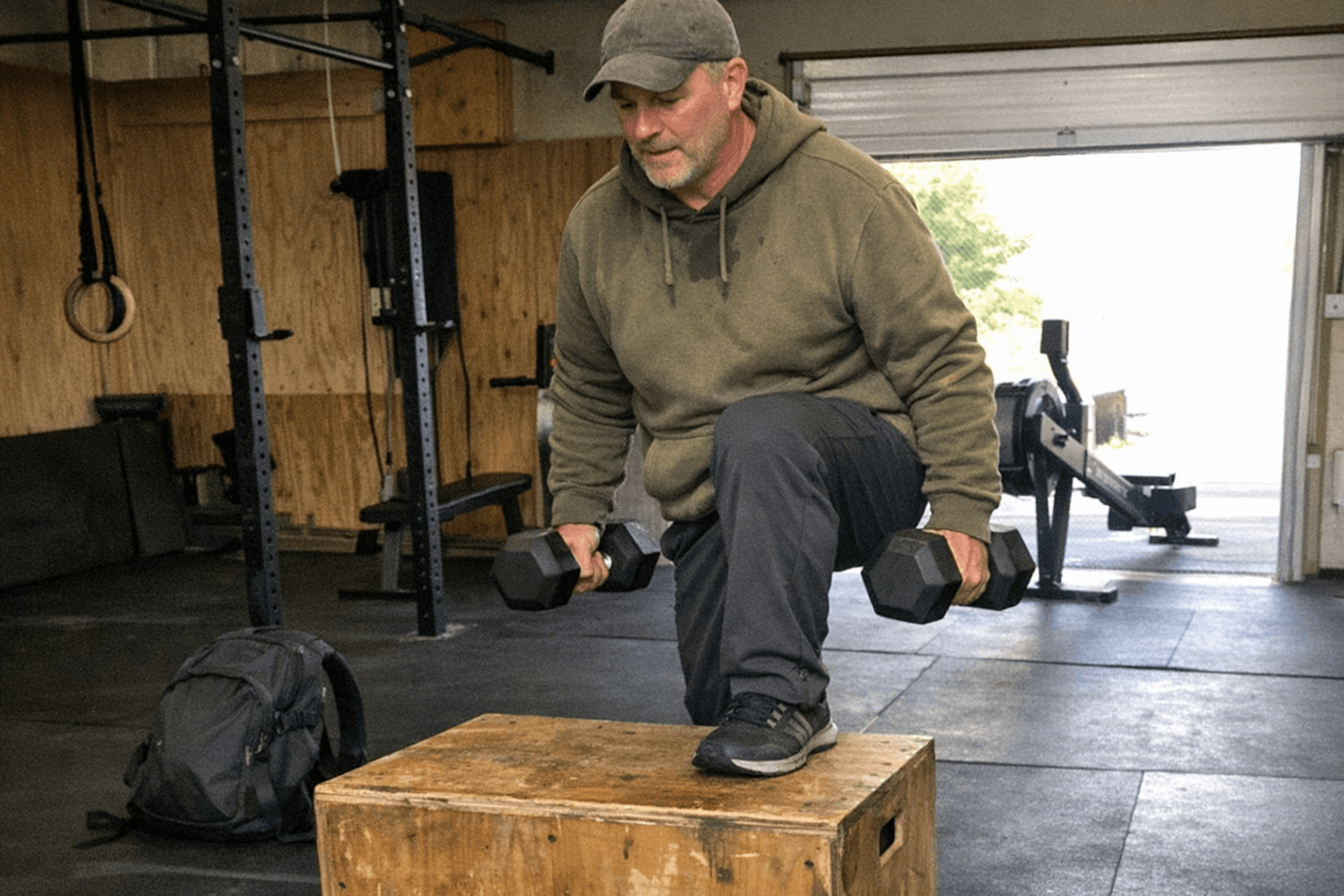
Step-ups and single-leg work
Hunting is full of uneven steps, side hills, roots, rocks, and weird footing.
Step-ups, split squats, lunges, and single-leg balance work help because they train each leg to handle the job without asking your knees and hips to figure it out on the fly.
Carries and pack work
If you never carry anything in training, carrying gear will feel harder than it should.
Farmer carries, front rack carries, sandbag carries, and even simple treadmill or outdoor walks with a loaded pack build exactly the kind of posture, trunk stiffness, and steady effort that shows up in the field.
Hinges and posterior chain
Think deadlifts, kettlebell swings, hip hinges, and glute work.
This is the stuff that helps with lifting from the ground, staying more durable through the low back, and handling the kind of effort that shows up when a hunt turns into actual work.
Easy conditioning
You do not need to redline every workout.
A lot of adults would do well with regular zone 2 work, longer row or bike pieces, incline walks, and the occasional short interval day. The goal is to make a long day outside feel more normal, not to win a suffering contest in September.
If you are 40, 50, or 60 plus, this matters even more
A lot of northern Minnesota hunters are not 23 anymore. That is not a problem.
It just means durability matters more than ego.
This is where strength training shines. Done well, it helps you keep muscle, protect your joints, move with more confidence, and stay capable for the stuff you actually care about outside the gym. That is the same reason we talk so much about longevity and why our Legends article resonates with so many adults who want to keep doing real things for a long time.
You do not need to train like a maniac. You just need to stop letting every fall season sneak up on you.
What a simple week could look like
If you are trying to get ready for hunting season without overcomplicating it, a week like this is enough for a lot of people:
- 2 to 3 strength sessions focused on squats, hinges, presses, rows, and carries
- 1 longer conditioning day like a hike, loaded walk, bike, or row
- 1 shorter interval or mixed effort day
- regular walking so your baseline activity is not near zero
That is one reason group coaching works well for busy adults. You do not have to invent the plan from scratch. You show up, get coached, scale what needs scaling, and keep stacking useful work.
You do not need to "get in shape first"
This part matters.
A lot of adults think they need to spend a few months getting less out of shape before they start training seriously.
That is backwards.
Most people at CrossFit Aerial are not coming in with a big training background. They start where they are, and we scale from there. If you are worried about what the beginning looks like, read What to Expect Your First Week at CrossFit. It covers exactly how the on-ramp feels.
The real goal
The goal is not to become a gym person.
The goal is to make hunting season feel better.
Stronger legs on the hike in. Less low-back nonsense when you carry something awkward. Better stamina when the day gets long. More confidence moving through uneven ground. More ability to keep doing this stuff with your friends, your kids, or your hunting crew as the years go on.
That is what good training is for.
If you want help building that kind of strength, check our pricing or come talk to us. We coach regular adults, including plenty who have not worked out in years, and we build training around real life instead of pretending everybody is already fit.