Strength Training for Late-Fall Hiking in Duluth
Saturday, Jun 20th, 2026Strength Training for Late-Fall Hiking in Duluth
Late-fall hiking in Duluth is great right up until your body reminds you it is not the same as a July walk.
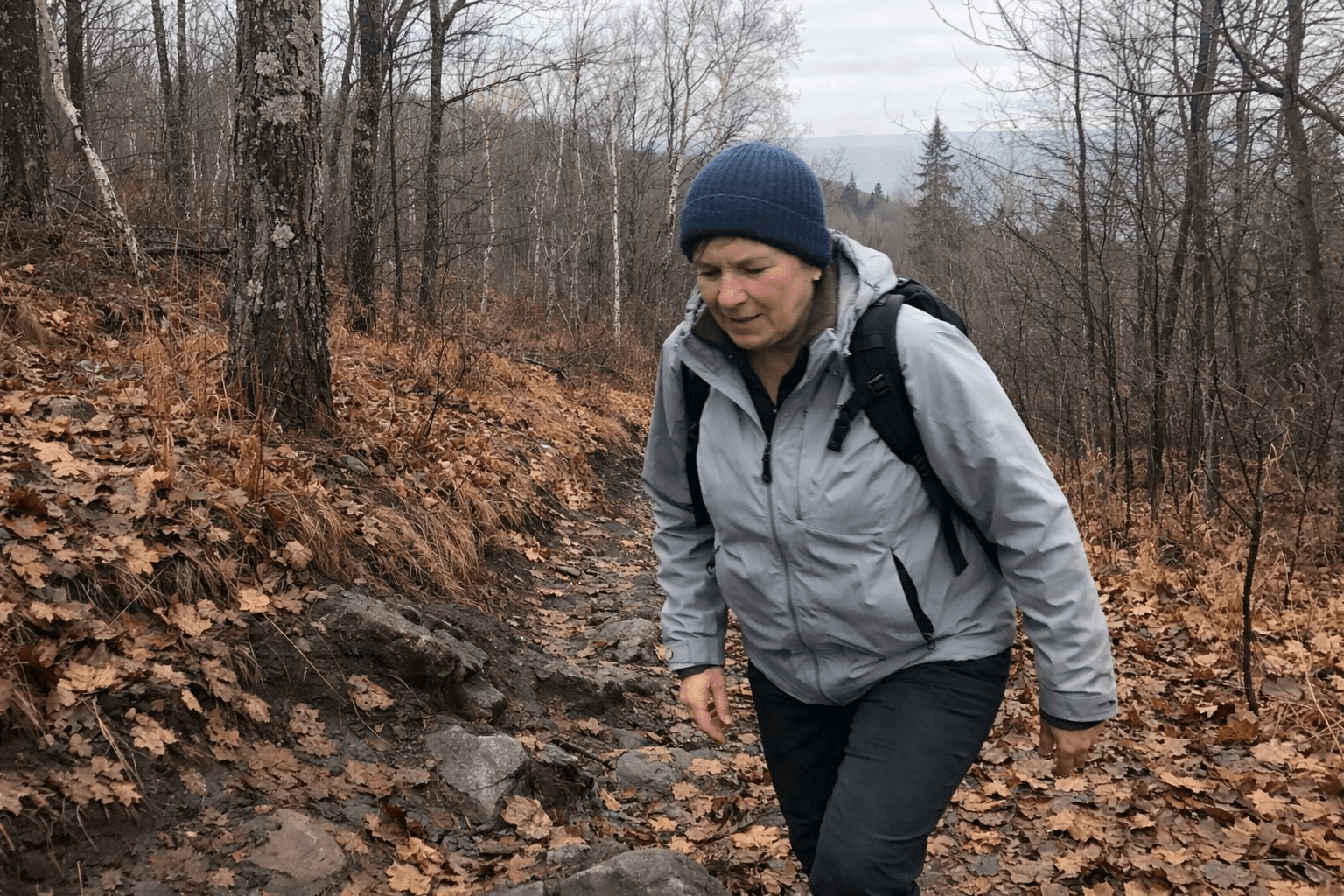
The leaves are down. The dirt is slick. The rocks stay wet longer. Small climbs feel steeper when you are layered up and a little cold. Downhills hit harder. Ankles have to pay attention. And if you have not moved much lately, even a pretty normal trail can feel like more than you bargained for.
That does not mean you need some giant training plan before you head outside.
It just means late-fall hiking asks for a slightly different kind of fitness.
A little more ankle stability. A little more leg strength for downhills. A little more trunk control when the trail gets uneven. A little more cold-weather stamina so an hour outside still feels good at the end.
If you want general route ideas first, start with Best Easy Fall Color Walks Near Duluth, Best Summer Trails and Walks in Duluth, and The Duluth Outdoor Guide. If you want the winter bridge after hiking season starts getting icy, Best Easy Winter Walks in Duluth is the next move.
Why Late-Fall Hiking Feels Different
Summer hiking lets you get away with a lot.
The footing is usually better. Your body is warmer faster. You are not dealing with cold hands, stiff ankles, or trails that turn greasy after one wet day.
Late fall is less forgiving.
Around Duluth, that usually means:
- slick leaves hiding roots and rocks
- muddy or half-frozen trail sections
- more downhill braking because footing is less certain
- colder starts that make hips, calves, and ankles feel stiffer
- wind, layers, and shorter daylight that make you fade faster than expected
That is why people often say the hike itself was fun, but their knees, ankles, or low back were not thrilled the next day.
The Main Physical Demands of Late-Fall Hiking
You do not need to train like a mountain athlete.
You just want a body that handles normal Duluth terrain without feeling sketchy.
1. Ankles that can react on uneven ground
Late-fall trails are messy.
A stable ankle matters because you are constantly making little adjustments on leaves, roots, wet rock, and packed dirt. If your feet and lower legs are weak or stiff, every weird step feels more dramatic.
2. Legs that can absorb downhill work
A lot of people think hiking is mostly uphill fitness.
It is not.
Downhill is where your quads usually start complaining, especially in late fall when you are braking more and trusting the ground less. If your legs are not ready for that, your knees take more of the stress.
3. Trunk control when the trail gets awkward
You do not need a six-pack for hiking.
You do need enough core and hip control to stay balanced when you step around mud, climb over rocks, or carry a small pack while moving over uneven ground.
4. Enough general stamina to stay steady in the cold
Cold weather takes a little more out of people than they expect.
Not because the hike is suddenly extreme, but because your body is working a bit harder the whole time. If your baseline conditioning is low, late-fall hiking can turn into one of those outings that sounds fun in theory and feels draining in real life.
The Best Strength Work for Late-Fall Hiking
You do not need dozens of exercises.
A few basics done consistently go a long way.
Split squats or step-ups
These build the kind of single-leg strength hiking actually uses.
They help with:
- climbing short hills
- stepping onto rocks or roots
- controlling your body on uneven ground
- reducing that cooked-leg feeling on longer descents
If you are newer to training, start with bodyweight. If that gets easy, hold light dumbbells.
Romanian deadlifts or regular deadlift variations
These help your glutes and hamstrings do more of the work.
That matters for hiking because it takes pressure off the knees and gives you more support through the hips and trunk, especially when the trail is slippery or you are carrying a backpack.
Lateral lunges
Late-fall trails are not straight-line environments.
You are adjusting sideways, stepping around puddles, catching yourself on weird angles, and trying not to eat it on wet leaves. Lateral strength helps more than people think.
Calf raises and tib raises
This is the boring stuff that pays off.
Stronger lower legs help with ankle stiffness, foot fatigue, and those small stabilizing demands that pile up over the course of a hike.
Carries
Farmer carries, suitcase carries, or even just walking with moderate weight are great for trunk control, posture, and hiking stamina.
They are simple. They work. And they feel a lot like real life.
If You Only Have 20 Minutes, Do This
If you want a simple late-fall hiking strength circuit, start here 2 times per week:
- 8 to 10 step-ups per leg
- 8 Romanian deadlifts
- 6 to 8 lateral lunges per side
- 20 to 30 calf raises
- 30 to 45 seconds of a farmer carry
Rest a little, then repeat for 2 to 4 rounds.
Nothing fancy.
Just enough to build more confidence on hills, descents, and uneven ground.
Do Not Ignore Downhill Strength
This is the part a lot of adults miss.
They think if they can walk uphill without getting winded, they are ready.
Then the downhill starts.
Late-fall descents in Duluth can feel rough because you are not only lowering yourself, you are doing it while trying not to slide. That is a lot of eccentric work through the quads and hips.
A few things help:
- slow step-downs from a box or bench
- split squats with a controlled lowering phase
- walking lunges at a steady pace
- shorter hikes done more often instead of one huge weekend effort
If your knees usually bark more on the way down than on the way up, this is probably the missing piece.
Mobility That Actually Helps Before a Hike
You do not need a 30-minute warm-up.
But going from desk chair to trailhead is not ideal either.
Before a late-fall hike, a few minutes of this can help:
- ankle rocks against a wall or bench
- calf stretch
- hip flexor stretch
- bodyweight squats
- a brisk 3 to 5 minute walk before the steeper part starts
That is usually enough to stop the first 15 minutes from feeling like your joints just woke up angry.
What If You Have Not Worked Out in Years?
Then this article is still for you.
A lot of adults around here think they need to get in shape first before they do anything structured.
That is backwards.
At CrossFit Aerial, plenty of members start from zero. Working parents. Adults in their 40s, 50s, and beyond. Legends members. People who want to keep hiking, skiing, walking, biking, and doing normal Duluth outdoor stuff without feeling beat up by it.
Nobody expects you to show up already fit.
That is the whole point of coaching and scaling.
If you are nervous about how the on-ramp works, read What to Expect Your First Week at CrossFit. It walks through what starting actually looks like.
How This Fits Real Duluth Life
This matters because most people here are not training just to train.
They want to feel better doing the stuff they already care about.
Late-fall hiking overlaps with a lot of normal Duluth life:
- weekend walks with family
- quick trail outings before winter really settles in
- hunting season miles on uneven ground
- walking the dog on hillier routes
- staying ready for winter activities instead of starting from scratch in January
That is one reason strength work carries over so well. It is not just about hiking better. It is about moving through fall and winter with more confidence.
You see the same thing in our guides on Strength Training for Hiking in Duluth, Strength Training for Snowshoeing in Duluth, and Low-Pressure Winter Activities in Duluth.
How Much Fitness Do You Need?
Less than you think.
You do not need to train six days a week. You do not need to become a runner. You do not need to turn every hike into an athletic event.
For most adults, 2 to 4 coached workouts a week plus some walking is enough to make outdoor life feel noticeably easier.
That is also why CrossFit can be such a good fit for working parents and adults coming back after a long gap. You get coaching, scaled workouts, accountability, and programming without having to figure it all out yourself. Most people around here are somewhere in the $100 to $200 per month range depending on what kind of support they want. The real value is not access to equipment. It is having structure, coaching, and community built in. If you want the exact breakdown, head to the pricing page.
The Goal Is Not to Dominate the Trail
The goal is simpler than that.
You want to head out on a cold Saturday, hike a local trail, handle the downhills, keep your footing, and come home feeling good enough to do it again next week.
That is real fitness.
If you want help building it, CrossFit Aerial can help you get stronger for hiking, winter, and regular life in Duluth without needing to show up already in shape.
Start with What to Expect Your First Week at CrossFit. If you want a lower-pressure outdoor starting point first, Best Easy Fall Color Walks Near Duluth is a good place to begin.
FAQ
What muscles help most with late-fall hiking?
For late-fall hiking, the biggest helpers are your glutes, quads, calves, and trunk. Those muscles help you climb, control descents, stay balanced on uneven ground, and handle slick conditions more confidently.
How do I prepare for downhill hiking without knee pain?
Build leg strength with split squats, step-downs, lunges, and deadlift variations. Downhill hiking is often harder on the knees because your quads have to control the lowering phase for longer, especially on slippery late-fall trails.
Is late-fall hiking harder than summer hiking?
Usually, yes. Late-fall hiking often means slick leaves, wet rocks, colder starts, and less forgiving footing. It does not have to be extreme, but it usually asks for better balance, more downhill strength, and a little more stamina.
Can beginners train for hiking at CrossFit?
Yes. Beginners can absolutely train for hiking at CrossFit, especially when workouts are coached and scaled. A lot of adults use CrossFit Aerial to build the strength and conditioning that makes hiking, skiing, biking, and everyday movement feel better.