Strength Training for Snowshoeing in Duluth
Sunday, Jun 14th, 2026Strength Training for Snowshoeing in Duluth
Snowshoeing sounds gentle until you actually do it.
Then you hit a hill, the snow gets soft, your hips start working overtime, and you realize this is not just a cute winter walk with nicer scenery.
If you live in Duluth, you probably already know the appeal. Snowshoeing is one of the easiest ways to stay outside all winter without needing elite skill, lift tickets, or a perfect weather window. It is also a lot more physical than most people expect.
That is where strength training helps.
Not because you need to turn a peaceful winter hobby into a performance project. You do not. You just want your legs, lungs, and low back to hold up better so the outing stays fun.
If you liked our pieces on winter fitness in Duluth, strength training for skiers in Duluth, or the Duluth outdoor guide, this fits right into that same lane.
What snowshoeing actually asks from your body
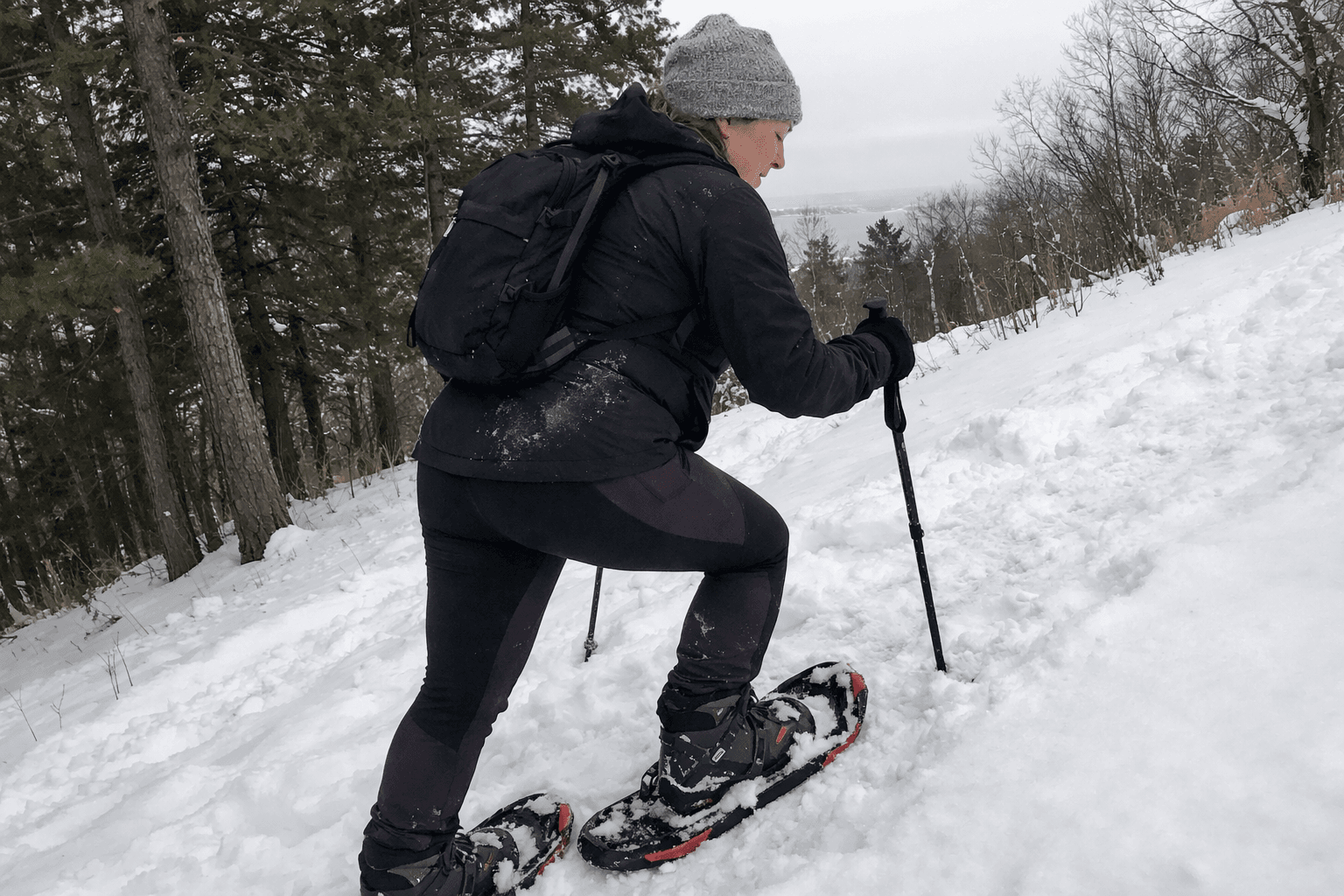
Snowshoeing is basically hiking with more resistance and worse footing.
You are lifting your feet through snow, dealing with uneven ground you cannot always see, climbing short hills, and staying upright on surfaces that want to slide around under you.
That usually exposes a few things fast:
- legs that burn out earlier than expected
- hips and glutes that are not used to repeated uphill work
- ankles that feel shaky on uneven surfaces
- low backs that get cranky when the snow is deep or the trail gets sloppy
- lungs that are fine on flat ground and suddenly not so fine on climbs
That does not mean you are out of shape. It usually means snowshoeing asks for a mix of balance, leg endurance, and steady conditioning that normal daily life does not train very well.
The three big weak links for most adults
1. Single-leg balance and trail stability
Winter trails are not clean gym floors.
Even easy routes make you deal with roots, packed snow, hidden dips, side angles, and little corrections every few steps. If your hips and ankles are not doing their job, your knees and low back often end up handling the mess.
That is why step-ups, split squats, lunges, and single-leg balance work carry over so well.
2. Glutes and uphill endurance
Snowshoeing gets real the second the trail tilts up.
You need enough leg strength to keep climbing without turning every hill into a survival march. Glutes, quads, and hamstrings do a ton of the work here. If they are underbuilt, your calves and low back tend to start complaining first.
Squats, sled pushes, rows, biking, and loaded carries all help build that steady uphill engine.
3. Core strength that keeps you from folding
A lot of people think of core work as abs.
For snowshoeing, it is more about posture and control. Can you keep your trunk steady while breathing hard, moving uphill, and navigating soft ground? Can you keep your ribs stacked over your hips instead of turning every climb into a low-back grind?
Carries, deadlift variations, rows, and anti-rotation work help a lot here.
What to train if you want snowshoeing to feel better
You do not need a snowshoe-specific workout full of gimmicks.
You need a simple strength plan that supports what winter trails actually demand.
Step-ups and split squats
These are great because they build the exact kind of leg strength snowshoeing asks for. You are driving into the ground, controlling each side independently, and getting stronger in the positions that show up on hills.
Carries and trunk work
Farmer carries, front rack carries, and sandbag carries build posture, grip, and the kind of steady midline strength that helps on longer outings.
Conditioning that stays honest
Snowshoeing is usually not an all-out sprint. It is steady work with occasional spikes when the hill shows up.
That is why incline walking, rowing, biking, and mixed longer intervals usually help more than random high-heart-rate chaos. You want a better engine, not just a sweatier hour.
Lateral and ankle stability work
A little side-to-side training goes a long way in winter.
Lateral lunges, skater steps, and simple balance work help because snow and packed trails do not always let you move in a perfectly straight line.
Why this matters so much for regular adults
Most people snowshoe because they want a winter activity that feels accessible.
That makes sense. A lot of CrossFit Aerial members are working parents, busy professionals, or adults getting back into fitness after a long layoff. They are not chasing extreme sports. They just want to enjoy Duluth without feeling limited by their body.
That is why strength training matters. It makes outdoor life more available.
You do not need to be advanced. You do not need to get in shape first. Most people here start much closer to zero than they think, and that is normal. If you are worried about the ramp-up, What to Expect Your First Week at CrossFit shows how we actually ease people in.
If you are 40, 50, or older, this is a longevity play too
Snowshoeing is one of those activities that sounds recreational until you realize it asks for balance, joint confidence, leg strength, and enough conditioning to keep moving in the cold.
That is exactly why it is worth training for.
The goal is not to become hardcore. The goal is to keep being the kind of person who can say yes to winter. That is the same reason our Legends article resonates with so many adults. Staying capable matters.
A simple week that helps
If you want snowshoeing to feel easier this winter, a week like this is enough for a lot of adults:
- 2 to 3 strength sessions with squats, hinges, split squats, rows, and carries
- 1 longer conditioning day like a walk, row, bike, or easy steady circuit
- regular walking so winter movement is not a total shock to the system
- optional outdoor days when weather allows, even if they are short
That is realistic.
It also works better than waiting until January, getting smoked on one hilly outing, and deciding your knees are the problem.
The real goal
The goal is not to become obsessed with training.
The goal is to make snowshoeing feel lighter.
More confidence on uneven trails. Better legs on the climbs. Less low-back nonsense. More capacity to spend time outside with friends, your partner, your family, or just by yourself when winter starts closing in.
That is what good strength training is for.
If you want help building that kind of base, check our pricing. CrossFit Aerial works with regular adults, including plenty who have not worked out in years, and everything is scaled so you can start where you actually are.