Strength Training for Paddling in Duluth
Thursday, May 28th, 2026Strength Training for Paddling in Duluth
Kayaking and paddle boarding look chill from a distance.
Then you get out on the water for an hour and realize your shoulders are cooked, your grip is fading, and your low back is way more involved than you expected.
That is pretty normal.
A lot of Duluth adults spend spring and summer getting back into outdoor stuff they love, then remember fast that paddling is easier to enjoy when your body is actually ready for it.
At CrossFit Aerial, we see that with outdoor-active adults all the time. Most people do not need some hyper-specific paddling program. They usually need better general strength, trunk stability, shoulder durability, and enough conditioning that a long paddle feels fun instead of like survival mode.
If you want the broad version of that idea, start with The Duluth Outdoor Guide. If you want the paddling-specific version, start here.
Why paddling feels harder than people expect
Paddling is repetitive.
You are doing a lot of the same motion over and over while trying to stay stable through your trunk and hips. That means small weak links show up fast.
Usually it is one or more of these:
- shoulders that get tired early
- grip that fades before the rest of you does
- upper back strength that is not there yet
- a core that gets loose as you fatigue
- hips that get stiff from sitting in one position
- conditioning that is fine for daily life but not for a long effort on the water
This is part of why people can be generally active and still feel surprisingly beat up by kayaking or SUP.
Paddling is not just an arm workout. It is a full-body endurance and control problem.
The goal is not bodybuilding shoulders
Most adults do not need a super niche paddling plan.
They need a body that can handle repeated pulling, posture, rotation control, and steady output without getting cranky.
That usually means improving:
- upper back and lat strength
- shoulder stability
- core stiffness and rotation control
- single-leg balance and hip strength
- grip endurance
- aerobic capacity
That is the same reason broad sports training in Duluth works well for a lot of outdoor athletes. You build a stronger, more capable base, then your summer activities feel better because your body has more margin.
If you spend a lot of the summer bouncing between hikes, bikes, and water days, Summer Strength Training for Outdoor People is a good companion read too.
What strength training helps most for paddlers
If your goal is to feel better for kayaking, canoeing, or paddle boarding around Duluth, these are usually the big buckets.
1. Pulling strength
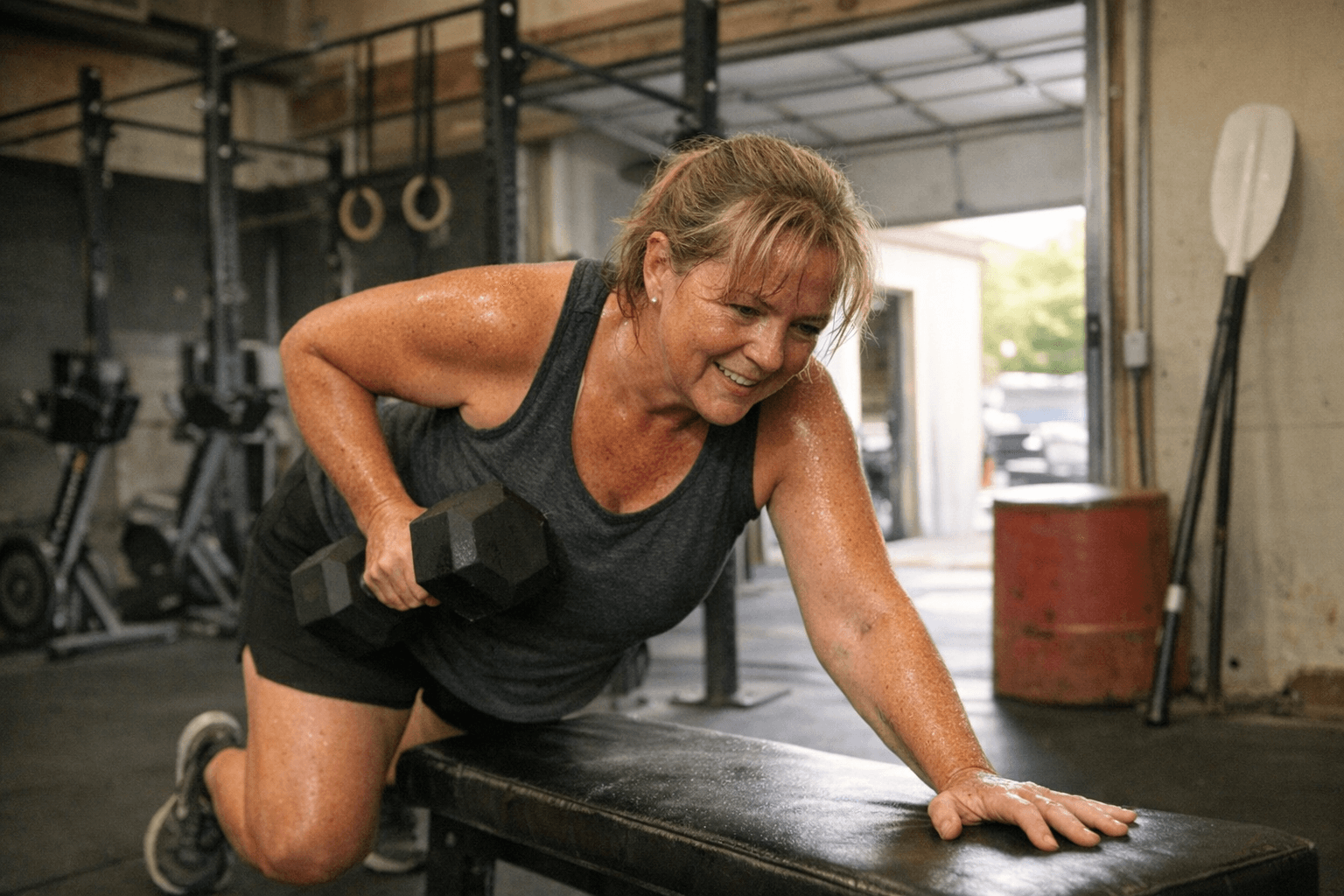
Rows, ring rows, pull-down patterns, carries, and controlled pulling work matter a lot.
Not because paddling is exactly the same as a gym row, but because stronger lats, upper back, and arms make repeated strokes less demanding.
When every pull takes a lower percentage of your total strength, you last longer.
2. Core stability
A lot of people think paddling is about twisting harder.
Usually it is more about being able to transfer force without getting sloppy.
That means your trunk needs to stay organized while your arms and hips do their job. Planks, carries, dead bugs, controlled rotational work, and anti-rotation training all help.
This is especially useful for adults who tend to feel their low back more than they feel their abs.
3. Shoulder durability
Your shoulders do a lot of work on the water, especially if you are rusty or your technique fades when you get tired.
Good training helps build the muscles around the shoulder so repeated paddling does not turn into irritation halfway through the summer.
That includes:
- upper back work
- pressing done well
- scapular control
- lighter accessory work for shoulder endurance
- balanced training instead of only doing more paddling
If one shoulder already gets cranky, CrossFit for Shoulder Pain is worth reading too.
4. Hip and trunk endurance
Even though paddling feels upper-body heavy, your hips still matter.
If you cannot sit well, brace well, and hold position for a while, everything upstream gets messier. Hip strength and positional endurance help you stay more solid and more comfortable on longer outings.
5. Conditioning that matches real life
A lot of Duluth adults are not training for races. They just want to enjoy longer lake days, river paddles, or weekend trips without feeling wrecked.
That is where general conditioning helps. If your engine is better, paddling becomes way more enjoyable.
The most common weak spots we see
For newer or returning adults, a few patterns show up over and over:
- they are stronger than they think in their legs, but not in their upper back
- they have decent motivation, but not much repeatable fitness yet
- their shoulders are not injured, but they get irritated when volume ramps up fast
- they are active on weekends and mostly sedentary during the week
- they want outdoor fitness, but they have not built the baseline to support it yet
That is why the answer is usually not to just paddle more immediately.
Sometimes the smarter move is a couple months of general strength work so the season actually feels good.
You do not need to train like a competitive paddler
Most CrossFit Aerial members are not trying to become elite athletes. They are working parents, adults getting back into fitness, and people who want their bodies to keep up with the life they live in Duluth.
So if your version of success is:
- feeling stronger on a paddle board
- lasting longer on the water
- not having your shoulders bark after every outing
- having enough gas left to still enjoy the rest of the day
- being more confident trying bigger summer adventures
then you do not need a complicated sport-specific plan.
You need smart, consistent training.
If you are starting from zero, What to Expect Your First Week at CrossFit will give you a realistic picture of how approachable that process actually is. And if you are still in the “I should probably get in shape first” phase, How to Start CrossFit Even If You Haven't Worked Out in Years is for you.
What a good week of training might look like
For most adults, paddling support training does not need to take over your life.
A solid week might look like:
- two to four coached workouts
- one actual paddle session when weather allows
- a walk, bike ride, or easy recovery day
- basic shoulder and hip mobility work
That is enough for a lot of people to feel a real difference by mid-summer.
You do not need six hard training days. You need enough consistency to build capacity.
If you are over 55, this still matters
A lot of Legends members want to stay active outside, not just exercise for the sake of exercise.
That is exactly the point.
Strength training helps with:
- getting in and out of a kayak more confidently
- balance on unstable surfaces like a paddle board or dock
- carrying gear without tweaking something
- shoulder comfort during longer outings
- staying adventurous as you get older
If that sounds like you, CrossFit for Legends is worth a read too.
Nutrition matters more than people think for summer sports
A lot of adults treat summer activity like it does not count as training.
Then they under-eat, under-hydrate, go paddle for a long time, and wonder why energy crashes halfway through.
You do not need a crazy fueling plan, but if you want better summer performance and recovery, sports nutrition in Duluth can help. Even simple changes with hydration, protein, and timing around activity can make a noticeable difference.
Why coaching helps here
A cheap gym membership can give you access.
It does not always give you a plan.
For a lot of adults, the hard part is not knowing that rows, carries, core work, and conditioning would help. The hard part is actually doing them consistently, scaling them correctly, and building them into a week that fits work, kids, and normal life.
That is where coaching matters.
It is also why CrossFit memberships usually land in the $100 to $200 per month range instead of big-box gym pricing. You are paying for programming, coaching, accountability, scaling, and a community that makes it easier to keep showing up. If you want the specifics, the pricing page breaks that out.
The bottom line
If you want to enjoy kayak and SUP season in Duluth more, strength training helps.
Not because you need to become a specialist.
Because stronger shoulders, a more stable trunk, better conditioning, and more durable hips make outdoor life feel better.
That is really the goal.
You want your body to support the fun stuff.
If paddling leaves you smoked, stiff, or hesitant to go again, a smart strength program can change that pretty fast. And if you are newer to training, you do not need to have it all figured out before you start.
You just need a place to begin.
FAQ
What muscles should I train for kayaking and paddle boarding?
Focus on upper back, lats, shoulders, core stability, grip, and hips. Paddling is full-body, even if it mostly feels like arms at first.
Does strength training help prevent shoulder pain from paddling?
It often helps by improving shoulder durability, posture, and upper-back support. It does not replace technique, but it gives your body more capacity for repeated paddling.
How many days a week should I strength train for paddling?
For most adults, two to four workouts a week is enough to build a stronger base while still leaving room for actual time on the water.
Is CrossFit good for paddlers?
It can be, especially when the program is coached and scaled well. General strength, conditioning, core control, and shoulder durability all carry over to paddling.
Do I need sport-specific training before kayak season?
Usually not. Most adults benefit more from consistent general strength and conditioning than from an overly specialized paddling plan.