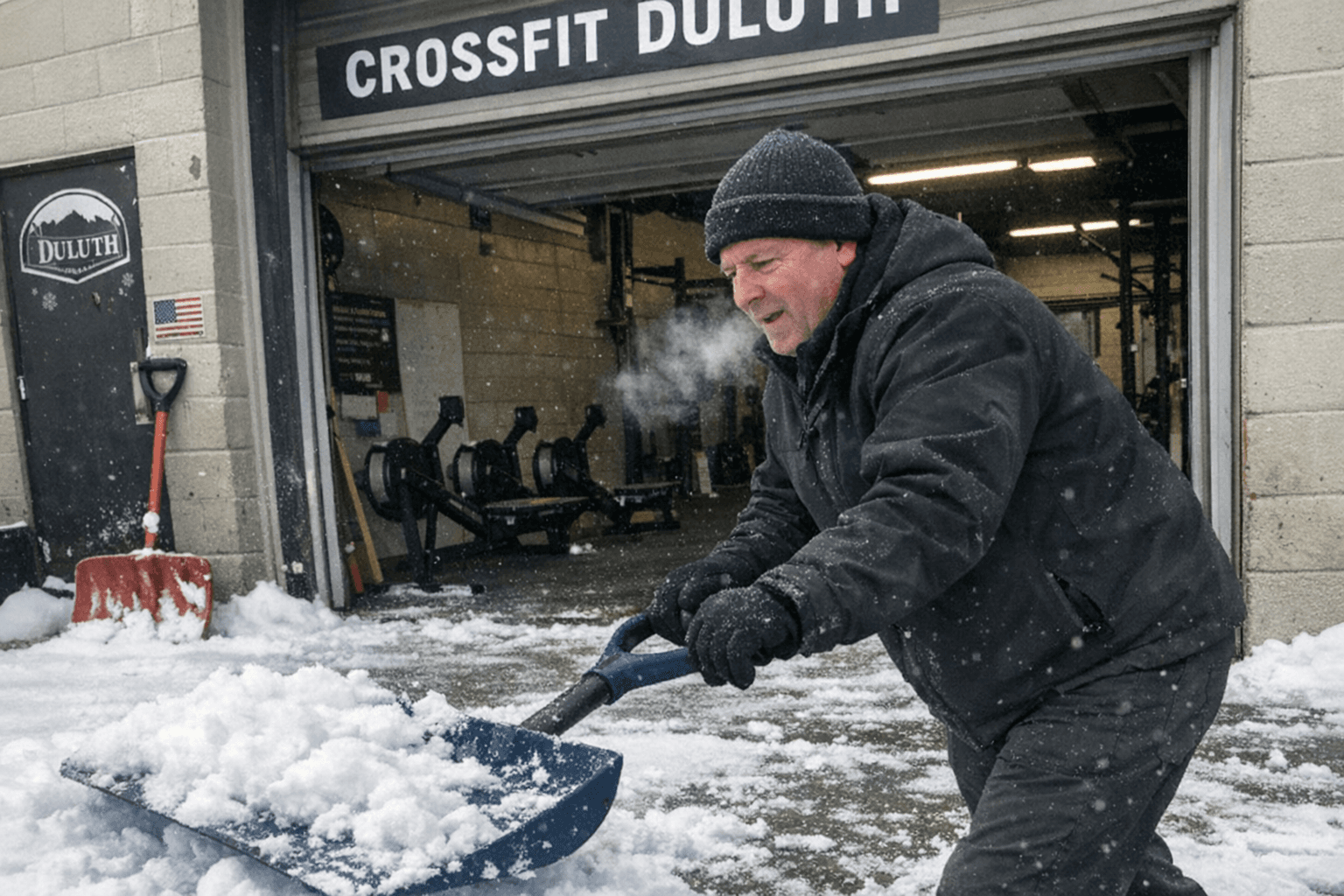
Strength Training for Snow Shoveling in Duluth
Wednesday, Jun 10th, 2026Strength Training for Snow Shoveling in Duluth
Snow shoveling has a funny way of humbling people.
You are not trying to set a PR. You are just trying to clear the driveway, get to work on time, and not tweak your back before 8 a.m. Then ten wet minutes later your heart rate is through the roof, your low back is talking, and one shoulder is already filing a complaint.
That is exactly why strength training helps.
Not because shoveling snow needs to become a whole performance project. It does not. You just want your body to feel more prepared for one of the most predictable winter demands in Duluth.
If you liked our articles on winter fitness in Duluth, the Duluth outdoor guide, or why strength training helps runners, this is the same idea in a very northern-Minnesota wrapper.
Why snow shoveling feels harder than it should
Snow shoveling is sneaky.
It looks like a chore, but your body reads it more like repeated loaded hinges, front raises, rotation, carrying, and short bursts of conditioning, often on slick ground while you are half-awake and underdressed.
That combination hits a few weak links fast:
- legs that are not ready to squat and drive over and over
- a trunk that loses stiffness when the shovel gets heavy
- shoulders and upper back that fatigue early
- lungs that are not thrilled about repeated effort in cold air
- balance that gets worse the second the ground turns sloppy
You do not need to be elite to handle that better. You just need more strength and a little more work capacity than the average first snowfall asks for.
The three body parts that matter most for snow shoveling
1. Legs that can keep pushing
A lot of back pain during shoveling actually starts lower.
When your legs get tired, you stop driving through your hips and knees. Then the lift gets sloppier and your back starts doing more than it should. Squats, step-ups, split squats, sled pushes, and even simple box squats help because they build the kind of leg strength that keeps the workload where it belongs.
2. A trunk that stays solid when the snow gets heavy
This is the big one.
Wet snow is awkward. Packed snow is awkward. Twisting to throw it off the shovel is awkward. A stronger trunk and posterior chain help you resist that chaos instead of getting folded up by it.
Think deadlift patterns, carries, planks, tempo hinges, and anti-rotation work. None of that is flashy. All of it is useful.
3. Shoulders and lungs that do not quit early
Shoveling is not just legs and back.
Your shoulders, upper back, and grip are doing a ton of work, especially if the snow is dense or the plow left a nasty ridge at the end of the driveway. And if your conditioning is poor, everything feels harder because your breathing gets ragged too early.
That is why rowing, biking, loaded carries, dumbbell work, and short conditioning intervals help more than people expect.
Best exercises to prep for snow season
You do not need a "snow shoveling workout" in the gimmicky internet sense.
You need a few patterns that make real life easier.
Squats and split squats
These build the leg strength to keep using your hips and knees instead of yanking everything with your back.
Deadlifts and hinges
Done well, these teach you how to pick up load with your hips, brace your trunk, and stay stronger through your posterior chain.
Carries
Farmer carries, front rack carries, and suitcase carries are ridiculously practical. They train posture, grip, trunk stiffness, and steady effort all at once.
Rows and presses
Your upper back and shoulders matter when the shovel keeps moving. Rows, dumbbell presses, and light higher-rep upper-body work help build durability there.
Simple conditioning
You do not need to redline. You just want enough engine that ten to twenty minutes of work in the cold does not feel like a full emergency.
A simple week that helps more than you think
For a lot of adults, something this basic is enough:
- 2 to 3 strength sessions with squats, hinges, presses, rows, and carries
- 1 longer easy conditioning piece like a walk, bike, or row
- 1 shorter interval day or mixed-effort workout
- regular walking so your activity level is not zero between workouts
That is one reason coached group training works so well for busy adults. You do not have to invent the plan, guess the right weight, or talk yourself into doing the hard part alone.
If you are over 40 or have had back flare-ups before, start now
This part matters.
A lot of people in Duluth only think about shoveling fitness after the first storm annoys them. That is late.
If you are already dealing with stiffness, old back flare-ups, desk-job hips, or a shoulder that gets cranky, building strength before winter shows up is much smarter than hoping the snowfall will somehow count as training. It will count as stress. That is not the same thing.
That is also why we tell people not to wait until they are "in shape" to start. Most members at CrossFit Aerial are working parents or adults getting back into fitness after years away. Your first week is built around that reality, not around pretending everybody walks in already fit.
And if you are 55 or older, our Legends article is worth reading too. Strength and balance are not side quests. They are what keep winter chores from becoming bigger problems.
A few snow-shoveling tips that are not sexy but still matter
Training helps, but technique still matters.
A few reminders:
- push snow when you can instead of always lifting it
- take smaller bites when the snow is wet and heavy
- switch sides if you always twist and throw one direction
- wear shoes or boots with actual grip
- stop before your form turns into pure survival mode
- if the snowfall is huge, break it into rounds instead of trying to win in one trip
That is not weakness. That is just a better plan.
The real goal
The goal is not to become weirdly passionate about lunges in November.
The goal is to make winter chores less miserable.
You want to clear snow without feeling cooked for the rest of the day. You want less low-back nonsense, more confidence on slick ground, and enough strength left over for the stuff people around here actually enjoy, like skiing, hiking, walking, and getting outside with friends.
If you want help building that kind of base, check our pricing. We coach regular adults in Duluth, including plenty who are starting from zero, scaling around old injuries, or just trying to feel stronger in real life.