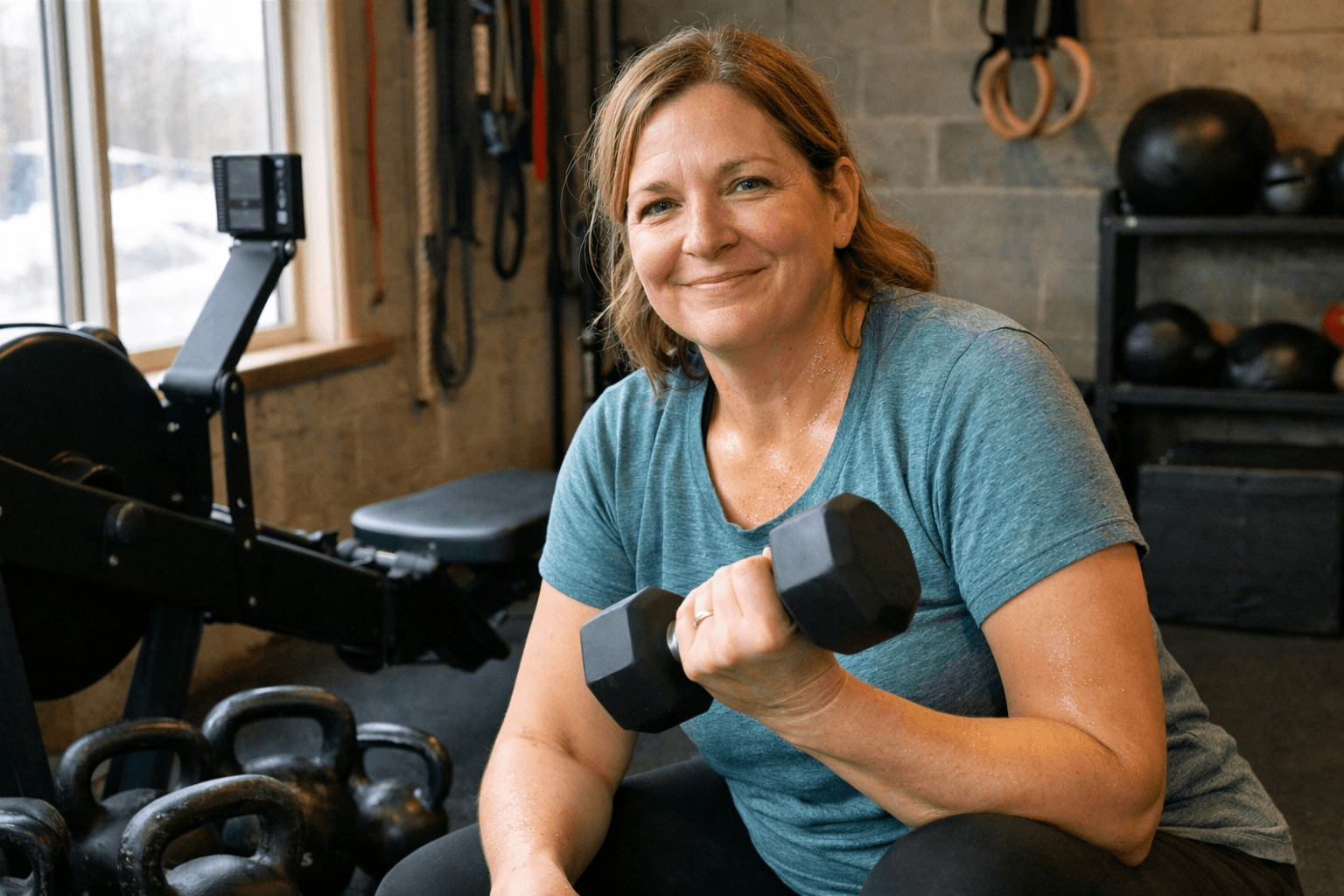
Workouts After a Winter Cold
Monday, Jul 27th, 2026Workouts After a Winter Cold
Getting back to workouts after a winter cold is usually harder on your ego than your body.
You miss a few days. Maybe a week. Your sleep gets weird. Your appetite drops. You finally start feeling human again, then your brain immediately wants to prove you are back.
That is usually the part that goes sideways.
For most adults, the goal after a winter cold is not to crush day one. It is to return without turning a normal illness into two more lost weeks.
That matters a lot in Duluth, where winter already makes routines fragile. Working parents get hit with school germs. Adults getting back into fitness lose momentum fast. Legends members often need a steadier ramp back in. And outdoor people who are used to skiing, hiking, walking, or shoveling through winter can forget that a simple cold still takes something out of you.
If your bigger issue is restarting after a random break, read Missed a Week of Winter Workouts?. If you are still feeling generally beat up this winter, Winter Recovery in Duluth is a good companion too.
First, make sure you are actually ready
A lot of people restart at the first sign of feeling less terrible.
That is not always the same thing as being ready to train.
A simple rule of thumb is this:
- if you still have a fever, wait
- if you still have body aches, wait
- if your chest feels tight, your cough is deep, or breathing feels off, wait
- if normal daily stuff still wipes you out, give it another day or two
You do not need to baby every sniffle forever.
But if your body is still clearly fighting something, hard training is rarely the smart flex.
If symptoms feel severe, keep dragging on, or breathing feels sketchy, this is a good spot to talk to a medical professional instead of trying to tough it out.
Your first workout back should feel almost too easy
This is where most people mess it up.
They feel 85 percent normal, so they try to train at 100 percent normal.
That gap matters.
Your first workout back after being sick should usually feel controlled, maybe even a little underwhelming. That is not weakness. That is good pacing.
A better first session often looks like this:
- lighter weights than you would normally use
- fewer rounds or less total volume
- more breathing room than usual
- stopping before you feel smoked
- treating it like a re-entry day, not a test
At CrossFit Aerial, that is normal. Scaling is not some emergency backup plan. It is how adults train through real life.
Think in terms of a return week, not a comeback day
One workout does not tell the whole story.
A lot of people can fake one decent day back, then get crushed for the next three.
A smarter plan is to think about your first week back instead.
For most adults, that means:
- two or three workouts, not five or six
- easy walks or light movement between sessions
- more sleep than usual if you can get it
- a little patience if your lungs or legs feel behind
That is especially true if you have not worked out in years and consistency is already something you are rebuilding. If that sounds like you, How to Start CrossFit Even If You Haven’t Worked Out in Years and What to Expect Your First Week at CrossFit will give you a better feel for how we approach the on-ramp.
Use the 70 percent rule
If you want one practical target, use this:
Come back at about 70 percent of what feels normal.
Not 70 percent forever. Just for the first couple sessions.
That might mean:
- jogging slower
- rowing easier
- using a lighter kettlebell or dumbbell
- cutting a workout short
- taking longer rests without guilt
People hate this because it feels like they are losing progress.
Usually, the opposite is true.
A calmer re-entry gives you a much better shot at getting three or four decent workouts in over the next week instead of one heroic day followed by a crash.
Pay attention to your breathing faster than your strength
After a winter cold, strength often comes back before conditioning does.
That can trick people.
The dumbbell may still feel fine. The squat may still feel fine. But your breathing gets ragged way earlier than expected, and suddenly the session gets sloppy.
That is a sign to back off, not to push through and win some imaginary toughness contest.
A good first week back usually means:
- keep the pace conversational when possible
- notice if your heart rate feels oddly spiky
- stop if coughing ramps up during the session
- choose smoother efforts over all-out intervals
If winter energy has already been low, Winter Energy in Duluth and Winter Hydration in Duluth are worth a look too.
Food, water, and sleep matter more right after illness
People love to focus on the workout itself and ignore the obvious stuff.
But after a cold, recovery often depends more on basic habits than on the perfect training plan.
A few useful moves:
- eat regular meals again, even if appetite has been weird
- get some protein in early instead of living on toast and coffee
- drink more water than your winter brain feels like drinking
- go to bed a little earlier for a few nights
- do not stack a hard workout on top of low sleep just because you finally feel available again
If meals tend to fall apart every winter, High-Protein Winter Breakfasts for Busy Adults and Winter Meal Prep for Busy Adults in Duluth can help tighten that up.
Legends and newer adults usually do better with a steadier ramp
This is not just a younger-athlete conversation.
If you are 55+ or brand new to working out, the smart move after a cold is usually even simpler.
That might mean:
- one shorter workout instead of a full week plan
- more walking before harder conditioning comes back
- lighter loading for a few sessions
- more attention to how joints and energy feel afterward, not just during the workout
That is not doing less for the sake of doing less. It is how you keep momentum.
If that sounds like you, CrossFit for Legends: Why It’s Never Too Late to Start in Duluth is a solid read.
The biggest mistake is trying to erase the sick week
You do not need to "make up" the workouts you missed.
That mindset causes a lot of dumb decisions.
You miss four or five training days, then try to earn them back with:
- extra volume
- double sessions
- no rest days
- zero scaling
- that weird guilt-fueled version of discipline that never lasts
Your body does not care about your imaginary debt.
It cares whether you are healthy enough to handle the work in front of you.
If your winter routine keeps getting disrupted in general, Too Cold to Leave the House in Duluth? can help with the weather side of that, and Stay Consistent With Exercise in Duluth covers the bigger consistency problem.
Community helps people return sooner and smarter
This is one thing coached training does really well.
When you are on your own, it is easy to guess wrong. You either talk yourself out of coming back, or you come back too hard because nobody is there to help you adjust.
In a good gym, you do not have to solve all of that alone.
A coach can help you scale the day. The workout is already written. The plan exists before you walk in. And a familiar room makes it easier to get one normal session back under your belt without turning it into a dramatic event.
That is a big part of why CrossFit works well for adults who have not trained in years. Most people are not looking for extreme fitness. They are looking for structure, coaching, accountability, and people who make it easier to keep showing up.
If you want the straightforward version of how that support is priced, the pricing page lays it out. Most memberships around here land somewhere in the $100 to $200 per month range depending on the level of coaching and support. What people are really paying for is scaling, coaching, programming, accountability, and community.
That community often carries outside the gym too. A lot of people here end up with walking buddies, ski partners, hiking plans, and normal human check-ins that make it easier to stay active through a Duluth winter.
A simple return plan after a winter cold
If you want the short version, do this:
- wait until fever, body aches, and chest-heavy symptoms are gone
- make the first workout easier than your ego wants
- come back at about 70 percent for the first couple sessions
- cap the first week at two or three workouts
- prioritize breathing, sleep, water, and food
- stop trying to earn back the sick days
That is enough.
The bottom line
The best workout after a winter cold is usually not the hardest one.
It is the one that gets you moving again without knocking you backward.
Start a little lighter. Stretch the comeback across a week instead of one day. Respect your breathing. Let normal routines come back before you chase intensity.
That is how you return to training without making winter drag on even longer.
FAQ
How soon can I work out after being sick with a winter cold?
Usually once fever, body aches, and chest-heavy symptoms are gone and normal daily activity does not leave you wiped out. If symptoms feel severe or linger, talk with a medical professional.
Should my first workout after being sick be hard?
Usually no. The first workout back should feel controlled and easier than normal so you can return without overdoing it.
Why does cardio feel harder after a cold even if I still feel strong?
That is common. Breathing and conditioning often take longer to bounce back than simple strength work.
How many workouts should I do the first week back after a winter illness?
For most adults, two or three workouts with easier movement in between works better than trying to cram in a full heavy week.
Do I need to get in shape before starting CrossFit if I keep getting knocked off track?
No. Most people at CrossFit Aerial start from zero or come back after a long break. Coaching and scaling are built in from day one.