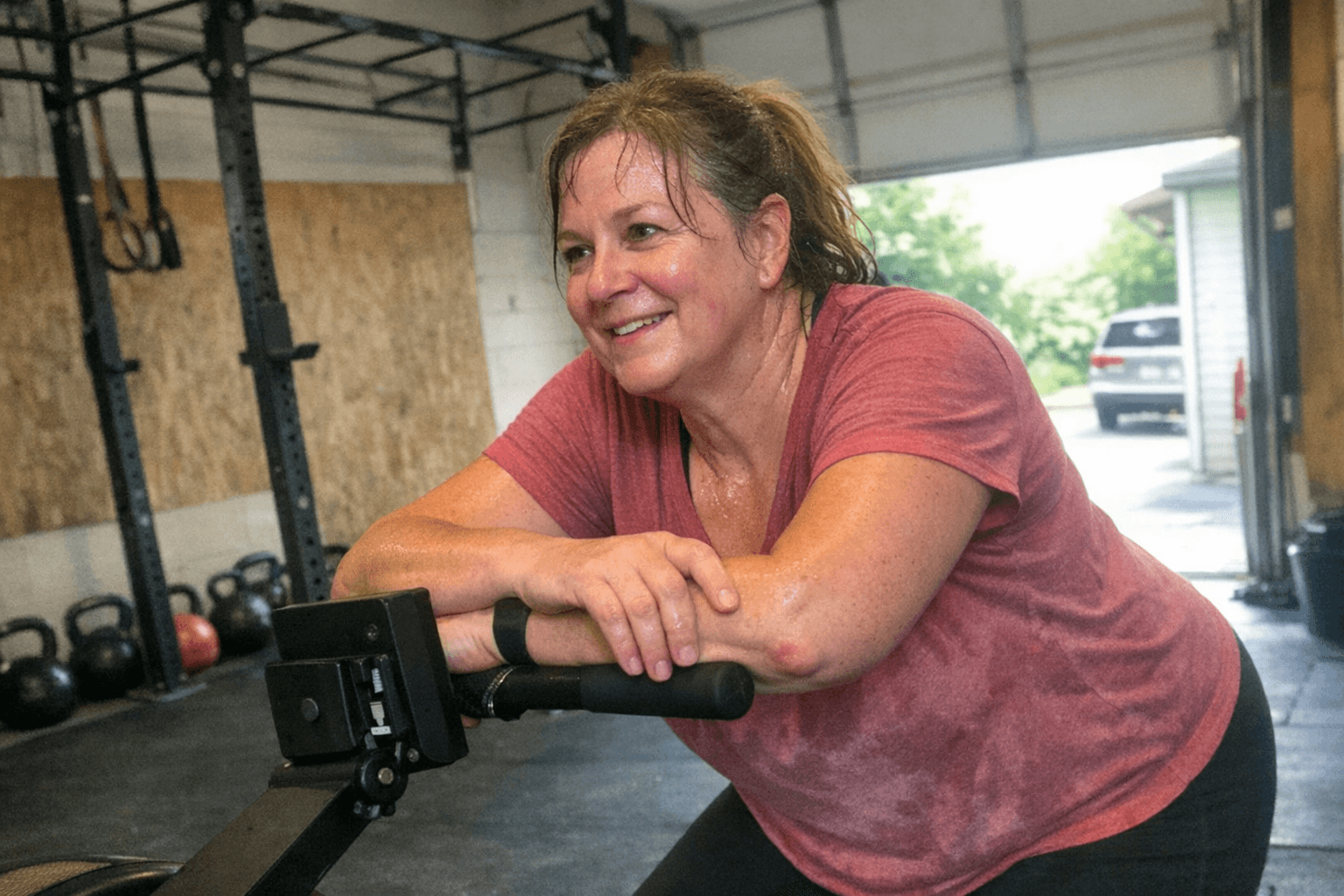
How to Avoid Workout Burnout
Friday, Apr 10th, 2026If you are finally getting momentum with exercise, one of the easiest mistakes to make is assuming more is always better.
You start showing up consistently. You feel sore in a satisfying way. Your energy is better. Maybe your mood is better too. Then your brain does what a lot of brains do and says, "Cool, let's floor it."
That is usually where burnout starts.
A lot of adults do not quit working out because they are lazy. They quit because they try to build a long-term habit with a short-term, all-gas-no-brakes approach. They go from zero to five hard days a week. They stack workouts on top of already-busy lives. They treat soreness like a badge of honor. Then life gets weird, recovery slips, and suddenly the whole plan feels miserable.
At CrossFit Aerial, we see this all the time with good people who genuinely want to feel better. Working parents. Adults getting back into shape after years away. Legends members over 55. Outdoor people who want to feel strong enough to hike, bike, ski, paddle, and keep up with life in Duluth.
The goal is not to prove how motivated you are for two weeks.
The goal is to build something you can still do in six months.
What Workout Burnout Actually Looks Like
Burnout is not just being tired after a hard class.
That part is normal.
Workout burnout usually looks more like this:
- you start dreading workouts you were excited about a week ago
- your soreness hangs around longer than it should
- your sleep gets worse instead of better
- you feel guilty every time you rest
- you miss a few days, then feel so behind that you avoid coming back
- exercise starts feeling like another thing you are failing at
For beginners especially, burnout is easy to confuse with "getting serious."
But serious training should make your life better, not make you feel cooked all the time.
If you are brand new, What to Expect Your First Week at CrossFit will give you a better picture of how we ease people in. The first goal is not maximum intensity. It is finding the right dose.
The Fastest Way to Burn Out: Doing Too Much Too Soon
This is the classic move.
Someone has a burst of motivation and decides they are going to "make up for lost time." They sign up, hit class five days in a row, start cleaning up their diet, add extra cardio on off days, and try to keep pace with people who have been training for years.
That works great right up until it doesn't.
Your body can adapt fast, but connective tissue, sleep, stress, and schedule still matter. If you have not worked out in years, your ideal training volume is probably not the same as the fittest person in the 5:30 a.m. class.
That is why How Often Should You Work Out matters so much. For most adults starting from scratch, three days a week is enough. Not because you are fragile, but because it gives you room to recover and come back without turning exercise into punishment.
A boring plan you can repeat beats an exciting plan you abandon.
Soreness Is Not the Same Thing as Progress
A lot of people still think if they are not wrecked after a workout, it did not count.
That mindset causes a lot of burnout.
Feeling challenged is fine. Feeling like you need to lower yourself onto the toilet for four straight days is not the gold standard.
If you have ever gotten super sore, panicked, and then skipped the next class because you thought you needed a week to recover, you are not alone. We wrote a whole article on How Sore Should You Be After CrossFit because this comes up constantly.
The short version is simple: a little soreness is normal. Getting annihilated every session is a bad strategy.
The best programs scale your effort so you can keep showing up.
Recovery Is Part of the Program, Not a Detour From It
A lot of burnout is really a recovery problem.
You are not weak because you need rest days. You are training like a normal adult with a job, family, responsibilities, and maybe a few old aches from your twenties.
Rest is where the adaptation happens. Sleep matters. Food matters. Easier days matter. Walking matters. Hydration matters. Sometimes the smartest thing you can do for next week's progress is not another hard workout. It is going to bed earlier.
If you struggle with this mentally, Recovery Day Guide is worth your time. So is our pricing page, honestly, because part of what people are paying for in a coached gym is help with pacing, scaling, and not running themselves into the floor.
Build a Schedule for Your Real Life, Not Your Ideal Life
This is a huge one for busy adults.
A lot of people accidentally create a routine that only works during a fantasy week.
In the fantasy week, work is calm. The kids sleep. Nobody gets sick. You meal prep on Sunday. You hit every class. You stretch every night. You feel like a machine.
Then normal life shows up and the whole thing collapses.
A better question is this: what workout schedule still works when your week is messy?
For a lot of parents, that might be three classes and one walk. For a Legends member, it might be consistent strength work with recovery days in between. For someone who loves the outdoors, it might be gym classes during the week so weekends can stay open for trails, biking, or time outside with friends.
If your calendar is already packed, CrossFit for Busy Parents gets more specific about how to make that work. The key is picking a rhythm you can protect, not one that looks impressive on paper.
Watch Out for All-or-Nothing Thinking
This is where burnout turns into disappearing.
You miss a couple workouts because work blows up or the kids get sick. Then you feel behind. Then you tell yourself you need to "restart" next Monday. Then next Monday becomes next month.
That spiral has less to do with discipline and more to do with perfectionism.
The people who stay consistent usually are not the people with flawless routines. They are the people who return quickly.
One missed class is normal. One messy week is normal. Scaling down is normal. Taking a rest day is normal.
What gets people in trouble is acting like any disruption means the plan failed.
It did not fail. Real life happened.
If this sounds familiar, How to Stay Consistent With Exercise is basically the antidote. Consistency is not never missing. It is not letting one miss become a month.
Use the Gym to Support the Rest of Your Life
At CrossFit Aerial, most people are not training because they dream about spending all day in a gym.
They are training because they want the rest of life to feel better.
They want enough energy to keep up with their kids. They want to hike without feeling smoked halfway up the hill. They want to ski, bike, paddle, and enjoy Duluth instead of feeling stiff and underpowered. They want to age without giving up capability.
That is one reason burnout matters so much. If your fitness routine is so aggressive that it ruins the rest of your week, it is missing the point.
Training should support your life outside the gym, including the fun stuff. The Duluth Outdoor Guide and CrossFit for Legends both point at the same bigger idea. The win is staying capable, social, and active for a long time.
What Avoiding Burnout Looks Like in Practice
Usually it looks less dramatic than people expect.
It looks like:
- starting with 3 days a week instead of 6
- scaling workouts even when your ego wants to go heavier
- taking rest days before your body forces them on you
- sleeping more instead of chasing bonus workouts
- keeping one lighter backup option for chaotic weeks
- measuring progress by energy, strength, confidence, and momentum, not just soreness
- remembering that long-term fitness should feel challenging, not miserable
That is not soft.
That is how adults actually keep going.
The Bottom Line
If you want to avoid workout burnout, stop treating fitness like a sprint.
Do less at the beginning than your motivation wants. Recover harder than the internet tells you to. Build a schedule that survives a real week. Let go of all-or-nothing thinking. Use coaching, scaling, and community to keep the plan sustainable.
The best workout program is not the one that crushes you. It is the one that still fits your life after the novelty wears off.
That is how progress sticks. That is how confidence builds. And that is how a lot of adults in Duluth go from "I should really get back in shape" to actually living like someone who trains.
FAQ
How do I avoid workout burnout as a beginner?
Start with fewer training days than you think you need, usually around three days a week. Focus on recovery, scaling, and building a routine you can repeat instead of chasing maximum soreness.
What are signs of exercise burnout?
Common signs include dreading workouts, lingering soreness, worse sleep, feeling guilty about rest days, and falling into an all-or-nothing cycle after missing a few sessions.
Is it normal to be sore after starting CrossFit?
Yes, some soreness is normal, especially at the beginning. But constant exhaustion or feeling wrecked for days after every workout usually means your training dose is too high.
How many rest days should I take each week?
For most adults, especially beginners, two to four easier or full rest days per week is completely reasonable. The right amount depends on your training age, recovery, stress, and schedule.
Can group fitness help prevent burnout?
Yes. Good coaching, smart scaling, and a supportive class environment help people avoid doing too much too soon. The right community makes it easier to stay steady instead of swinging between overdoing it and disappearing.
What Workout Burnout Actually Looks Like?
Burnout is not just being tired after a hard class.
The Fastest Way to Burn Out: Doing Too Much Too Soon?
This is the classic move.
Soreness Is Not the Same Thing as Progress?
A lot of people still think if they are not wrecked after a workout, it did not count.
Recovery Is Part of the Program, Not a Detour From It?
A lot of burnout is really a recovery problem.
Build a Schedule for Your Real Life, Not Your Ideal Life?
This is a huge one for busy adults.
Watch Out for All-or-Nothing Thinking?
This is where burnout turns into disappearing.