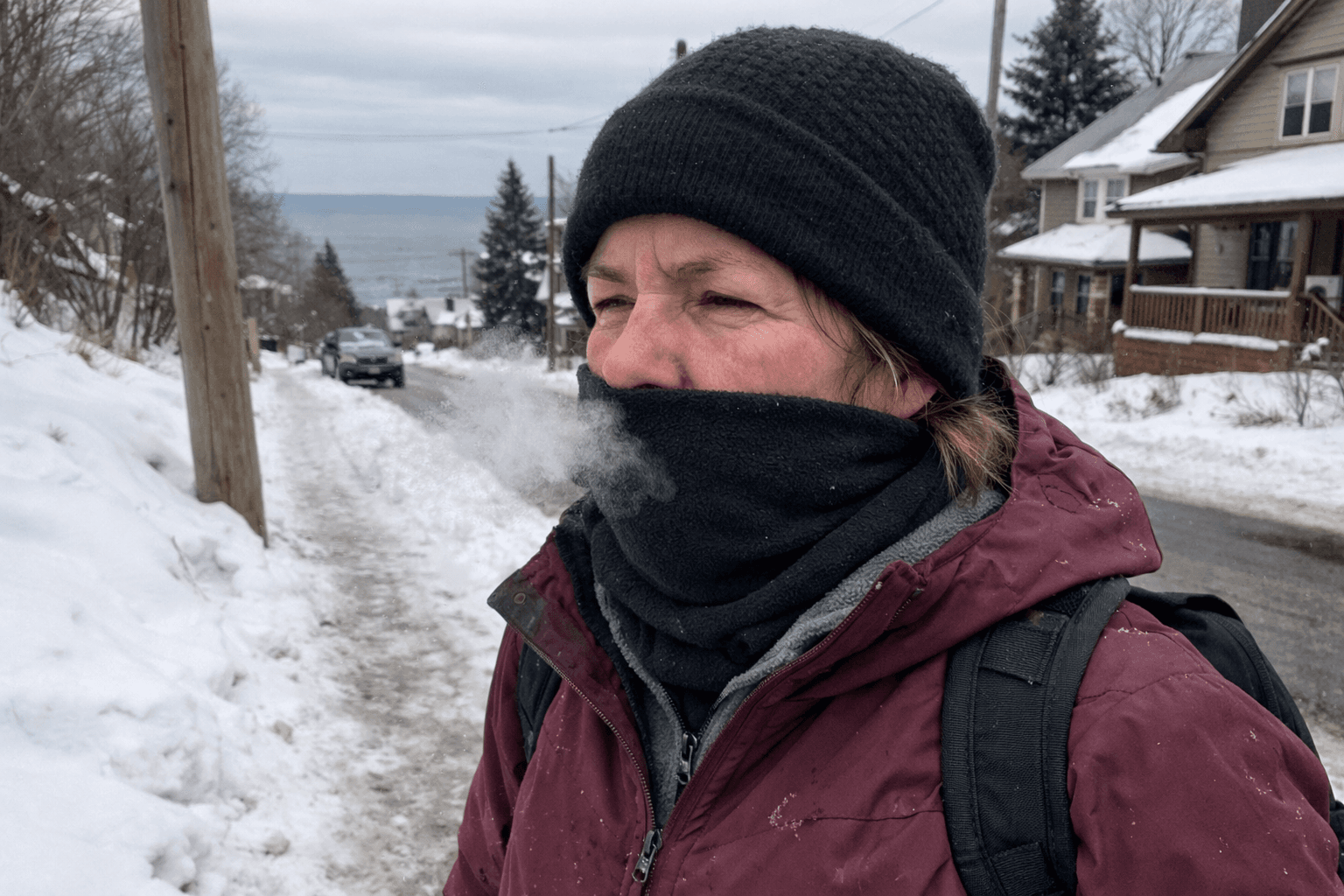
How to Breathe Better in Cold Air
Wednesday, Aug 12th, 2026If cold air makes a winter walk or run feel harder than it should, you are not imagining it.
A lot of adults step outside in Duluth, take a few deeper breaths, and immediately feel tight, dry, or weirdly winded. Sometimes it feels like your chest is working too hard. Sometimes your throat gets scratchy. Sometimes an easy walk feels fine until you hit a hill and your breathing suddenly goes sideways.
That does not always mean anything is wrong with you.
Usually it means cold, dry air is adding friction.
That matters for a lot of the adults we care about at CrossFit Aerial. Working parents trying to get moving again. Legends members who want to keep walking through winter. Outdoor people who still want to hike, ski, snowshoe, or run without every outing feeling harsher than expected.
If the bigger problem is getting out the door at all, read Too Cold to Leave the House in Duluth? too. If your issue shows up more once you are already running, Strength Training for Winter Running in Duluth is a good companion.
Why cold air makes breathing feel harder
Cold air is usually dry air.
When you breathe it in, your body has to warm and humidify that air before it gets where it is going. That takes work. For some people it feels like dryness in the nose or throat. For others it feels like a little chest tightness, coughing, or that sharp feeling you get when you start too fast.
A few things make that worse:
- you go from warm indoor air straight into the cold with no transition
- you start too hard before your breathing settles in
- you breathe mostly through your mouth right away
- the air is very dry or the wind is nasty
- you are already a little dehydrated
- you are recovering from a cold and your airways are still touchy
That last one matters more than people think. If you are not fully back yet, Workouts After a Winter Cold is the better starting point.
The goal is not perfect winter lungs. It is less irritation.
A lot of adults make this harder by treating every cold-weather outing like a toughness test.
You do not need to prove anything.
You just want breathing to feel smoother, less panicky, and more sustainable so you can actually enjoy the walk, run, or outdoor workout.
That usually comes down to a few boring fixes:
- warm up more gradually
- cover the mouth and nose when needed
- pace the first 5 to 10 minutes better
- pick routes that do not spike your breathing too early
- stop expecting your body to feel like July in minute one
That is good news because those are all fixable.
1. Give your body a runway before you ask for much
One of the easiest ways to make cold-air breathing feel awful is to start hard while your whole system still feels cold.
That is true for walking hills, running, shoveling, and outdoor circuits.
Your first few minutes should be easier than your ego wants.
Try this:
- start with 5 to 10 minutes at a truly easy pace
- keep your first hill mellow if possible
- let your nose, throat, and chest adjust before you push effort
- if you are running, think shuffle pace at first, not workout pace
This is where a quick indoor warm-up helps a lot. Winter Warm-Ups in Duluth gives you a simple one that works before class, a walk, or an outdoor workout.
2. Breathe through your nose more at the start if you can
This is not an all-or-nothing rule.
You do not need to nasal-breathe your way through every winter run like you are in a podcast argument.
But breathing through your nose, especially in the first few minutes, can help warm and humidify the air a little before it hits deeper into your system.
That often means:
- less throat burn
- less coughing at the start
- a calmer pace
- less of that instant “why does this feel terrible already?” reaction
For a walk, that may be enough for most of the outing.
For a run or harder effort, you will probably end up mixing nose and mouth breathing. That is normal. The point is not purity. The point is taking the edge off early.
3. Use a buff, scarf, or neck gaiter when the air is brutal
This is one of the simplest fixes and a lot of people skip it because they think it feels annoying.
Sometimes it does.
It also works.
A light layer over your mouth and nose can help trap a little warmth and moisture, which makes the air feel less sharp coming in. On bitter days or windy days, that can be the difference between a decent outing and one where your chest and throat hate you.
A few notes:
- pull it up for the first 10 to 15 minutes or for the whole outing if needed
- swap it out if it gets soaked and gross
- use something breathable, not a giant suffocating wrap
- combine it with smarter pacing, not instead of smarter pacing
If winter setup friction is your bigger issue, Winter Walking Gear for Duluth and How to Layer for Winter Walks and Hikes in Duluth Without Sweating Through Your Coat help with the clothing side.
4. Slow down earlier than you think you need to
A lot of “cold air breathing” problems are really pace problems wearing a winter hat.
You hit a hill. You try to talk while moving fast. You start your run at the pace your legs remember from better weather. Then your breathing spikes and the cold gets blamed for all of it.
The fix is not always fitness. Often it is restraint.
If you want breathing to stay manageable:
- keep the first part conversational
- shorten your stride on hills
- back off sooner when the wind is in your face
- use run-walk intervals if steady running feels choppy
- choose flatter routes on harsher days
That is not a step backward.
It is just better winter pacing.
5. Start with easier routes when the weather is sharp
Not every day needs to be the heroic route.
If the air is cold enough that breathing already feels touchy, do not stack that with the windiest route, the steepest hill, and the iciest footing just because it is your usual loop.
This is especially helpful for adults getting back into exercise after years away. You want small wins. Not a rough first mile that convinces you winter movement is not for you.
Better options on harsher days:
- shorter neighborhood walks
- flatter out-and-back routes
- looped routes close to home or the car
- sheltered walking routes
- easy treadmill or indoor bike work when outside feels like too much
If you need an easier winter entry point, Best Easy Winter Walks in Duluth is a good place to start.
6. Hydration matters more than people expect
Dry winter air plus coffee plus indoor heat is a pretty good recipe for feeling flat and scratchy before you even start moving.
You do not need a giant hydration lecture here.
Just know that being a little dried out can make cold air feel worse.
A few easy wins:
- drink some water before you head out
- do not let coffee be the only thing you have had all morning
- drink after longer walks, runs, or winter outings too
- if you are outside a long time, eat and drink like a normal person instead of pretending the cold cancels that out
If that sounds like your actual problem, Winter Hydration in Duluth goes deeper.
7. If you are coming back from a cold, expect breathing to feel touchy for a bit
This is where people get fooled.
They are mostly better, so they assume their first outdoor workout should feel normal.
Then the cold air hits and everything feels tight, coughy, or harsher than expected.
That does not always mean you are doing damage. But it usually means your system needs a little more patience.
If you are in that window:
- keep the first few outings shorter
- stay easier than you think you need to
- choose walking or easy mixed intervals first
- cover your mouth and nose in colder air
- go indoors if your chest still feels cranky
You are not losing fitness by doing that. You are just not picking a fight you do not need.
When cold-air breathing might be more than a normal winter annoyance
Sometimes winter breathing trouble is not just ordinary adjustment.
If you regularly get wheezy, have chest pain, feel significant chest tightness, or keep coughing hard every time you are in cold air, it is worth talking to a medical professional.
Same if you have asthma or suspect you might.
This article is about practical coaching-level fixes, not diagnosis.
For plenty of adults, the issue is just pacing, dryness, warm-up, and route choice. But if symptoms feel strong or persistent, get that checked.
What this looks like for beginners, Legends, and busy adults
A lot of adults assume winter breathing discomfort means they need to get fitter before they are “allowed” to do outdoor movement.
Usually, no.
It usually means they need a better entry point.
That could be:
- a shorter walk instead of a long one
- a better warm-up
- a scarf over the mouth and nose
- flatter routes
- slower starts
- indoor options on the worst days
That is true for adults starting from zero, adults getting back into movement after years away, and Legends members who want to keep hiking, walking, and enjoying winter without feeling cooked.
If you want to see how we handle true beginner starts, read What to Expect Your First Week at CrossFit. And if you want the simple membership breakdown, head to the pricing page. Most adults land somewhere in the $100 to $200 per month range depending on the level of coaching and support they want.
A simple cold-air breathing checklist
If you want the short version, do this:
- warm up indoors or start easier outside
- breathe through your nose more in the first few minutes if you can
- use a buff or neck gaiter on harsher days
- slow down sooner, especially on hills and into the wind
- choose easier routes when conditions are sharp
- hydrate before you head out
- be extra patient if you are getting over a cold
That is enough to make winter movement feel way more manageable.
The bottom line
Cold air can make breathing feel harsher, but it does not have to ruin winter walks, runs, or outdoor workouts.
Most of the time, you do not need a dramatic fix.
You need a better warm-up, a little more patience, a face covering on rough days, and a pace that respects the conditions.
That is how a lot of adults stay active through winter without every outing feeling like a respiratory stress test.
FAQ
Why is it hard to breathe when I run in the cold?
Cold air is usually dry air, and your body has to warm and humidify it. If you start too fast or go straight into a hill, breathing often feels sharper and harder right away.
Does breathing through my nose help in cold weather?
It can, especially at the start of a walk or run. Nose breathing helps warm and humidify the air a bit before it reaches deeper into your system.
Should I cover my mouth when exercising outside in winter?
On colder or windier days, a buff, scarf, or neck gaiter can help a lot. It traps a little warmth and moisture, which often makes the air feel less harsh.
Why do I cough more when I work out in cold air?
Dry cold air can irritate the airways, especially if you start hard, breathe mostly through your mouth right away, or are coming back from a recent cold.
When should I worry about cold-weather breathing?
If you keep getting strong chest tightness, wheezing, chest pain, or heavy coughing whenever you are in cold air, talk to a medical professional. That may be more than a normal winter adjustment.
Why cold air makes breathing feel harder?
Cold air is usually dry air.
The goal is not perfect winter lungs. It is less irritation.?
A lot of adults make this harder by treating every cold-weather outing like a toughness test.
1. Give your body a runway before you ask for much?
One of the easiest ways to make cold-air breathing feel awful is to start hard while your whole system still feels cold.
2. Breathe through your nose more at the start if you can?
This is not an all-or-nothing rule.
3. Use a buff, scarf, or neck gaiter when the air is brutal?
This is one of the simplest fixes and a lot of people skip it because they think it feels annoying.
4. Slow down earlier than you think you need to?
A lot of “cold air breathing” problems are really pace problems wearing a winter hat.