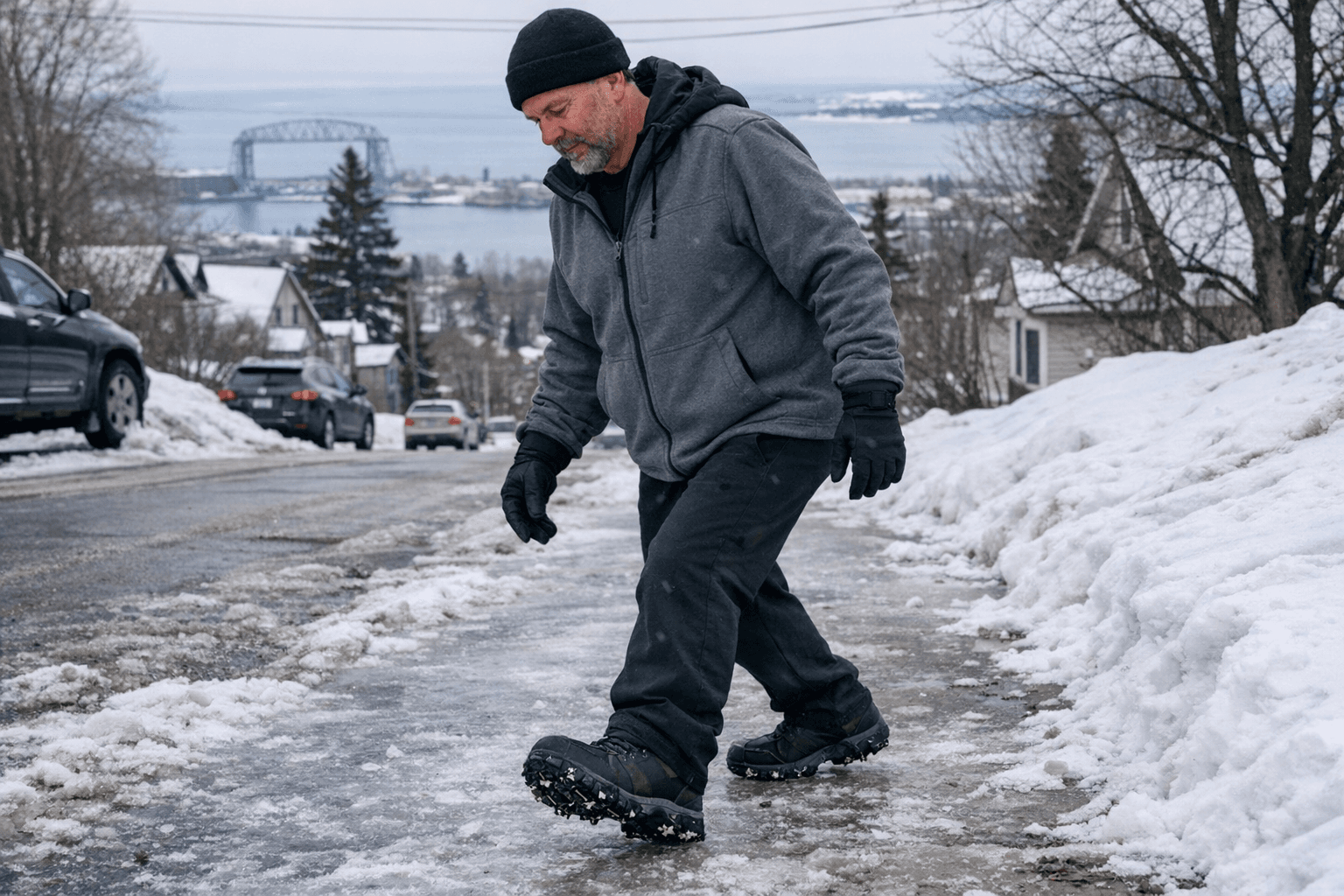
How to Walk on Ice Safely
Friday, Jul 31st, 2026If icy sidewalks make you tense up the second you step outside, you are not weak and you are not being dramatic.
Walking on ice is one of those winter things that can make a simple five-minute outing feel way bigger than it should. Your shoulders come up. Your steps get weird. You start thinking more about not falling than where you are actually going.
That is especially true for the adults we see all the time at CrossFit Aerial: working parents hurrying between work and pickup, Legends members who want to stay independent, and people getting back into exercise who do not need one bad slip to kill the habit.
The good news is that safer winter walking usually is not about being tougher. It is about lowering friction. Better footing. Better pacing. Better body position. A little more strength and balance. A little less panic.
If winter walking already feels like a whole production, start with Winter Walking Gear for Duluth and Best Easy Winter Walks in Duluth. This piece is the next step, what to actually do when the ground gets slick.
The first rule is simple, slow down before you need to
Most slips happen because people realize a surface is sketchy half a second too late.
They are walking normally, hit a glazed patch, and try to save it after the fact.
A better move is to change your pace before you hit the worst part.
That means:
- shorten your stride
- keep your steps more underneath you
- move a little slower than your ego wants to
- avoid sharp turns and sudden stops
This is boring advice. It works.
A lot of winter falls are not strength problems first. They are timing problems.
Walk a little more like a penguin, not like you are late
Yes, everybody makes fun of the penguin walk. It is still solid advice.
On ice, you want your center of mass over your feet as much as possible. Long heel-striking steps make that harder. Shorter flatter steps make it easier.
Think about this:
- feet a little wider than usual if needed
- knees soft, not locked out
- chest tall instead of leaning way back
- arms free for balance instead of buried in pockets
You do not need to exaggerate it into a cartoon. You just want a gait that gives you more chances to catch yourself.
If you know you get stiff in the cold and that makes your walking worse, Winter Warm-Ups in Duluth is worth reading too. Ankles, calves, and hips matter a lot here.
The right shoes matter, but traction matters more when it gets truly slick
A decent winter shoe helps.
But on actual ice, the small upgrade that changes the game most often is traction cleats.
If your usual pattern is avoiding walks because the sidewalks look polished over, traction is probably the first thing to fix. Not the fancy coat. Not some perfect boot search that drags on for three weeks.
For most adults, the order is:
- stable shoes with decent tread
- socks that keep feet warm without cramming the shoe too tight
- traction cleats for real ice days
If your feet feel numb, cramped, or sketchy, your body starts bracing everywhere else too.
That is why gear and movement are connected. Better footing changes your confidence right away.
Pick the safer line, not the shortest line
This sounds obvious, but people still do it.
They cut across the shiniest patch in the parking lot because it saves eight seconds.
They step over the curb edge where slush refroze.
They take the steeper side of a driveway instead of the flatter longer route.
In winter, the safest route is often not the most direct one.
Look for:
- packed snow over clear glare ice
- flatter approaches instead of sloped shortcuts
- textured snow or rough pavement instead of glossy surfaces
- railings, walls, or parked-car spacing that gives you room and reference
This matters for everybody, but especially for older adults. The whole point is staying active and independent, not proving a point in a parking lot. That is one reason the Legends article talks so much about balance, confidence, and real-life movement.
Do not walk with your hands buried in your pockets
This is one of the easiest bad habits to fix.
Hands in pockets feel warm, but they take away one of your best balance tools.
When surfaces are slick, keep your arms available.
That does not mean flailing around. It just means your body has a better chance of reacting if one foot slides.
If you need warm hands, gloves or mittens beat pockets.
Small strength wins help more than people think
Walking on ice is not a max-strength event. But it does expose weak links fast.
Usually that looks like:
- ankles that wobble
- hips that do not control side-to-side movement well
- legs that tense up instead of absorbing little adjustments
- a trunk that collapses the second balance gets challenged
You do not need a special ice-only training program.
You do benefit from a few basics done consistently:
Calf raises and ankle rocks
These help because your ankles are constantly making tiny corrections on uneven or slick surfaces.
Step-ups and split squats
These build single-leg control and make you better at catching yourself without feeling sloppy.
Carries
Farmer carries teach you to stay organized through the trunk while you move, which is useful when winter footing gets weird.
Side-to-side work
Lateral lunges, supported skater steps, or simple side steps help because slips are rarely perfectly straight ahead.
If that sounds intimidating, it does not need to be. At CrossFit Aerial, a lot of people start from zero. That is normal. What to Expect Your First Week at CrossFit walks through how we actually scale things for real adults, not fake internet beginners.
Balance gets better when you actually train it a little
A lot of adults assume balance is something you either have or you do not.
Not really.
Balance is trainable, especially when the goal is everyday confidence and not circus tricks.
A few simple options:
- stand on one foot near a wall for 15 to 30 seconds
- do slow controlled step-downs holding a rail if needed
- practice marching or knee raises without rushing
- use supported single-leg hinges or toe taps
For Legends members and adults coming back after a long layoff, this kind of low-drama practice matters a lot. You are not trying to become flashy. You are trying to make winter sidewalks feel less stressful.
Know when to bail and change the plan
Sometimes the right move is not better technique. It is just saying, nope, not today.
If sidewalks are glazed, freezing rain is coming down, or the parking lot feels like a hockey rink, pivot.
That is not laziness.
That is judgment.
Go to the indoor plan. Pick the plowed route. Walk later in the day. Use the mall. Choose one of the easier routes from Best Easy Winter Walks in Duluth. Live to walk again tomorrow.
Consistency beats heroics.
The real goal is confidence, not perfection
You are probably never going to love walking on ice.
That is fine.
The win is being able to get through winter with less tension, fewer close calls, and more confidence doing normal life. Getting to work. Walking the dog. Taking a short walk after dinner. Heading into the gym without feeling like the parking lot is the hardest part of the day.
That kind of confidence matters more than people admit.
If you want help building the strength, balance, and general fitness that makes winter feel easier, check out pricing. Most people here are not coming in already fit. They are parents, professionals, beginners, and Legends members who want their body to cooperate a little better in real life.
What is the safest way to walk on ice?
Shorten your stride, keep your steps underneath you, move slower before you hit the slick patch, and avoid sudden turns or stops.
Does the penguin walk actually help on ice?
Yes. Shorter flatter steps with soft knees and your weight centered over your feet usually give you better balance than long heel-striking steps.
What shoes help most for icy sidewalks?
Start with stable shoes or boots that have decent tread, then add traction cleats on truly icy days because traction usually matters more than the shoe alone.
Should you walk with your hands in your pockets on ice?
No. Keep your arms free so your body has a better chance to react and balance if one foot slides.
Can strength training help you walk on ice more safely?
Yes. Better ankle control, single-leg strength, trunk stability, and side-to-side balance can make winter footing feel less sketchy and help you recover from small slips.
When should you skip the walk and change the plan?
If sidewalks are glazed over, freezing rain is falling, or the route feels like a hockey rink, switch to an indoor option or a better-plowed route instead of forcing it.