Ski Conditioning in Duluth
Sunday, Jun 28th, 2026If you live in Duluth, ski season has a way of sneaking up on you.
One week you are still in fall mode. The next week somebody is talking about Spirit, somebody else is waxing skis, and you are realizing your legs have mostly been doing desk-chair reps since spring.
That is usually the gap.
A lot of adults around here already like winter. They are not trying to be convinced to ski. They just want their body to feel ready when the snow shows up.
That is where preseason ski conditioning helps.
Not because you need some elite athlete program. You do not. But if you want the first few ski days to feel fun instead of humbling, a little strength work before the season starts goes a long way.
Why preseason work matters more than people think
Most adults wait until ski season starts, then try to ski their way into ski shape.
Sometimes that works. More often, the first few outings turn into a reminder of what is underbuilt.
Usually it looks like one of these:
- quads blowing up way too early
- knees feeling shaky once fatigue kicks in
- low back getting tight after a few runs or climbs
- balance getting worse as soon as the legs get tired
- feeling wrecked for two or three days after the first real outing
That does not mean you are out of shape in some giant dramatic sense. It usually means skiing asks for leg strength, trunk control, and repeat effort that most adults are not training by accident.
If you build some of that before winter really gets rolling, the whole season usually feels better.
What ski conditioning should actually focus on
This is where people get weird.
You do not need a circus workout with wobble boards and fake ski gadgets. You need a stronger, more durable version of the body you already have.
1. Leg strength
Skiing exposes weak legs fast.
For downhill skiers, that often shows up as quads getting torched and turns getting sloppier as the day goes on. For nordic skiers, it shows up more as push-off power fading, climbs getting ugly, and stride quality falling apart.
Useful prep work usually includes things like:
- squats
- split squats
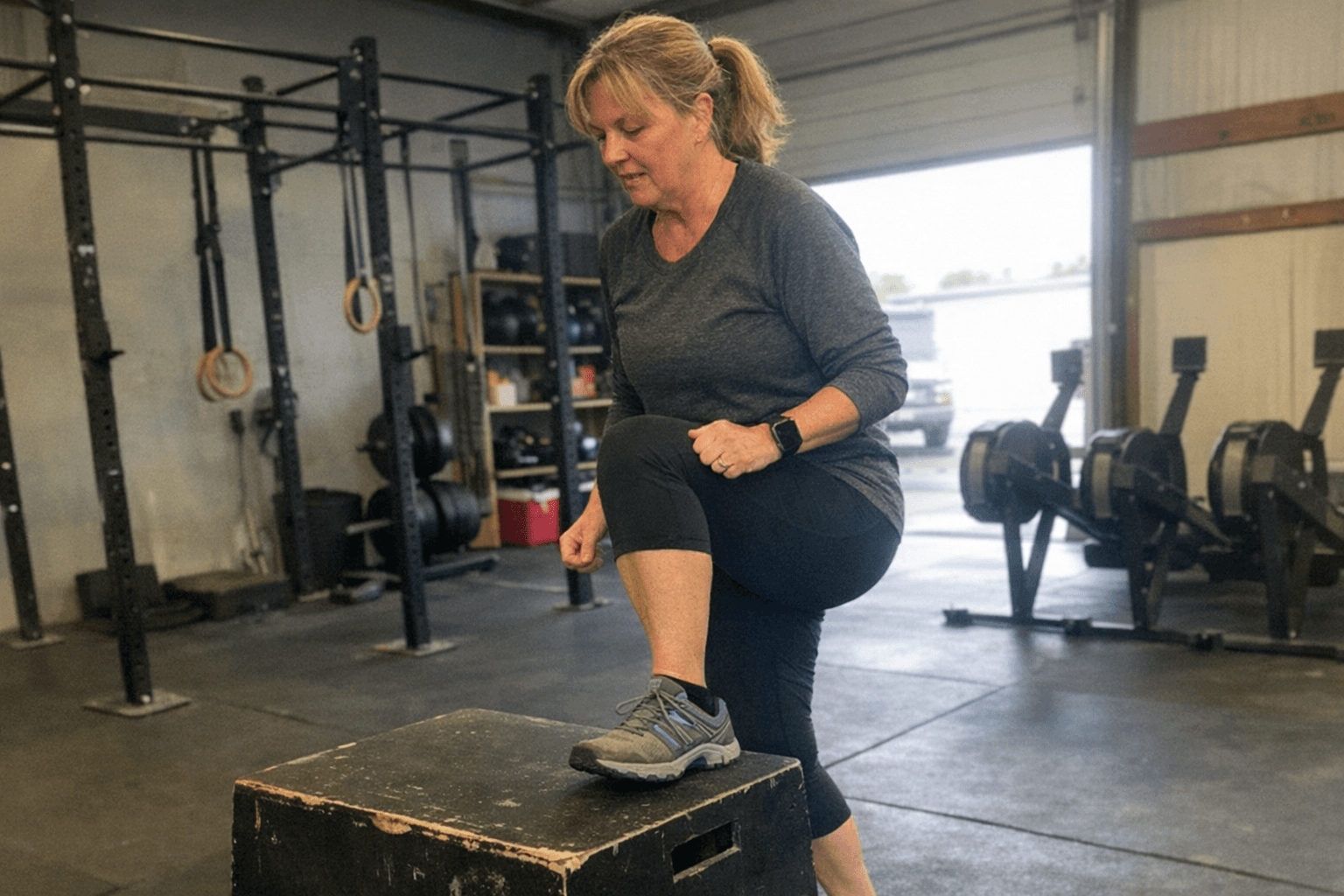
- step-ups
- lunges
- deadlift variations
Nothing flashy. Just enough strength that your legs can keep doing their job when the snow is uneven and the session runs long.
2. Single-leg control
Skiing is full of side-to-side shifts, uneven pressure, and little moments where one leg has to save the day.
If one side is noticeably weaker or less stable, winter finds it fast.
That is why good ski conditioning almost always includes single-leg work. It helps with balance, knee control, and cleaning up the little leaks that make adults feel sketchy on snow.
3. Trunk strength
A lot of people think “core” and picture ab circuits.
That is not really the point here.
You want a trunk that can hold position while the rest of you moves. That matters for downhill turns, nordic push-off, icy footing in the parking lot, and basically every outdoor winter activity in Duluth.
Carries, planks, bracing drills, and loaded movements all help here. So does simply learning how to move under load without your low back doing extra work.
4. Conditioning that supports the season
You do not need marathon training.
But if your plan is to ski after work, take a few laps at Spirit, or spend a weekend outside with family, your conditioning still matters.
The goal is not just to survive one hard effort. It is to recover between efforts and keep your movement quality longer.
That is one reason general class training helps so much. You build strength and work capacity at the same time.
The goal is not to become a ski athlete
For most adults, the win is simpler than that.
You want the first day out to feel decent.
You want to say yes to skiing without wondering if your knees are going to get weird. You want to keep up with friends or family. You want to finish the day tired in a satisfying way, not totally smoked.
That is the real value of preseason conditioning.
It keeps winter activities available.
That is the same reason we talk so much about training for hiking, paddling, biking, and all the other stuff that makes this city feel like home. If that bigger picture resonates, read The Duluth Outdoor Guide.
How this differs from our other ski articles
This one is about getting ready before the season starts.
If you are already in the middle of winter and want broader carryover, Strength Training for Skiers in Duluth is the better big-picture read.
If your focus is more specific to cross-country skiing, Strength Training for Nordic Skiing in Duluth goes deeper on push-off power, poling, and uphill stamina.
If you care more about downhill days, snowboard weekends, and not getting destroyed on a trip, Strength Training for Ski Trips is the more direct fit.
Preseason conditioning sits one step earlier than all of those. It is the bridge between “I should probably get moving again” and “I want winter to feel good this year.”
What a realistic preseason plan looks like
For normal adults, two to four training sessions a week is plenty.
A useful plan usually includes:
- one or two lower-body strength days
- single-leg work every week
- carries or trunk work every week
- enough conditioning that longer outings do not wreck you
- recovery that lets you stay consistent
That is it.
You do not need a hundred perfect workouts. You need a handful of good ones done consistently before the first big snow stretch.
That is also why coached classes work well for busy adults. You do not have to figure it all out yourself when work is busy, kids are busy, and it gets dark at 4:30.
What if you have not worked out in years
Then you are exactly the kind of person who should start now, not later.
A lot of adults assume they need to get in shape first before doing any kind of conditioning program. That is backwards.
At CrossFit Aerial, most people are not rolling in with a long recent training history. They are working parents, adults getting back to themselves, or outdoor people who stay active in bursts but have not built a real strength base in a while.
That is why the coaching and scaling part matters.
If you want to see what the on-ramp actually looks like, read What to Expect Your First Week at CrossFit. It is built for people starting from zero, not people trying to impress anybody.
This matters for older adults too
A lot of adults in their 50s, 60s, and beyond still want winter to stay open.
They want to ski, walk, snowshoe, keep up with grandkids, and feel steady on ice.
That is not a motivation problem. It is a strength and durability problem.
Muscle, balance, and power do not exactly improve on their own. A little training goes a long way if the goal is to stay capable for a long time.
That is why this conversation overlaps with our Legends article more than people expect.
Do you need nutrition help too?
Sometimes, yes.
If you start training more in late fall and then jump into ski season under-recovered, under-fed, and dehydrated, you will feel it.
That does not mean you need to obsess over food. It usually means you need a better plan than coffee, random snacks, and hoping for the best.
If that side feels messy, our sports nutrition page is a good place to start.
The bottom line
Ski conditioning in Duluth does not need to be fancy.
It needs to be useful.
Stronger legs. Better balance. More trunk control. Enough conditioning to enjoy winter without getting blindsided by it.
If skiing matters to you, even casually, getting stronger before the season starts is one of the easiest ways to make winter feel better.
And if you want coaching, structure, and classes that meet real adults where they are, that is exactly what we do. You can see the options on our pricing page.
FAQ
When should I start ski conditioning in Duluth?
For most adults, starting six to twelve weeks before consistent ski days is a great window. That gives you enough time to build some leg strength, trunk control, and work capacity before winter really ramps up.
Does ski conditioning help both downhill and nordic skiing?
Yes. The exact demands are a little different, but both styles benefit from stronger legs, better balance, and more trunk control.
How often should I train before ski season?
Two to four sessions a week is enough for most adults if the work is consistent and scaled well.
Can I do ski conditioning if I have not worked out in years?
Absolutely. Most adults do not need an advanced program. They need a smart starting point, coaching, and a plan they can actually stick with.
Is CrossFit good for ski conditioning?
It often is, especially when the coaching is good and the workouts are scaled well. Strength, conditioning, balance, and trunk control all carry over to skiing and other winter activities in Duluth.
Why preseason work matters more than people think?
Most adults wait until ski season starts, then try to ski their way into ski shape.
What ski conditioning should actually focus on?
This is where people get weird.
1. Leg strength?
Skiing exposes weak legs fast.
2. Single-leg control?
Skiing is full of side-to-side shifts, uneven pressure, and little moments where one leg has to save the day.
3. Trunk strength?
A lot of people think “core” and picture ab circuits.
4. Conditioning that supports the season?
You do not need marathon training.