Strength Training for Broomball in Duluth
Friday, Jul 10th, 2026Broomball has a way of looking casual right up until your legs are on fire and you almost eat it trying to change directions.
That is especially true in Duluth. A lot of adults jump into a winter league or a pickup game because it sounds fun, social, and lower pressure than hockey. All true. It is also a fast way to find out whether your balance, lateral strength, and hamstrings are actually ready for slick ice.
You do not need a sport-specific lab program to get better at broomball. Most adults do better with simple strength work, side-to-side control, and enough conditioning that the second half of the game is still fun.
If you have already read our pieces on pond hockey training in Duluth, strength training for ice skating in Duluth, or winter fitness in Duluth, this is the broomball version of that same conversation.
Why broomball exposes people fast
Broomball is sneaky.
You are on shoes, not skates, so people assume it will be easier on the body. Sometimes it is. But it also means you spend a lot of time fighting for traction, catching yourself, and trying to create power without a stable base.
That usually exposes a few things fast:
- weak side-to-side strength
- shaky single-leg balance
- hamstrings and glutes that are not doing enough
- lungs that are not ready for repeated bursts
- hips and groins that get cranky when you try to cut hard
A lot of working adults in Duluth are not undertrained because they are lazy. They are undertrained because life is full. Work. Kids. Winter. Weird schedules. You stay active enough to feel busy, but not always in the specific ways broomball demands.
The main physical buckets that matter for broomball
Lateral power and braking
Broomball is not just straight-line movement.
You are shuffling, reaching, cutting, stopping, and trying to stay upright on a surface that does not always want to cooperate. If you cannot produce force side to side, or slow yourself down without folding over, the game starts feeling sloppy in a hurry.
Lateral lunges, skater jumps, and controlled change-of-direction work help a lot here.
Single-leg balance
A lot of broomball movement happens while one leg is doing most of the work.
You plant, reach, rotate, and try to stay under control while the other foot is barely helping. If your balance falls apart the second one foot has to own the rep, you feel it on the ice too.
That is why step-ups, split squats, and single-leg RDLs carry over so well.
Hamstring durability
Hamstrings do not get much credit until they are the thing yelling at you.
In broomball they help with deceleration, hip extension, and staying more athletic when you start getting tired. If they are weak, every stop and reach gets a little uglier.
Deadlift variations, hinges, bridges, and sled drags are useful because they build the backside that keeps you from turning every game into a quad-only survival test.
Trunk control
Broomball gets messy fast.
You are leaning, reaching, rotating, and absorbing weird angles. A stronger trunk helps you stay organized when the game stops being clean. That means carries, planks, anti-rotation work, and just getting stronger overall usually matter more than doing a hundred random crunches.
What to train if you want broomball to feel better
You do not need a giant list. A few basics cover a lot.
1. Single-leg strength
Start with things like:
- split squats
- step-ups
- reverse lunges
- single-leg RDLs
Those build the kind of control most adults are missing when they try to cut or recover on slick ice.
2. Lateral work
This is the big broomball bucket.
Good options:
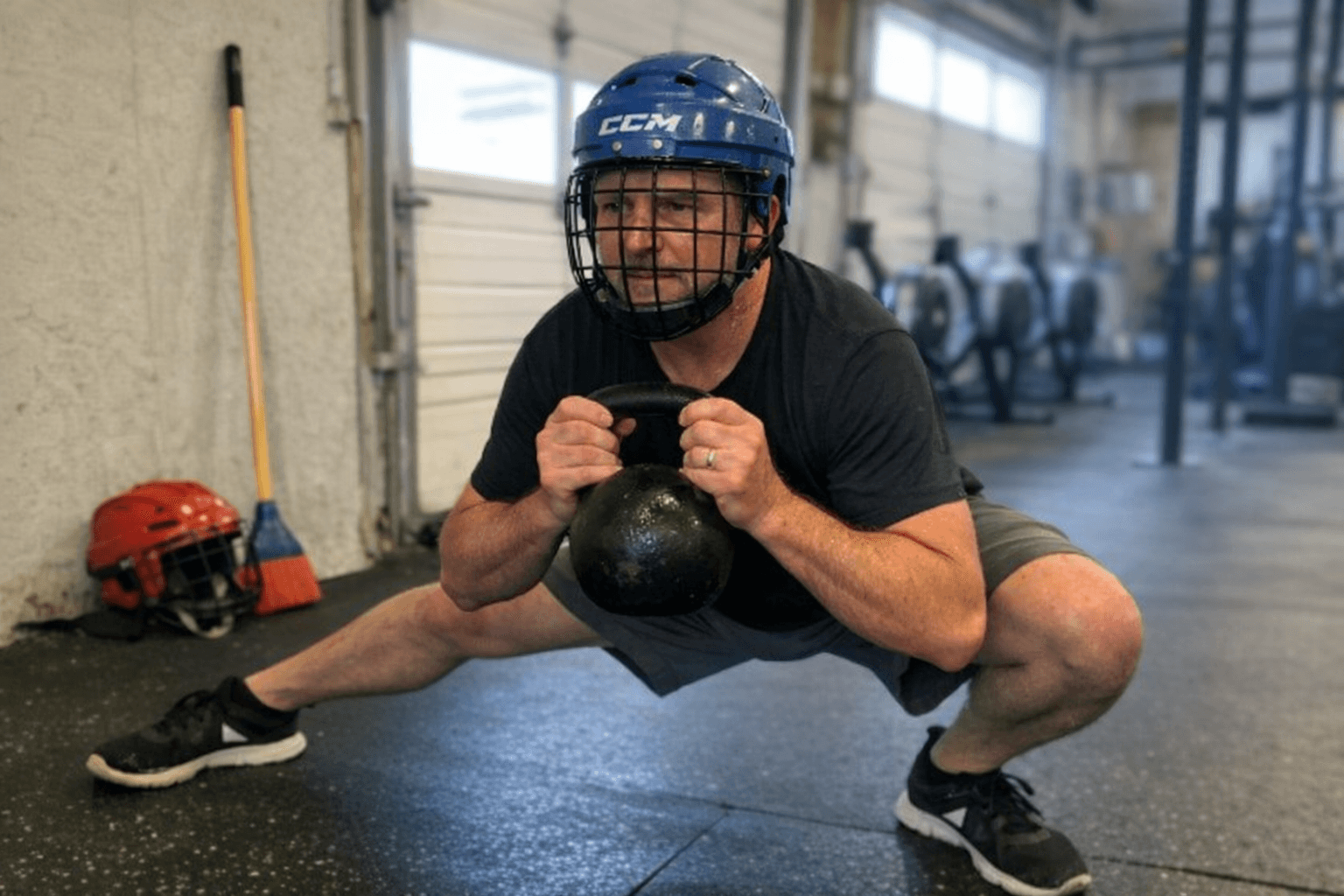
- lateral lunges
- Cossack squats
- skater hops
- band-resisted lateral walks
- controlled side shuffles
You do not need to turn everything into agility-ladder theater. You just need enough side-to-side strength that your groins and knees do not feel ambushed.
3. Hamstrings and glutes
A lot of adults live in their quads and low back.
Broomball goes better when the backside shows up. Think deadlifts, Romanian deadlifts, hip bridges, carries, sled drags, and rows. That same base helps with hockey, skating, shoveling, and just getting through winter without feeling beat up.
4. Short-burst conditioning
Broomball is closer to repeated hard efforts than a steady jog.
Bike intervals, row sprints, short shuttle work, and work-rest pieces that let you recover just enough before going again are a better match than only doing long slow cardio.
If you want a broader winter version of that conversation, winter recovery in Duluth and winter energy in Duluth both help on the consistency side.
A simple weekly setup for regular adults
If broomball is something you want to enjoy without feeling trashed, this is enough for a lot of people:
- 2 strength sessions built around squats, hinges, rows, carries, and single-leg work
- 1 session with lateral work and short intervals
- 1 to 2 broomball games, depending on league and life
- some walking or light mobility on the other days
That is realistic for working parents and normal adults.
You do not need to train like a college athlete. You need enough structure that your body is not surprised every time you play.
If you have not worked out in years, that does not disqualify you
This is one of the biggest mental blocks people carry.
They think they need to get into shape first, then maybe earn the right to start something structured.
That is backwards.
At CrossFit Aerial, a lot of people start from zero. Working parents. Adults in their 40s and 50s. People who used to be active, then life got loud. People who still love outdoor stuff but have not had a strength routine in a long time.
The point is not to throw you into chaos. The point is to scale things well and build capacity from where you are now. If you want to see what that looks like, What to Expect Your First Week at CrossFit covers the onboarding side.
This matters for Legends too
Broomball is not just for twenty-somethings who bounce back the next morning.
A lot of adults want to keep saying yes to winter leagues, outdoor family stuff, skating, hiking, and all the random social movement that makes Duluth feel like Duluth. Strength training helps with that.
It helps you keep your balance, hold onto muscle, and move with more confidence when the ground is slick and the weather is working against you. That is the same bigger idea behind our Legends article, even if your goal is just feeling more solid during winter rec league nights.
Recovery still matters
A lot of people think they need a better program when what they really need is to recover like an adult who wants to keep playing.
Sleep matters. Protein matters. Hydration matters more in winter than people think. A little mobility between games matters. So does not trying to live on coffee and vibes when your week gets busy.
If you want more help with the coaching side, the pricing page shows the options for classes, nutrition support, and the kind of accountability that helps adults stay consistent.
The real win
The point is not to become some broomball specialist.
The point is to have more fun.
More balance. Better cuts. Less hamstring panic. Fewer groin tweaks. More gas late in the game. More confidence saying yes when somebody asks if you are in this week.
That is what strength training is for.
If you want help building that kind of durability, CrossFit Aerial works with regular adults, including plenty who are starting from scratch. You can learn more on the pricing page.
FAQ
What kind of strength training helps broomball most?
Single-leg strength, lateral lunges, skater-style power work, hamstring strength, carries, and short interval conditioning all carry over well. Most adults do not need fancy drills. They need better balance, stronger hips, and more repeat-effort fitness.
Why does broomball make my groin and hamstrings so sore?
Broomball asks you to cut, brake, and recover on slick ice with a lot of side-to-side force. If your adductors, glutes, and hamstrings are undertrained, those areas usually light up first.
Is CrossFit good for broomball players?
It can be, especially when the coaching is good and the workouts are scaled. A solid CrossFit program builds strength, conditioning, and durability that transfer well to winter rec sports like broomball.
What if I have not worked out in years but still want to play broomball?
You do not need to get in shape first. A lot of adults start from zero. The key is finding coaching that scales well and helps you build from your current level instead of trying to wing it alone.
Why broomball exposes people fast?
Broomball is sneaky.
What about Lateral power and braking?
Broomball is not just straight-line movement.
Single-leg balance?
A lot of broomball movement happens while one leg is doing most of the work.
Hamstring durability?
Hamstrings do not get much credit until they are the thing yelling at you.
Trunk control?
Broomball gets messy fast.
What to train if you want broomball to feel better?
You do not need a giant list. A few basics cover a lot.