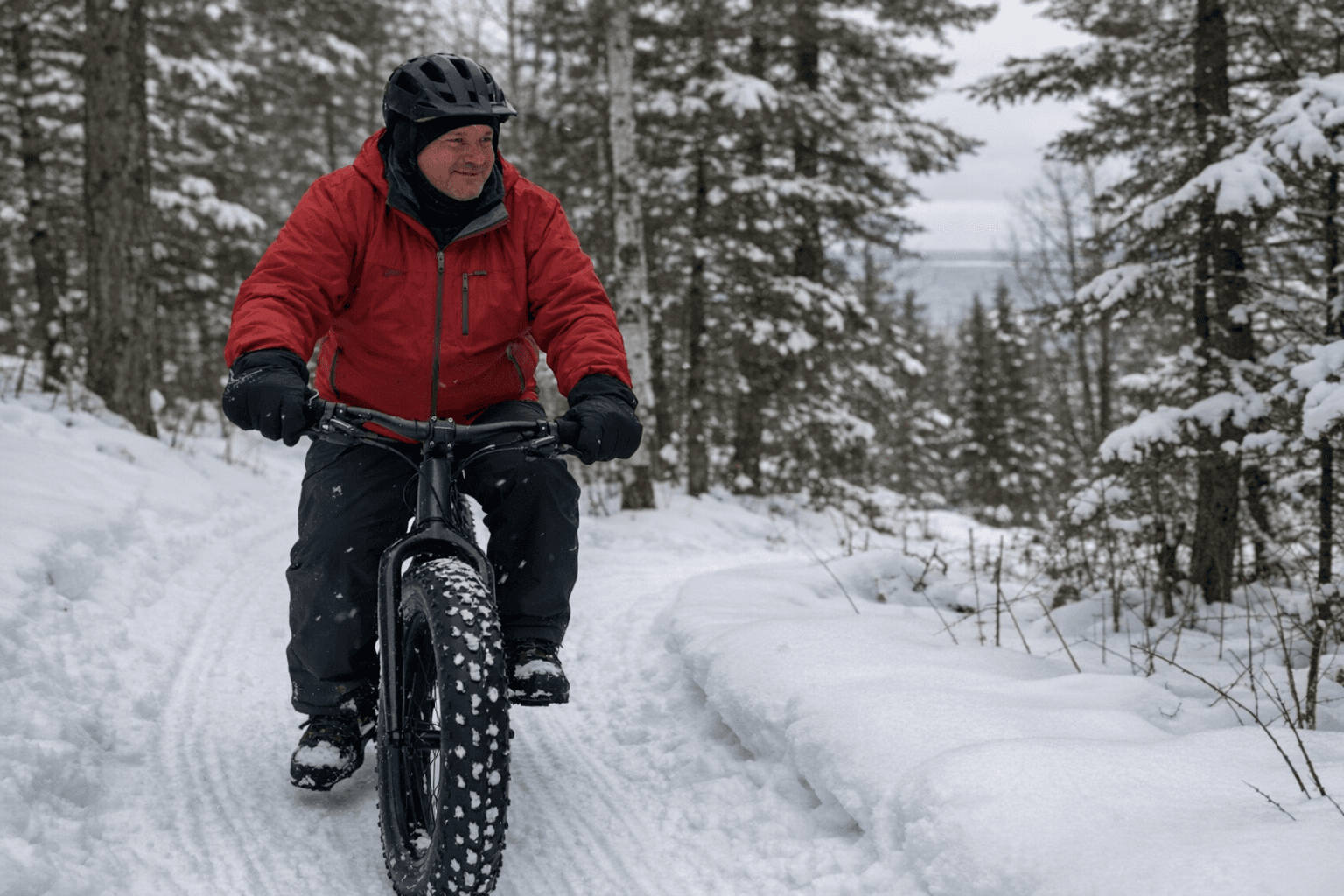
Strength Training for Fat-Tire Biking in Duluth
Wednesday, Jun 17th, 2026Strength Training for Fat-Tire Biking in Duluth
Fat-tire biking sounds casual until you actually ride in fresh snow.
Then your legs light up on every climb, your lungs realize winter air is not messing around, and your grip starts fading long before you want the ride to end.
That is especially true in Duluth. Between groomed singletrack, rolling trail systems, cold air, and the extra resistance of snow, fat biking asks a lot more from your body than a normal spin around town.
That is where strength training helps.
Not because you need to turn a fun winter ride into a training camp. You do not. You just want more good rides, better legs on the climbs, steadier handling when the trail gets choppy, and enough gas left to enjoy the back half of the outing.
If you liked our pieces on strength training for mountain biking in Duluth, strength training for snowshoeing in Duluth, or winter fitness in Duluth, this is the same idea in a very Duluth-specific lane.
Why fat-tire biking feels different from regular biking
Snow changes everything.
The bike feels heavier. The trail rolls slower. Climbs that would be manageable in July suddenly feel expensive in January. Even when the pace looks mellow, your body is working the whole time to stay stable, keep traction, and keep pressure on the pedals.
Usually the limiting factors show up like this:
- legs that burn out early on punchy climbs
- lungs that feel underdosed the second the trail tilts up
- grip and upper back fatigue from steering through soft or uneven snow
- hips and trunk getting sloppy when traction gets weird
- low back tightness from staying braced for longer than expected
- not enough winter conditioning to recover well between hard efforts
That does not mean you are bad at biking. It usually means fat biking exposes strength and conditioning gaps faster than people expect.
What fat-tire biking in Duluth actually asks from your body
Duluth is one of the better fat-bike towns around for a reason. People here do not just put the bike away when the snow shows up.
They ride groomed trails at Spirit, Lester, Piedmont, and across the broader trail network when conditions line up. That makes winter way more fun, but it also means your body has to handle repeated climbs, cold-weather breathing, technical balance, and a lot of steady leg work.
The big demands usually look like this:
1. Leg strength that lasts on slow climbs
Fat biking is not all speed. A lot of it is grinding well.
When the snow is soft or the trail pitches up, you need enough strength to keep force on the pedals without blowing yourself up. Squats, split squats, deadlifts, step-ups, and sled work help because they build the exact kind of leg strength that makes those climbs feel less costly.
2. Balance and trunk control when traction gets weird
Winter trails are not predictable.
One patch is firm. The next gets loose. One line is clean. The next wants to throw your front tire sideways. If your hips and trunk are weak, every little correction gets more dramatic than it needs to be.
That is why carries, single-leg work, anti-rotation drills, and good general strength matter so much. They help you stay organized instead of fighting the bike every time conditions change.
3. Grip and upper-back endurance for longer rides
People notice this one late in the ride.
Your hands start getting tired. Your upper back feels cooked. Steering gets less crisp. That is not just a hand problem. It is usually a whole chain problem, grip, forearms, shoulders, and upper back all getting exposed.
Rows, carries, hangs, and pulling work help a lot here.
4. A winter engine, not just summer fitness
A lot of adults are pretty active in summer, then winter sneaks up and their general conditioning drops just enough to make outdoor stuff feel harder than it should.
Fat biking rewards a solid aerobic base and the ability to repeat moderate-to-hard efforts without falling apart. That is why steady conditioning, intervals, rowing, biking, and mixed-modal work carry over so well.
Where regular adults usually get stuck
For most people, the issue is not motivation.
It is that they want winter to stay active and fun, but they are trying to get all their fitness from the activity itself. So they ride when conditions are good, sit a lot for work, and hope a couple outdoor sessions will carry everything.
Then one of these happens:
- the first real climb wrecks their legs
- they feel shaky on uneven snow because balance and hip strength are behind
- their low back gets cranky from bracing the whole ride
- they recover slowly and stop riding as often as they wanted
- they quietly decide they are just not built for winter biking
Usually that is not true.
Usually they just need a better base.
You do not need a weird sport-specific plan
Most adults do not need a hyper-detailed fat-bike training cycle.
They need smart general training that supports outdoor life in Duluth.
That is a big part of what CrossFit Aerial already does well. Stronger legs help you climb. Better trunk control helps you stay stable. Better conditioning helps you recover and keep making good decisions when you are tired. Better overall durability means you can ride, ski, snowshoe, shovel, and still feel like a functional person the next day.
That is the same bigger idea behind our Duluth outdoor guide. Training is not the point. Training keeps the fun available.
A realistic training week for fat-tire biking
For most busy adults, it does not need to get fancy.
A useful week might look like this:
- 2 to 4 strength and conditioning sessions
- 1 to 2 fat-bike rides when conditions and schedule cooperate
- 1 easier recovery day like walking, mobility, or an easy spin
- enough sleep and food that winter does not quietly grind you down
That is enough for a lot of people to feel a clear difference in a couple months.
If you have not trained in years, that is fine. Most people at CrossFit Aerial are not walking in with a big fitness background. They are working parents, adults starting over, and people who want their body back. What to Expect Your First Week at CrossFit gives the honest version of how the ramp-up works.
This matters even more if you are 40-plus or getting back into fitness
A lot of people in Duluth want to keep doing winter stuff without feeling beat up by it.
That includes adults in their 40s and 50s, beginners who have not worked out in years, and older members who just want to stay capable. The goal is not to become extreme. The goal is to stay the kind of person who can say yes to winter.
That is why we talk so much about longevity, scaling, and consistency. It is also why our Legends article resonates with so many people. Staying strong is what keeps outdoor life open.
The bottom line
If you want fat-tire biking in Duluth to feel better, strength training helps.
Stronger legs make climbs less miserable. Better trunk control helps on sketchy traction. More grip and upper-back endurance help you stay smooth later in the ride. Better conditioning helps you finish with something left.
That is the real win.
More winter rides. Less feeling cooked. More confidence saying yes when friends want to get outside.
If your body feels like the limiting factor right now, that can change pretty fast with good coaching and consistency.
If you want help building that base, you can learn what CrossFit looks like for beginners, see pricing here, or talk to CrossFit Aerial about where to start.
FAQ
Does strength training help fat-tire biking?
Yes. It helps with climbing strength, balance, trunk control, grip endurance, and overall winter conditioning.
What muscles matter most for fat biking?
Glutes, quads, hamstrings, core, upper back, and grip all matter because fat biking asks for steady leg drive plus balance and control.
Why is fat-tire biking so tiring?
Snow adds resistance, traction changes constantly, and climbs cost more than they do on dry dirt. Even mellow-looking rides can be a lot of work.
Is CrossFit good for fat bikers?
It can be a great fit when coaching and scaling are solid. Fat bikers benefit from general strength, conditioning, balance, grip, and durability.
Do I need to be in shape before starting CrossFit for this?
No. Most people at CrossFit Aerial start from scratch or after a long break. Everything is scaled to your current level.