Strength Training for Canoe Trips and Portaging
Saturday, Jun 6th, 2026Strength Training for Canoe Trips and Portaging
A Boundary Waters trip sounds peaceful when you're talking about it in February.
Then August shows up. The canoe feels heavier than you remembered. The portage trail is muddier than you'd hoped. Your pack digs into your shoulders. Halfway through the carry, you're not thinking about wilderness serenity anymore. You're thinking about how much farther the landing better be.
That's the part a lot of people miss.
Canoe trips are not just paddling. They're carrying awkward weight, walking uneven trails, stepping over roots, loading gear, getting in and out of the boat, and doing all of it while you're a little tired, a little sweaty, and sometimes a little rushed.
The good news is you do not need some elite expedition training plan to feel better out there. You just need enough strength, balance, and work capacity that the trip feels fun instead of like a survival event.
If you already love being outside but want your body to hold up better for the real work of paddling and portaging, strength training helps a lot.
Why portaging feels so hard
Portaging exposes the exact stuff most adults haven't trained in a while:
- carrying load for longer than a minute
- bracing your trunk while moving
- climbing, descending, and stepping on uneven ground
- using hips and legs instead of yanking everything with your low back
- repeating effort for hours, not one quick set
It's not usually one dramatic weakness. It's a bunch of small leaks.
Your legs get tired faster than expected. Your grip starts to fade. Your posture softens under the pack. Your low back gets cranky because your hips are not doing enough. Then every landing, lift, and carry starts costing more energy.
That's why people who hike a little or paddle casually can still get humbled on a canoe trip.
What actually matters for canoe-trip strength
You do not need bodybuilding muscles for this.
You need practical strength that carries over outside.
1. Leg strength
Every portage is basically a loaded hike with awkward setup and takedown.
Squats, split squats, step-ups, and lunges help because they build the leg strength to climb hills, handle uneven footing, and keep moving when you're carrying weight. If your legs are stronger, everything feels more stable.
2. Core strength that actually does something
This is less about six-pack exercises and more about resisting movement.
When you carry a canoe, a pack, or a dry bag, your trunk has to stay organized while the load tries to pull you around. Carries, planks, dead bugs, and controlled hinging patterns matter more here than endless crunches.
If you've read our piece on why CrossFit beats just doing planks, same idea. Your core works best when it learns to stabilize while the rest of you moves.
3. Upper-back and shoulder endurance
A canoe trip is a lot of time with your shoulders working without much glamour.
Rows, carries, hangs, and pressing variations help build the posture and shoulder control to paddle longer and carry gear without folding forward.
4. Grip strength
Wet handles, awkward packs, paddles, coolers, food barrels, random gear bags. Grip matters.
If your hands are smoked early, everything feels harder. We wrote more about that in How to Build Grip Strength, but the short version is simple: carries, hangs, and repeated exposure work.
5. Balance and single-leg control
Portage trails are not treadmills.
Roots, rocks, mud, slanted landings, stepping in and out of a canoe on a weird angle. Single-leg work helps because real outdoor movement is rarely perfectly even.
The best exercises to prepare for portaging
You do not need to do all of these every session. But these are the big rocks.
Step-ups
One of the most useful exercises in the whole mix.
They train the exact pattern of getting up onto things, climbing uneven terrain, and producing force through one leg at a time. Hold dumbbells if you want to make them more realistic.
Farmer carries
These are money for canoe trips.
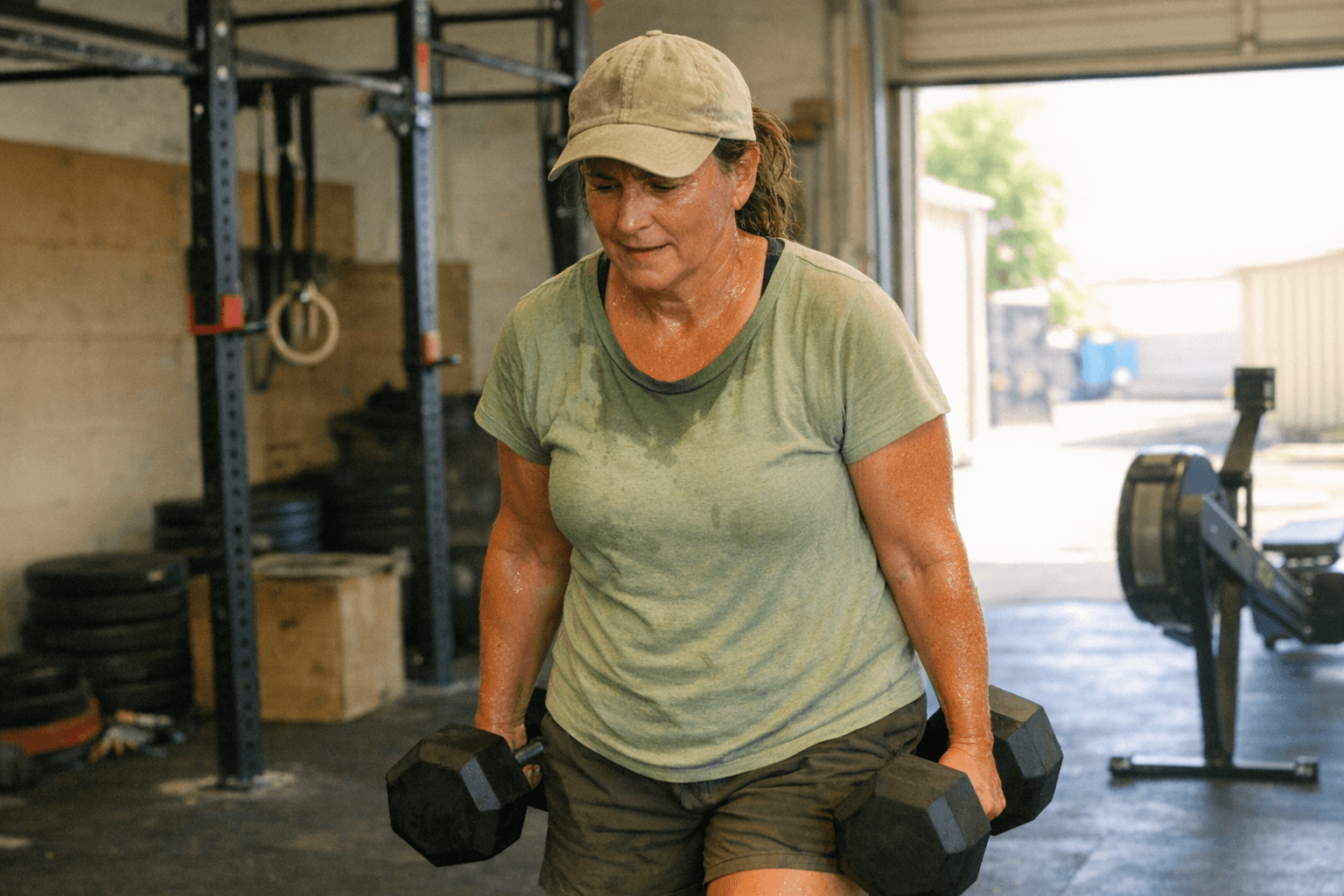
They build grip, posture, bracing, and the ability to keep moving while loaded. They also teach you pretty quickly if your core gives out before your legs do.
Front-rack or suitcase carries
A canoe trip rarely loads you perfectly evenly. These carry variations force you to stabilize and resist being pulled side to side.
Split squats and lunges
Great for leg strength, hip stability, and making uphill trail sections feel less rude.
Romanian deadlifts or kettlebell deadlifts
These teach you to hinge and use your hamstrings and glutes when you're picking up gear instead of rounding your back like a folding chair.
Rows and pull variations
Helpful for upper-back strength and posture, especially if long paddling days usually leave your neck and shoulders cooked.
Sled pushes or bike/row intervals
Not specific to canoeing, but useful for building work capacity. Portaging is not just strength. It's repeated effort with incomplete rest.
A simple weekly plan
If you're 4 to 8 weeks out from a trip, this is enough for most adults:
- 2 to 3 strength sessions per week
- 1 loaded carry focus each week
- 1 longer walk or hike with a light pack if your joints tolerate it
- some paddling if you already have access to it, but not as your only prep
A basic week could look like this:
- Day 1: step-ups, rows, farmer carries, planks
- Day 2: squats or deadlifts, split squats, suitcase carries, bike intervals
- Day 3: longer walk, easy trail, or outdoor day with a light pack
It does not need to be fancy. It needs to be consistent.
How heavy should your training be?
Heavy enough to matter. Not so heavy that you can't recover.
For most adults, the goal is not max strength. It's being strong enough that normal trip demands sit well below your ceiling.
If carrying a 40 to 60 pound awkward load for a stretch currently feels like a near-max effort, your margin is too small. Training gives you buffer.
That's a huge deal for working parents and busy adults who just want to enjoy the trip instead of needing two recovery days after the first portage.
If you're brand new to strength training
You do not need to get in shape first.
That mindset keeps people stuck forever.
Most people at CrossFit Aerial start from scratch, or close to it. That's true for busy parents, adults getting back into exercise, and our Legends members 55+ too.
If that sounds like you, start with simple movements, lighter loads, and coaching. Build the base first. You can read What to Expect Your First Week at CrossFit if you want a better feel for how that ramp-up actually works.
Strength training helps the whole trip feel better
The win is not just surviving the portage.
It's having more energy for the parts you actually care about.
You recover better between carries. You feel steadier stepping onto slick rocks. Your back and shoulders are less likely to get torched. You have more left in the tank for paddling, camp setup, swimming, fishing, and all the normal stuff around the trip.
That's the same reason a lot of our members train for hiking, skiing, paddling, and summer adventures in general. If you liked our article on Strength Training for Paddling in Duluth, this is the same conversation, just with more awkward carries and more mud.
You don't need a canoe-specific gym
You just need coaching that makes training useful for real life.
That means:
- scaling from your current level
- getting stronger without getting beat up
- building balance, carrying strength, and conditioning
- training in a way that still fits your work and family schedule
For most adults, that lands somewhere between the value of group coaching and the flexibility of a smart long-term plan. If you're comparing options, our pricing page breaks down the general range and what is actually included.
Final thought
The best canoe trip training plan is the one that makes the trip feel smaller than your capacity.
Not easy, exactly. Boundary Waters trips are still supposed to feel like something.
But your body should feel ready for it.
If you want to feel stronger on portages, steadier on uneven ground, and less wrecked at the end of the day, strength training is one of the best things you can do before you head north.