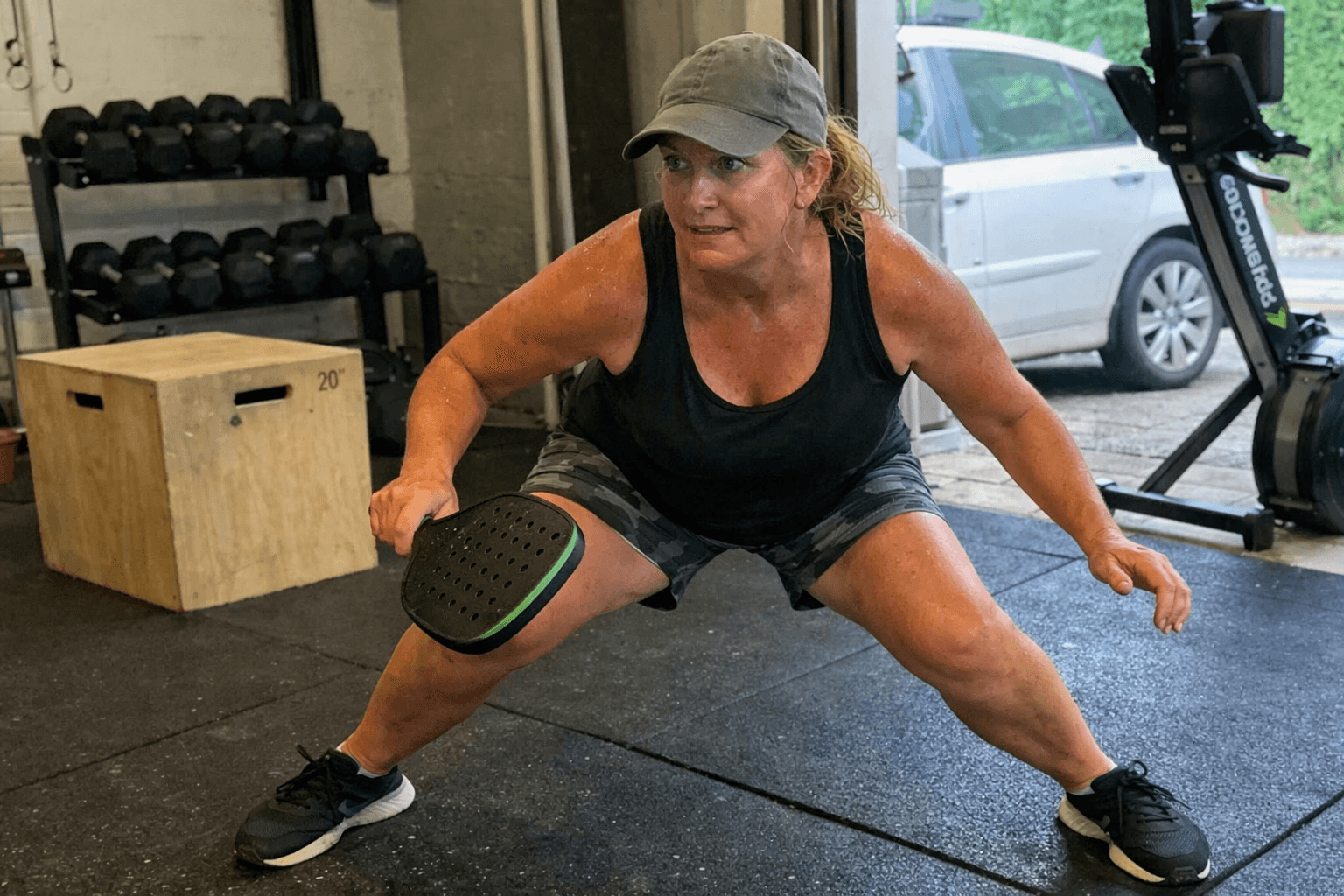
Strength Training for Pickleball in Duluth
Thursday, May 14th, 2026Strength Training for Pickleball in Duluth
Pickleball has a way of sneaking up on people.
It looks light. Social. Kind of casual.
Then you play for an hour and your calves are lit up, your knees feel every stop-and-go step, and your shoulder is suddenly very aware that you have been swinging a paddle over and over.
That is not because you are doing it wrong. Pickleball just asks for more than people expect.
At CrossFit Aerial, that pattern is pretty familiar. A lot of adults here are not trying to become elite athletes. They want to stay active, keep up with friends, feel good outside the gym, and avoid the cycle where one fun activity turns into three weeks of feeling beat up. Pickleball fits right into that.
The good news is you do not need some hyper-specific training plan to feel better on the court. Most adults just need a better base. More leg strength. Better balance. More trunk control. A little more pop, and a little more durability.
Why pickleball feels harder than it looks
From the outside, pickleball seems pretty manageable.
Small court. Short paddle. Not a ton of running.
But once you are actually playing, the demands show up fast:
- quick starts and stops
- lots of side-to-side movement
- repeated squatting and reaching
- balance under fatigue
- shoulder and forearm repetition
- enough conditioning to keep moving well late in a game
That is why a lot of adults can be generally active and still feel weirdly cooked after playing.
Pickleball is not just cardio, and it is not just hand-eye coordination. It is a change-of-direction, balance, and repeat-effort sport.
The goal is not to become a gym rat
You do not need to care about lifting for its own sake.
You just want pickleball to feel better.
Usually that means:
- stronger legs for lunging, bracing, and quick direction changes
- better balance so you feel more stable reaching and recovering
- a stronger trunk so power transfers better and your low back does not do all the work
- more shoulder durability for repeated swings and overhead shots
- enough conditioning that your footwork does not fall apart when you get tired
That is the same big-picture reason people do well with broad sports training in Duluth. Better general fitness gives you more room to enjoy the activity.
What helps pickleball players most
1. Lower-body strength for stops, starts, and staying low
Pickleball is full of short bursts.
You push off, shuffle, plant, reach, recover, and do it again a few seconds later. If your legs are weak, all of that feels more expensive. You get slower to the ball, less stable in awkward positions, and more likely to feel beat up through the knees and hips.
Squats, split squats, lunges, step-ups, and deadlift variations all help here. Not because they look like pickleball, but because stronger legs make every court movement cost less.
2. Balance and single-leg control
A lot of awkward court moments happen on one leg.
You reach wide. You plant off-balance. You decelerate into a shot. You recover after getting pulled out of position.
That is where single-leg work matters. It helps with ankle control, hip stability, and that general feeling of being more athletic instead of a little wobbly every time the rally speeds up.
This matters even more for adults who are getting back into fitness after a long break. You do not need to get in shape first. You just need to start building. What to Expect Your First Week at CrossFit gives the honest version of how that usually starts.
3. Core strength that keeps you organized
Pickleball is not about six-pack abs.
It is about being able to rotate, brace, and recover without your low back taking over.
Carries, planks, anti-rotation work, and heavy basic lifts done well all help. When your trunk is stronger, it is easier to change direction, stay balanced, and transfer force into your shots without feeling sloppy.
4. Shoulder and forearm durability
The court is small, but the repetition adds up.
A lot of newer players notice forearm tightness, shoulder fatigue, or that vague cranky feeling that shows up after a couple sessions in one week. Usually that is not because pickleball is inherently bad for you. It is because the tissues are not used to that volume yet.
Rows, presses, carries, pulling work, and smart shoulder accessory work all help build the kind of durability that keeps fun sports fun.
If you already know one area gets irritated, articles like CrossFit for Shoulder Pain can help you think more clearly about training around it instead of just avoiding movement forever.
5. Conditioning that keeps your footwork from disappearing
Pickleball is one of those sports where technique looks a lot better when you are fresh.
Once you are breathing hard and your legs are heavy, timing slips. You stop moving your feet. You reach instead of getting into position. You start playing more upright because getting low sounds annoying.
A better engine helps more than people expect.
That is one reason general strength and conditioning works well for recreational athletes. You are building the ability to keep moving well, not just the ability to survive the first fifteen minutes.
Where adults usually get stuck
The most common pattern is not laziness.
It is inconsistency.
A lot of people play when the weather is good, sit a lot for work, and try to get all their fitness from the activity itself. Then they wonder why they feel tweaky, slow, or more worn down than they expected.
Usually it looks like this:
- weekend activity is higher than weekday movement
- balance and coordination feel rusty
- the knees or calves complain when volume jumps up
- shoulders are fine until they are suddenly not
- they like the sport enough to keep playing, but not enough to do rehab homework forever
That is why a better base matters.
It gives you some margin.
You do not need a pickleball-only program
For most adults in Duluth, a simple plan works great:
- two to four coached strength and conditioning sessions each week
- one to three days of pickleball depending on the season and your schedule
- one easier recovery day like a walk, mobility work, or a lighter bike ride
- enough sleep and food that you are not trying to play hard on fumes
That is plenty for a lot of adults to feel noticeably better within a couple months.
And if you are someone who likes pickleball because it gets you outside, social, and moving, this fits well with the bigger CrossFit Aerial crowd. A lot of members are already doing the same thing with hiking, biking, skiing, and other seasonal stuff. Articles like Strength Training for Hiking in Duluth, Strength Training for Skiers in Duluth, and Summer Strength Training for Outdoor People all come back to the same idea. The gym is support work for the life you actually want.
This matters even more if you are 40-plus or in the Legends lane
Pickleball pulls in a wide age range for a reason.
It is social, accessible, and easy to start.
That also means a lot of players are not coming in with a big training background. Some have not worked out consistently in years. Some are active, but mostly in a seasonal way. Some want to stay competitive with friends. Some just want to stay active long enough to keep saying yes.
That is exactly where strength training helps.
It improves confidence, stability, recovery, and your ability to keep doing fun things for a long time. If that is your season of life, CrossFit for Legends is worth a read too.
Do not ignore recovery and fueling
This part gets brushed off a lot because pickleball feels recreational.
But if you are playing hard for an hour or two, sweating, changing direction a lot, and stacking that on top of work and family life, recovery matters.
A little more protein, better hydration, and not showing up underfed can go a long way. If that side of things feels messy, sports nutrition in Duluth is part of the bigger picture too.
The bottom line
If you want to enjoy pickleball in Duluth more, strength training helps.
Not because you need to become intense about fitness.
Because stronger legs help you move better. Better balance helps you stay more confident. A stronger trunk and shoulders help you handle the repetition. Better conditioning helps your game hold up when you get tired.
That is the real win.
You get to keep playing, feel better doing it, and recover like a normal person afterward.
If you want help building that kind of base, you can see pricing here, learn what starting CrossFit actually looks like, or just talk to CrossFit Aerial about where to begin.
FAQ
Does strength training help with pickleball?
Yes. Strength training helps with quick direction changes, balance, power, recovery, and durability for the stop-and-go demands of pickleball.
What exercises help pickleball players the most?
Squats, split squats, lunges, step-ups, carries, rows, presses, planks, and anti-rotation work are all useful because they build lower-body strength, balance, trunk control, and shoulder durability.
Is pickleball enough exercise on its own?
It definitely counts as real activity, but many adults still benefit from strength work outside the court. General strength and conditioning usually makes pickleball feel better and helps reduce that beat-up feeling.
Is CrossFit good for pickleball players?
It can be, especially when coaching and scaling are good. Pickleball players benefit from general strength, conditioning, coordination, and durability.
What if I have not worked out in years but want to start playing pickleball?
That is really common. Start with coached, scaled workouts and build gradually. You do not need to get fit first before beginning.